
Monthly Archives: December 2011

Hot Doc: A Damage Assessment at the Getty Finds Forgery, Fraud and Fabricated Histories

The true cost of looting has always been hard to measure: how does one account for what is lost? Perhaps this is why some — Americans in particular, it seems — tend to think of looting as a victimless crime.

In truth, looting has many victims — the artifacts lost or damaged during the act itself; the defaced monuments and pockmarked archaeological sites left in its wake. Then there is the more pernicious effect of plunder and the black market it fuels — the corruption of our knowledge about the past.
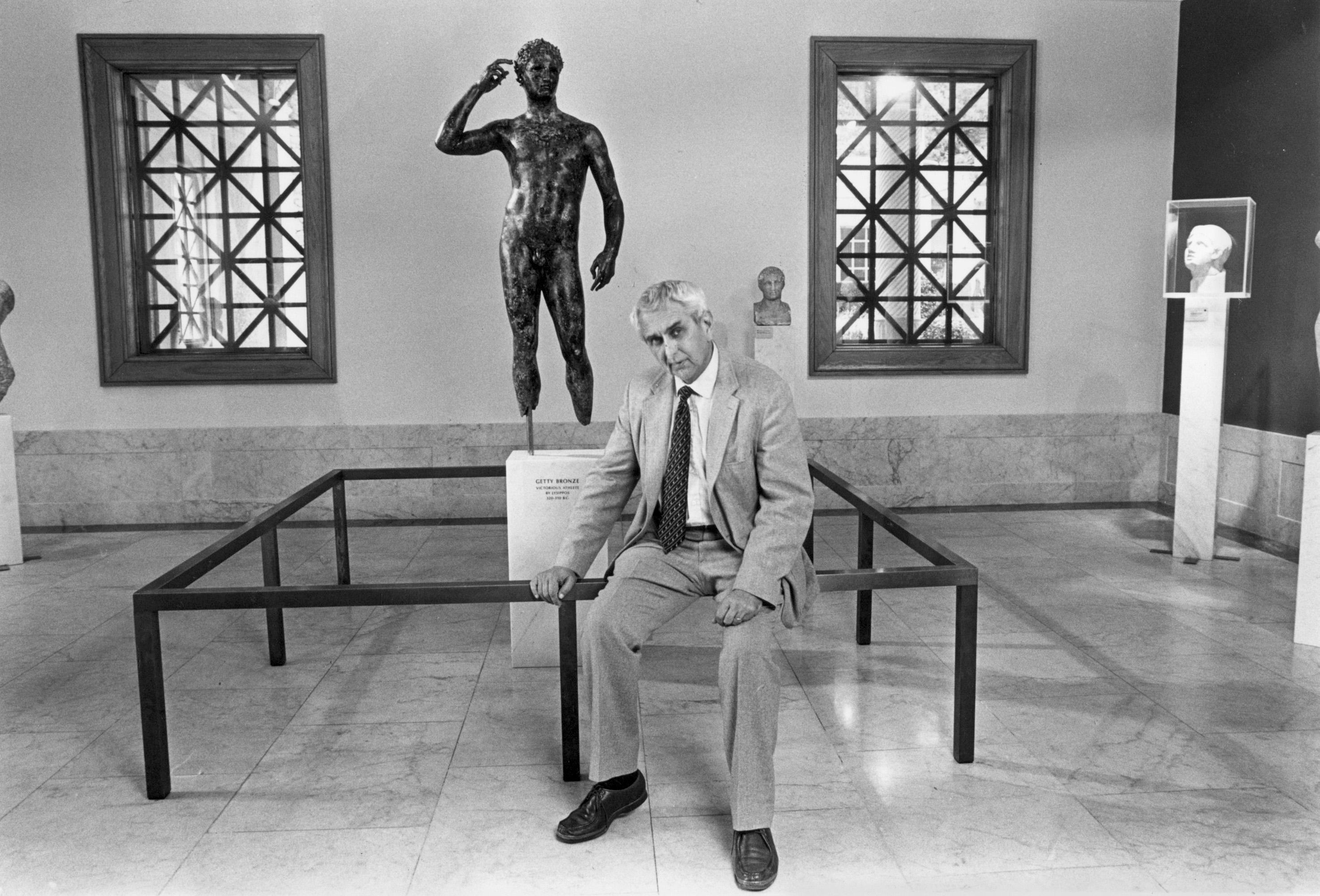
Jiri Frel with The Getty Bronze

This is what the Getty Museum confronted in 1984, after the hasty departure of its charming and crooked antiquities curator Jiri Frel. In his decade at the Getty, Frel had used any means necessary to build the museum’s antiquities collection into one worthy of the Getty’s wealth. In 1984, when his criminal activity was discovered amidst an IRS investigation, he abruptly left the country, leaving colleagues at the museum to clean up the mess.

John Walsh, Getty Museum Director

A confidential June 1984 memo from acting antiquities curator Arthur Houghton to museum director John Walsh was an early attempt to account for the damage done by Frel’s collecting practices. We’ve posted it below as part of our Hot Docs series, a effort to publish some of the key confidential files we used while reporting Chasing Aphrodite.

Arthur Houghton III

“Changes or additions to the central files registry should be recorded for many of the objects in the antiquities collection,” Houghton noted with characteristic understatement. “The scope of the problem is quite large and involved a number of areas.”

Among the problems Houghton reported:

Falsified provenance: Many of the ownership histories of objects in the collection were “mythical.” Frel and his trusted dealers had made a parlor game of inventing bogus European collections like “Esterhauzy” to cover the fact that the objects being purchased were fresh from an illicit dig.

Bogus attributions: Frel had often gussied up the attribution of objects to make them more palatable to the public or the Getty’s own acquisition committee. Roman copies were listed as Greek originals; a 3rd century BC sculpture became the only surviving piece by a Greek master.
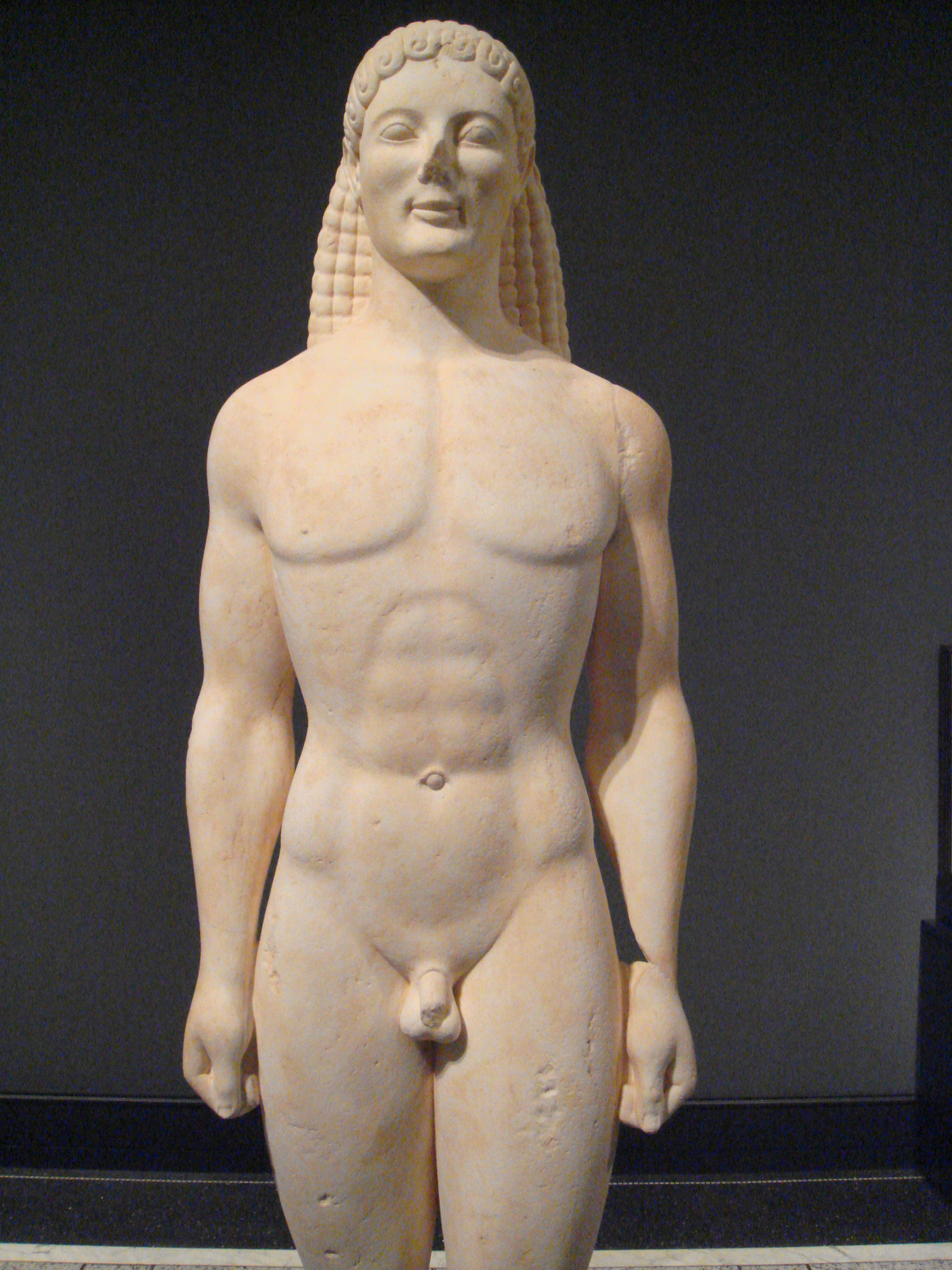
The Getty bought the kouros in 1985 for $10 million. Today it is believed to be fake.

Forgeries: Frel had bought several multi-million dollar fakes, either because he was fooled or (more likely) in exchange for a cut of the purchase price. The most famous is the nearly $10 million Getty Kouros, still on display today at the Getty Villa. As Houghton noted, “Several [fakes] are of major importance and involve very high values and the Museum’s reputation.”

Then there were the lies that mostly hurt the Getty: Frel had convinced the museum to dramatically overpay for objects, with some of the money likely coming back to him in kickbacks. He had inflated valuations of objects as part of a tax fraud scheme and invented phony donors — many still honored on Getty display placards– who he used to launder objects coming into the collection.
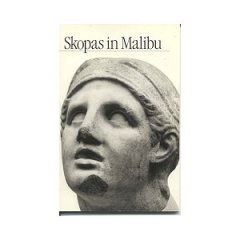
The Getty bought his sculpture in 1979, believing it was a head of Achilles by Skopas, a famous Greek sculptor. Subsequent research showed that it was a modern forgery.

In time, some of the most egregious distortions were corrected. The Getty kouros today is awkwardly labeled “Greek, about 530 B.C., or modern forgery,” and several other fakes were taken off display. But in many more cases, Houghton noted the damage to the historical record was irreversible. “Much of the suspected provenance and acquisition (including donation) information is fragmentary; and while many records can be corrected in time and with reasonably diligent attention, it will not be possible with reasonable discretion to probe into the true provenance or acquisition history or many objects in the collection.”

The truth, in other words, was lost.

Today, similar distortions  and fabrications litter the antiquities collections of America’s great museums, which are tax-exempt because their public mission is education. In doing business with the black market, museums have betrayed that mission and filled their shelves with what amount to beautiful lies.

HOT DOC: June 1984 confidential memo from Arthur Houghton to John Walsh.

Article: “An Art World Detective Story: The Getty’s Head of Achilles” Suzanne Muchnic, LA Times, 11/3/88
Looted Antiquities at American Museums: An On-Going Crime, law professor argues

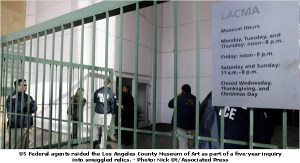
In January 2008, more than one hundred federal agents raided four Southern California museums. They seized scores of Southeast Asian antiquities that investigators said had been looted and illegally smuggled into Los Angeles before being donated at inflated values to the museums.

Since then, nothing much has happened in the case. But one legal expert is warning that the case represents a ticking time bomb for American museums, whose antiquities collections are still filled with looted antiquities.

If the raids result in convictions, the legal fallout could be devastating, argues Stephen K. Urice, a University of Miami law professor and one of the country’s foremost legal minds on cultural property.

Stephen K. Urice

“Continued possession of virtually all unprovenanced antiquities in public museums within the court’s jurisdiction would suddenly become actionable under the [National Stolen Property Act], and museums would be obligated to divest themselves of those collections promptly,” Urice writes. “Failure to do so would expose the antiquities to civil seizure and forfeiture proceedings, and the museums’ board and staff members to criminal liability.”

This doomsday scenario comes not from the alarmist fringes in the debate over antiquities but an avowed centrist. Urice is a former museum director with a PhD in archaeology, and was the founder of the University of Pennsylvania’s cultural law program. He has earned respect from archaeologists and museums alike for his dispassionate, middle-of-the-road analyses of museum policies and cultural property statutes.

That’s why Urice’s 39-page article in the Summer 2010 issue of the New Mexico Law Review is so striking. His analysis, now bubbling up in cultural circles, is too involved to present in full here. But in essence, it predicts a doomsday scenario based on a little noticed wrinkle in the NSPA, the key U.S. criminal law in antiquities looting cases.

LACMA Director Michael Govan asks federal agents to let him into the museum on the morning of the raid

In the 1977 McClain case, in which five Texas dealers were convicted of smuggling looted Mexican artifacts, prosecutors successfully asserted the antiquities were “stolen property” under US law if they were exported illegally from a foreign country with an enforced cultural property law that gives the government rightful owner of such artifacts. (According to the UNESCO Database of National Cultural Heritage Laws, 180 countries have passed one or more such statutes ).

Urice reasons that this interpretation is easily extended to most museum antiquities collections, where the bulk of objects could be considered contraband because they lack provenance (ownership history) and valid export licenses.

Museums have believed that the statute of limitations would protect them from such claims. But Urice notes that a 1986 change in the NSPA added possession of such objects as a crime. Since possession is an on-going act, Urice writes, ”even in situations where the museum had taken possession of an antiquity decades ago, there would be no statute of limitations defense.”

This hasn’t come up in past antiquities cases since prosecutors went after collectors or dealers. The Southern California raids, however, specifically targeted museums, which under McClain arguably possess stolen property. Urice argues that a successful conviction in the case would trigger a chain reaction, forcing other museums in the court district (such as the Getty) to disgorge their unprovenanced artifacts or have their officers face criminal indictment.

In Urice’s view, this is an unacceptable – and unintended — outcome of the law that would strip American museums of an important teaching tool. What to do?

Urice suggests several remedies. Among them is a law exempting museums from the potential fallout of Southern California case and other antiquities claims under the NSPA. A second one is to replace the NSPA with a new law with input from archaeologists and collectors — a likely bitter and tortuous process.

One question not addressed in the article: Are Urice’s warnings a present-day reality? After all, federal courts in New York and Texas have both found the McClain Doctrine to be the ruling precedent, making possession of looted antiquities an on-going federal crime. In order to seize the objects, the government would only need to establish probable cause that the objects were illegally exported — the burden would be on the museum to prove legal export, something that can’t be done for most antiquities. All that’s missing is a US Attorney interested in making such a bold case.

Whatever the answer, Urice’s article makes clear the legal struggle over looted antiquities did not end with the Getty scandal.

If the Southern California case moves forward, the worse may be yet to come.

HOT DOC: Urice on Unprovenanced Antiquities and the National Stolen Property Act

Our coverage of the January 2008 museum raids:

Raids Suggest A Deeper Network of Looted Antiquities

Federal Probe of Stolen Art Goes National

Roxanna Brown: A Passion for Art, a Perilous Pursuit (3-part series)