Tag Archives: antiquities

Beacon Award for Chasing Aphrodite authors

We’re honored to announce our work has been recognized with a Beacon Award from Saving Antiquities for Everyone (SAFE), the non-profit organization dedicated to the preservation of cultural heritage worldwide.

In announcing the 2011 award, SAFE cited the authors “for educating the public about how museum practices affect the preservation of cultural heritage. As investigative reporters at the Los Angeles Times, their dedication to uncovering the truth was essential in breaking open the case with the J. Paul Getty Museum. Through their recent book and continued effort to raise awareness online, many will learn, some for the first time, about the devastating effects of the illicit antiquities trade.”

SAFE will be presenting the award at a dinner in New York City on October 28th. You can find details on this and our other upcoming East Coast appearances here.

We’d also like to congratulate the 2012 Beacon Award Winner David Gill, the mind behind Looting Matters and soon to be Head of Humanities and Professor of Archaeological Heritage at University Campus Suffolk. We’ve followed David’s important research closely over the years and his blog is must-read for those interested in the illicit antiquities trade.

Our exchange with Hugh Eakin at the NY Review of Books

The New York Review of Books has published our exchange with Hugh Eakin about his review of Chasing Aphrodite.

For those who haven’t followed the back and forth: Eakin reviewed the book in June’s NYROB. We posted our response here. The NYROB has now published an abbreviated version of that response with a final comment from Eakin.

We took issue with Eakin’s review, which we found “begrudgingly complimentary in several places, but also curiously littered with internal contradictions and a derisive tone that went unsupported by any argument of substance.” Eakin’s contortions appeared to be colored by his competing coverage of the Getty scandal for The New York Times and his sympathy for former Getty curator Marion True, who he had profiled in the New Yorker.

In Eakin’s final comment, he writes: “Let me be clear: there is nothing grudging about my admiration for their extraordinary revelations about the Getty Museum. Contrary to what they suggest, neither I nor any other reporter could compete with them because their information was, as I wrote, all their own.”

He goes on to cite several facts that he calls “contradictory” to our account of the controversial statue of Aphrodite, which was looted in Sicily and never seriously studied during its 22 years at the Getty. Rather than contradict our account (several of the facts he cites were, after all, first reported by us), they illustrate the contradiction between Marion True’s public and private persona. For example, Eakin cites two cases in which True professed to be open to scientific investigation of the statue’s origin. But he omits True’s statement to the Getty’s own attorneys that the purpose of these activities were “to keep the Carabinieri happy that we’re doing something.” (cited on p. 202 of Chasing Aphrodite)

As we said in our response to another True empathizer, sympathy for True’s plight is understandable, but should not blind us to the troubling complexities of her actions.

Eakin concludes his comment by noting, “The leaking of information to journalists places a burden on them to countercheck the claims being made.” We agree wholeheartedly, and spent the better part of five years seeking confirmation of and context for the leaked information we obtained. They offer a complex and multifaceted account that has not been contradicted. We wish Eakin had taken similar care to paint the whole picture.

We welcome your thoughts on the issues raised in this exchange. Feel free to chip in with a comment via the link below.

Loot at the Seattle Art Museum?

While in Seattle last month for a talk at Elliot Bay Bookstore, I stumbled across an interesting piece in the Seattle Art Museum’s permanent collection of ancient art: a marble Roman portrait head of the Emperor Claudius.

Why interesting? Here’s the provenance listed for the object: “Robin Symes Ltd.; Seattle Art Museum, Norman and Amelia Davis Collection.” That’s the same Robin Symes who brokered the sale to the Getty of the looted Griffins, Apollo and Lekanis, which the museum returned to Italy in 2007. He was also the dealer who sold the Getty its famous looted statue of Aphrodite, which was returned to Italy last year. (Symes was never indicted by Italian authorities, but his name comes up repeatedly as a key player in their investigation of the looted antiquities trade.)

I asked the Seattle Art Museum for details about the object. What was known about its ownership history? Was the museum concerned about possessing an object from a dealer known to traffic in looted art?

According to museum spokeswoman Cara Egan, the Claudius was acquired in 1993 from Symes. It had not been previously published, and had no known ownership history. (The Norman Davis endowment — named for a prominent Seattle collector of ancient coins — provided the funds for the purchase.)

“We proactively contacted the Italian authorities several times beginning in 2006 to alert them about the Claudius portrait and to research the object’s provenance,” said Egan. “We have not received a response back from them.”

The museum does not have any other objects in its collection known to have come through Symes or the other prominent dealers implicated in the Italian case, Egan said. The SAM continues to actively research the provenance of the piece and welcomes new information.

Egan did not provide any details about that research. We suggest the SAM consider contacting Greek authorities, who raided Symes’ estate on the island on Schinoussa. Among the items seized during the raid were photos of dozens of likely looted objects sold by Symes.


Video: The (Slightly Whitewashed) History of the Getty Villa

While we’re off on vacation for two weeks, we thought you’d enjoy this (somewhat whitewashed*) history of the Getty Villa. Produced by the Getty for promotional purposes, it features Stephen Garrett, the Getty’s first museum director, as well as former antiquities curator Marion True, who oversaw the transformation of the original museum into the Getty Villa as we know it today. Sadly, many of the galleries were designed around objects — such as the statue of Aphrodite seen in a diagram dominating the Gods and Goddesses Gallery at minute 7:00 — are no longer part of the Getty’s collection.

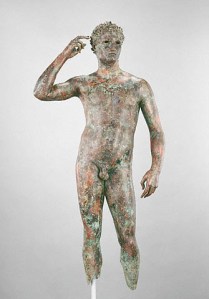
*Whitewashed: Missing from the glossy promo video are many of the less flattering facts about the Getty’s history — J. Paul Getty started the museum as a tax dodge, not because of some philanthropic instinct. He left many of his most important works, like the Landsdowne Herakles, outside in the elements for years. The world’s richest museum charges for $15 for parking, despite Getty’s explicit wish that his museum be free of charge for admission and parking. Worst of all: the governing metaphor of the site’s $275 million redesign is that of an archaeological excavation. Unmentioned is the irony that most of the objects on display were illegally ripped from just such an archaeological site. While it pretends to celebrate archaeology, the Villa is in many ways an affront to it.

Notes on a Scandal: Our Advice for Italy and American Museums

The Art Newspaper is preparing an article looking back at the looting scandal that erupted between Italy and US museums in 2005 and continues today. They’ve asked us what advice we might have for both parties.
Here’s what we had to say:
“Now is a critical time for both parties. These next few years will determine whether the spirit of cooperation achieved after a painful period of scandal will amount to more than a mere pause in the antiquities wars. Both sides must to work hard to ensure it is a lasting peace.
Italian authorities helped promote dramatic changes in collecting practices in the United States. They should resist the temptation to continue strong-arm tactics (see Padgett), which will ultimately lose them the public support they have enjoyed. Rather, they should build on their success by extending the collaboration agreements they forged with the Met and the Getty to all American museums open to the exchange of cultural property and conservation know-how. They should continue to extend the period allowed for long-term loans, and find new ways to share their remarkable collections. Finally, they should find a way, within the bounds of the legal process, to publicly release the Medici archives and other evidence of the illicit trade. Museums should confront the truth, not live in fear of the next Polaroid to be leaked from the archives.
American museums have made remarkable changes in a relatively short period of time, rejecting the illicit trade and embracing a new era of loans and collaboration. To indicate their commitment to this path, they should double down on their efforts at transparency, publishing their complete antiquities collections online with detailed provenance information available to the public. They should take a proactive role in investigating their own ancient art, treating it with the seriousness they do their provenance research of possible Nazi loot. They should disclose the troubling information they are likely to find as a gesture of their good faith embrace of reform, and as an opportunity to build collaborative relationships with foreign governments like Italy.
Two key events will provide both sides the opportunity to build trust and show their embrace of the new ethos: The trial over the Getty Bronze and the Michael Padgett case. Italy and the Getty should find a way to settle their dispute over the bronze outside of court, using the principles both sides articulated in their 2007 agreement. This will involve some painful compromise. And the Padgett case should be resolved without the need for another criminal trial like that of Marion True — lengthy, destructive and ultimately fruitless.”
What’s your advice for Italy and American museums? Let us know in the comments below.

The Truth about Marion True: Our Response to Malcolm Bell’s review in WSJ

Malcolm Bell’s review of our book Chasing Aphrodite (WSJ, July 1) concurred with our central finding—that American museums fueled the destruction of knowledge by acquiring looted antiquities and using what Bell calls a “fabric of lies” to obscure their complicity in an illicit trade.
The review takes a befuddling turn, however, in Bell’s defense of Marion True, the former Getty antiquities curator at the center of the book.

Bell recommends True be hired for “a major museum position.” He is apparently unbothered by glaring conflicts of interest. As we detail in the book, True twice accepted secret six-figure loans from two of the museum’s most prominent sources of ancient art. It was those loans — not her indictment by Italy for allegedly trafficking in looted art — that ended True’s career, ruined her professional reputation and silenced many of her most ardent supporters. The ethics policy of Bell’s own university bars such conflicts, as would common sense. Yet Bell urges us to ignore them.

Archaeologist Malcolm Bell, who has led the American excavation at Morgantina since the early 1980s.

Elsewhere in the review, Bell says we “undervalue” True’s efforts at reform. In fact, we took pains to research True’s path as a reformer, and our book details many efforts that had not previously been published. For example, under the Freedom of Information Act we obtained a previously unreleased copy of her remarks before the Cultural Property Advisory Committee arguing in favor of import restrictions on Italian antiquities, a position that won her no favor with museum colleagues. Her defense of Italy’s request (which was drafted by Bell) proved influential in the panel’s subsequent decision to grant it.

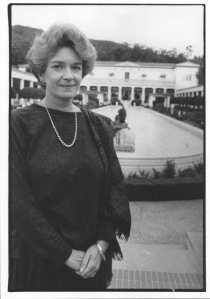
Bell also claims we “repeatedly cast doubt on her actions and motives.” In his view, after some “unwise” acquisitions, True underwent a “radical change of course” in 1995, and her subsequent reforms did far more good than the harmful practices in her past. While it is tempting to think of the curator’s story as a Pauline tale of conversion, True’s actions are more complex than that, and more troubling. Over her two decades as curator, True often acted as the reformer and the acquisitive curator at the same time. She appears to have adopted both identities, and used them to accomplish her ends as the circumstances required. It is this conflicted behavior that raise questions about True’s motives.Marion True
For example, in 1988, just months after completing the acquisition of the clearly looted statue of Aphrodite, True denounced a Cleveland dealer for trying to sell a Cypriot mosaic of similarly dubious origins. In 1993, when True was offered a suspect ancient funerary wreath in a Swiss bank vault, she took the high road, declining the offer because it was “too dangerous.” Yet months later, she changed her mind and recommended the wreath’s purchase.

In 1995, True led the reform of the Getty’s acquisition policy, but a year later violated the spirit of her reform in order to acquire the antiquities collection of her close friends Lawrence and Barbara Fleischman. (It was her colleague and confidant John Papadopoulos who considered the move hypocritical, not us, as Bell claims.)

And in 2001, long after her supposed conversion, True proposed the acquisition of a bronze Poseidon, withholding troubling information about its origins in what Getty attorneys concluded was “materially misleading.”

Are True’s conflicting actions a sign of hypocrisy? Ernest indecision? Remarkable self-blindness? Only True knows for sure, and we leave the question to the reader to decide. (In polls on this site, six of ten readers said they would not hire her, and seven in ten think she was guilty of trafficking in looted antiquities.)

In the end, we share some of Bell’s obvious sympathy for True’s plight. Until recently, she was the only American curator targeted by Italy for a practice that has long been rampant in American museums. And we share his sense of injustice that none of True’s superiors or peers were held to similar account. As we wrote in the book’s epilogue, “True, at once the greatest sinner and the greatest champion of reform, has been made to pay for the crimes of American museums.”

But sympathy should not blind us to the troubling complexities of True’s actions. Bell would do well to heed his own advice when he writes that True’s “bitter experience offers lessons to all parties.” Sadly, in the end it was not True’s conflicted crusade for reform that brought about the dramatic changes we have seen in recent years. It was her downfall.


An hour of Chasing Aphrodite on KQED’s Forum with Michael Krasny

Jason was interviewed Tuesday on KQED’s Forum, the award-winning public affairs program in San Francisco.

During the hour, Jason and host Michael Krasny touched on a variety of topics, including the fall of Marion True, the fate of so-called “orphans,” the Elgin marbles and Western imperialism. Callers had some interesting questions, including several people wondering what to do with looted objects they have come across.

You can listen to and download the program here.

Tuesday in San Francisco: The Commonwealth Club and KQED’s Forum


This Tuesday, Jason will be in San Francisco speaking about American museums and the illicit antiquities trade at The Commonwealth Club, “the nation’s oldest and largest public affairs forum.”

He’ll be in conversation with Anne W. Smith, chair of the Club’s Art Forum and a long-time art professional in San Francisco. She has served as a trustee for the Book Club of California, the Film Arts Foundation, California Lawyers for the Arts and numerous other cultural groups.

“Personally, I found CHASING APHRODITE an extraordinarily detailed, sometimes scary and ultimately fascinating narrative that should command the attention of curators, collectors, policy makers, arts administrators, art historians and museum goers,” Smith wrote in the invitation to the event.

The program starts at 6pm at the Club’s downtown venue on 595 Market Street. Tickets can be purchased at the door, through the reservation line (415) 597- 6705, or in advance here.

Also, tune in to KQED Tuesday morning at 10am to hear Jason live on Michael Krasny’s Forum.

If you can’t make it, both programs will be available as podcasts. We’ll post a link when they become available.


Marion True: Did the good outweigh the bad?

In archaeologist Malcolm Bell’s review of Chasing Aphrodite in this weekend’s Wall Street Journal, he echoes our premise that museums have destroyed our knowledge of the past by fueling the trade in looted antiquities. “A fabric of lies was woven around artifacts whose real history was suppressed or unknown,” Bell writes.

But controversially, Bell also suggests we “undervalue” True’s role as a reformer of the illicit antiquities trade, concluding:  “Her contributions far outweigh her mistakes, and were I today to be asked to recommend someone to fill a major museum position, she would be the first person to come to my mind.”

One critic has called Bell “a liar,” while another says Bell “has an agenda” but calls his review “informed and informative.”

We’re preparing a response to Bell’s review. In the meantime, we’d love to hear your thoughts. Weigh in with the poll below, and feel free to ellaborate on your answer in the comments section:

Dallas Morning News: “A Page-Turner”

In a review published on Sunday, the Dallas Morning News calls Chasing Aphrodite “a fascinating look at the long-standing ‘institutional hypocrisy’ of the acquisition policy of major American Museums.”

“Felch and Frammolino were relentless in their uncovering of the Getty’s various other lapses:  they peer into the infighting and ‘sexually charged Getty culture,’ ferreting out details in the museum’s governance, as well as the extravagant personal use of the Getty’s funds by its most flamboyant director, Barry Munitz, a former chancellor of the California State University system. All of which makes for a page-turner.”

Interesting side-note: the reviewer Kathryn Lang was a docent at the Kimbell Art Museum in Ft. Worth, which has an impressive collection of ancient art. Lang does not mention the fact, but several suspect dealers in the book helped the Kimbell form its collection. Among the ancient objects at the museum are a Greek vase purchased from Robin Symes (the dealer who sold the Getty its looted statue of Aphrodite) and several objects from Elie Borowski, whose name appears prominently in a chart of the illicit antiquities trade seized by Italian police. (See Chasing Aphrodite, p. 151)