Author Archives: Chasing Aphrodite

Kapoor Case: Investigation into Stolen Indian Idols Will Test Museum Transparency

Subhash Kapoor

The investigation of antiquities dealer Subhash Kapoor, which made international headlines this week when federal agents raided his Manhattan warehouse, promises to shine a bright light on the illicit trade in antiquities smuggled out of India and other South Asian countries — and the dealer’s ties to prominent museums around the world.

New York authorities issued an arrest warrant for Kapoor, the longtime owner of Madison Avenue gallery Art of the Past, the same day that agents with Immigration and Custom’s Enforcement seized what they said were $20 million worth of stolen Indian artifacts from his Manhattan storage facilities. The seized objects include three Chola period statues that investigators say match objects in Interpol’s database of stolen works of art. Some objects were imported into the U.S. labelled “Marble Garden Table Sets.” An additional $10 million in antiquities were quietly seized from Kapoor in January of this year.

The seized objects are likely the tip of the iceberg of the dealer’s inventory. Since 1974, Kapoor has traded in ancient art from India, Afghanistan, Southeast Asia and the Islamic world, as well as more recent art from India. A sample of his recent inventory can been seen in this 2011 catalog for Art of the Past.
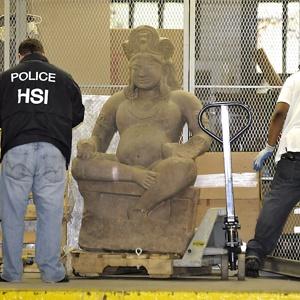
Kapoor’s legal troubles extend far beyond New York. He was detained in Germany in October 2011 and this month extradited to Chennai, India, where he is facing criminal charges of being the mastermind of an idol smuggling ring that plundered ancient temples in Tamil Nadu. Kapoor has reportedly admitted to Indian police that he earned more than $11 million through the transport and sale of plundered Indian antiquities with his daughter and brother through a US corporation called Nimbus International.

Kapoor’s New York attorney Christopher Kane did not return a call to his cell phone on Sunday, but told the New York Post that Kapoor ““thinks of himself as a legitimate businessman, and I have no reason to think he’s not.” We’ll post any response we receive here.

As Kapoor’s legal case plays out in India, the spotlight now turns to the dozens of museums and collectors who did business with the dealer. Kapoor boasts in his bio that he has sold antiquities to a long list of leading museums, including The Metropolitan Museum of Art, New York City; Arthur M. Sackler Gallery, Washington D.C.; Los Angeles County Museum of Art, Los Angeles; Museum of Fine Arts, Boston; Asian Art Museum of San Francisco, San Francisco; The Art Institute, Chicago; Virginia Museum of Fine Arts, Richmond; Musée des Arts Asiatiques-Guimet, Paris; Museum fűr Indische Kunst, Berlin; The National Gallery of Australia, Canberra; Royal Ontario Museum, Toronto; and the Asian Civilisations Museum, Singapore.
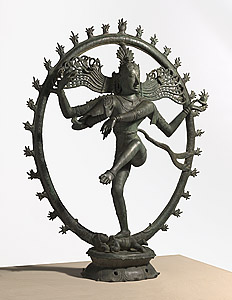
Investigators have tied a Dancing Shiva at Australia’s National Gallery to Kapoor, the New York Post reported.

In a press release, American investigators asked Kapoor’s clients to check their collections and be in touch. “Some of the artifacts seized during this investigation — which are stolen — have been displayed in major international museums worldwide,” ICE’s Homeland Security Investigations team said in a press release. “Other pieces that match those listed as stolen are still openly on display in some museums. HSI will aggressively pursue the illicit pieces not yet recovered.”

The press, however, is not waiting for museums to come clean. The New York Times queried several museums last week about Kapoor objects in their collections. And on Saturday, The New York Post reported that a statue of Shiva as the Lord of Dance at the National Gallery of Australia has been tied to the investigation.

Not all museums that did business with Kapoor will be in trouble, of course. The Freer-Sackler Gallery, for example, told the New York Times that the only object they had acquired from Kapoor was a 20th century Indian necklace. The two objects in the Boston Museum of Fine Arts’s online catalog linked to Kapoor Galleries, operated by Kapoor’s brother Ramesh, are 17th century Indian paintings.

The Met’s response to the Kapoor investigation has been rather cavalier. Despite the admonition from the federal authorities, the museum will not review its Kapoor antiquities, Holzer told the Times, noting that the collection had long been posted on the Met’s website. One might think that recent history would have taught Met officials time and again that open possession of allegedly stolen property is no protection from claims both legal and moral.

The Met tried to deflect the questions from the press, telling the NY Times that most of the 81 pieces they had acquired from Kapoor were drawings from the 17th, 18th or 19th century highlighted in the 2009 Met exhibit, Living Line: Selected Indian Drawings From the Subhash Kapoor Gift. “They do not appear to be the type of items that they are worried about,” said museum spokesman Harold Holzer.

But a search of the Met’s online catalog reveals several antiquities from Kapoor that authorities likely will be interested in — none have documented ownership histories dating to 1972, when India began controlling exports of ancient art.
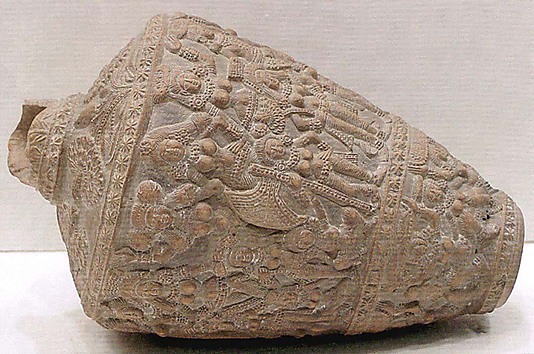
1st Century BC ceramic Bengal pot (2003 Gift of Subhash Kapoor)
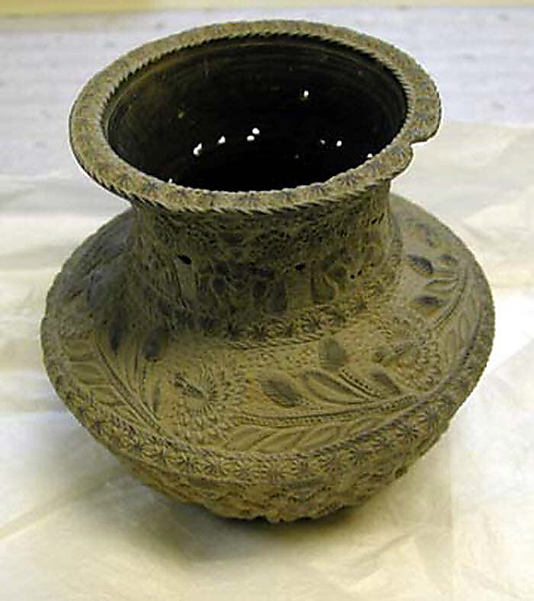
1st Century BC Bengal Vessel (2001 Gift of Subhash Kapoor)
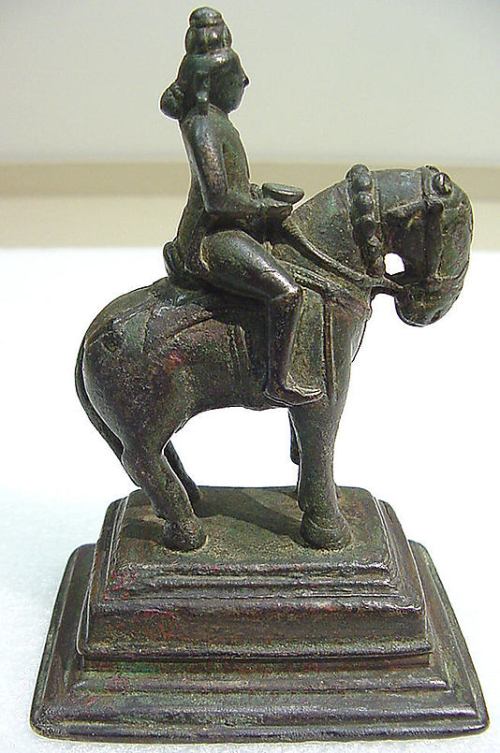
The God Revanta Returning from a Hunt (2003 Gift of Subhash Kapoor)

Yakshi Holding a Crowned Child (2002 Gift of Subhash Kapoor)

Curiously, the Met also has five stone sculptures from Kapoor in its study collection, here and here, for example. They resemble ancient pieces but are labeled by the museum as “20th Century.” All were acquired in 1991. Did the museum acquire these objects from Kapoor, only to discover they were modern forgeries? We’ve asked Holzer for more information.

UPDATE: Harold Holzer tells us, “The group of 20th-century forgeries was accepted as a gift along with the other Kapoor gifts for our study collection, and always identified as such.”

To be fair to the Met, their online collection is far more transparent than that of several other American museums tied to Kapoor. The Toledo Museum of Art told the NY Times that it had received a gift of 44 terracotta antiquities from Kapoor in 2007. The only object that appears in a search of the museum’s online collection is a terracotta vessel purchased in 2008. The museum published the object in 2009 in a book of the museum’s masterworks, but offers no ownership history other than saying it was created in Chandraketugarh, an archaeological site north-east of Kolkata. Where was it before Toledo? What are the ownership histories for the other 43 objects acquired from Kapoor?

We’ve asked the Toledo Museum for that information, but apparently such requests are a low priority there. More than a month ago, we requested information about objects in their collection tied to two other dealers who investigators have connected to the illicit trade — Edoardo Almagia and Gianfranco Becchina. We have still not received a response.

Several years ago, the Getty Museum took a similar stance when faced with questions about objects in their collection. Stonewalling only convinced the public of the museum’s bad faith, and fueled the zeal of investigations by foreign governments and the media. Museums would be smart to heed those lessons from the Getty case, lest they relive the consequences.

Like the Almagia investigation, the Kapoor case will be a test for how transparent American museums can be in the face of unpleasant questions about ancient art in their collections. Will they take a proactive approach to investigating their collections, as they have done with objects with unclear provenance from World War II era? Or will they stonewall and encourage others to do the investigation for them?

Hat-Tips: Several people have been covering the Kapoor case for months, and you should read their detailed coverage. The Indian press, especially the Times of India, has been covering the case for months. Damien Huffer, whose excellent blog It Surfaced Down Under tracks the illicit antiquities trade in the Southern Hemisphere, was one of the first to pick up the story, a distinction that earned him repeated legal threats. Paul Barford’s blog has also diligently tracked reports on the case, adding his salty commentary along the way. Most recently, The New York Post broke the news of the Manhattan raids last week and has followed-up with some additional scoops.

UPDATE: Attorney Rick St. Hiliare has some very interesting thoughts on what the Kapoor case reveals about antiquities smuggling networks: “Examining the import and export methods surrounding the Kapoor case not only can aid police in the United States and India in their current investigations targeting the alleged idol thief, but it can help policymakers, criminologists, and scholars think about better ways to detect, uncover, interdict, and prosecute future crimes of heritage trafficking.” Hilaire also offers excellent analysis of the bills of lading allegedly used by Kapoor’s enterprises, revealing how these objects were able to enter the U.S. under false premises. He goes on to say the case might give a boost to our WikiLoot project, which is designed to suss out these very matters. Worth reading his entire post.

Castor and Pollux, Forgeries and Loot: Reflections on the Arnold Peter Weiss Case

original art by Elli Crocker (http://www.ellicrocker.com)

Looting and forgery are the Castor and Pollux of the antiquities trade, bound together by a love of murky origins.

That appears to be the lesson of the guilty plea earlier this month by coin dealer Dr. Arnold Peter Weiss, which came with a twist – the “looted” coins he was hawking at the Waldor Astoria were actually forgeries.

Dr. Arnold Peter Weiss

But why would Weiss brag so openly – to both a confidential informant and an undercover agent posing as a buyer, according to the complaint – that the ancient coins he was trying to sell had been recently looted in Sicily? Wouldn’t that fact lower the value of the coins and made them harder to sell?

And how could the three coins – which were proved forgeries by a scanning electron microscope only after being found authentic by several experts – fool so many, including Weiss and his Nomos partners and Herbert Kreindler, Weiss’ reported source for the coins? Who was duped, and who was complicit in the fraud?

The answers may come out as the on-going investigation unfolds in the coming months. But the case of another famous fraud, the Getty Kouros, offers some interesting hints.

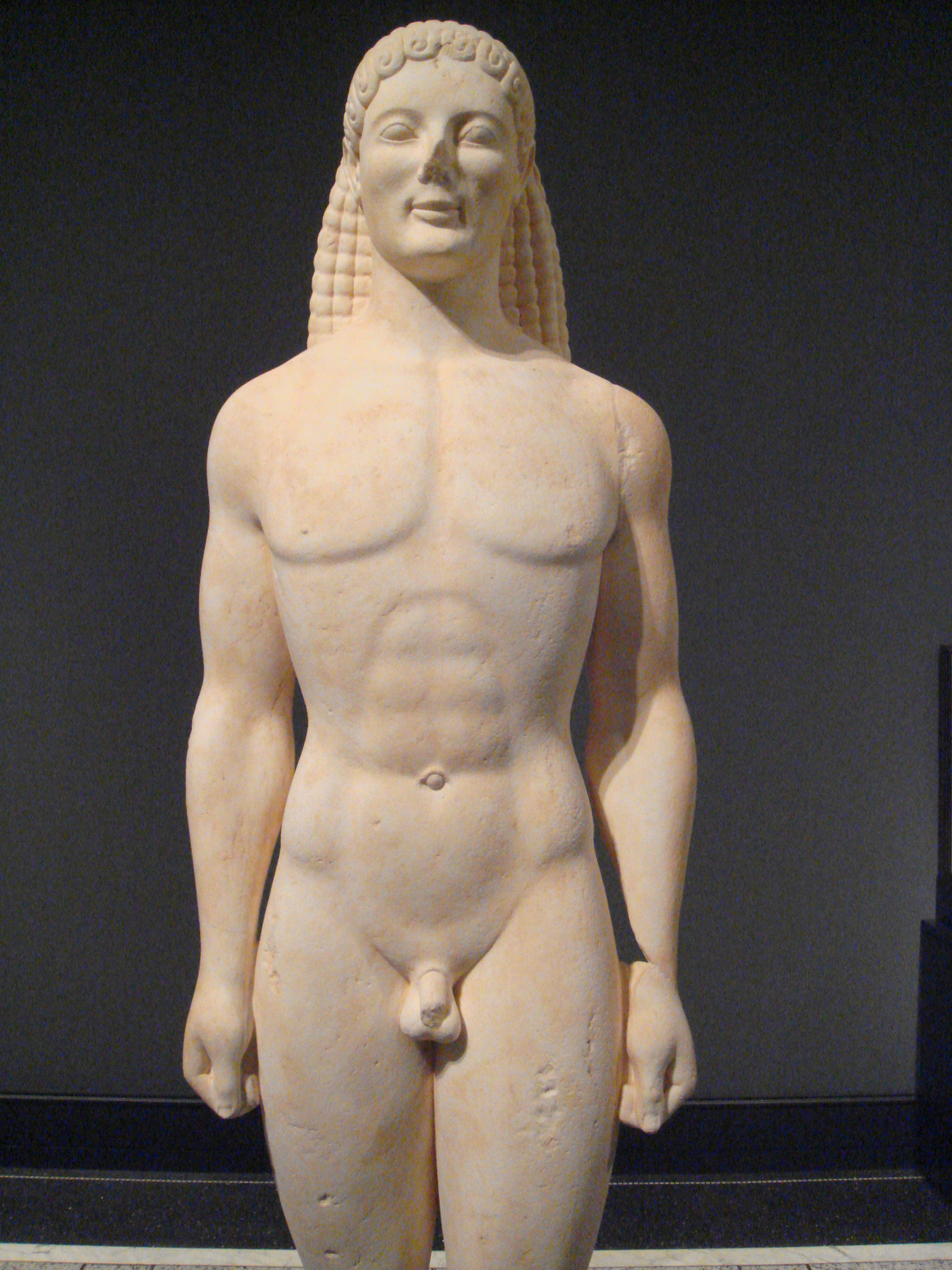
The outlines of the Kouros story are well known: In 1985, the Getty paid $9.5 million for a 7-foot-tall Greek marble youth with a thoroughly detailed ownership history, amid speculation that the piece was a modern forgery. There are only a dozen such intact kouroi, making the Getty’s a truly remarkable find. The question of its authenticity has been hotly debated ever since. Today most are convinced the statue is a fake, though it remains on display at the Getty Villa, labeled “Greek, about 530 B.C., or modern forgery.”

In the opening chapter of his bestselling Blink, Malcolm Gladwell suggests Getty officials were blinded by bad science in their decision to buy the statue. In Chasing Aphrodite we revealed that science was the public reason to justify the purchase, and the one given to the Getty board. But behind the scenes, museum officials concluded the Kouros was authentic because they heard from the dealer that it had been recently looted in Sicily.

As we write in Chapter 4:

Speaking in confidence, [Sicilian dealer Gianfranco] Becchina had cautioned [Met curator Dietrich] von Bothmer to ignore the cover story about the statue coming from Greece or being in the family of a Swiss doctor. He suggested instead that the statue had been found recently in Sicily, an origin that would explain many of the stylistic anomlies that had initially troubled him. It also suggested that the piece was freshly excavated and, by extension, authentic. The statue’s suspiciously voluminous ownership history must have been forged to cover the kouros’s illicit origins. Bolstered by the new information pointing to authenticity, [Getty director John] Walsh once again recommended the purchase of the kouros.”

This illustrates the first lure of loot: In a market rife with forgeries, evidence of looting is the ultimate badge of authenticity.

It is worth noting that one of the Weiss coins in question was a silver decadrachms of Akragas. Before being confiscated by authorities, it was given a record-setting estimate of $2.5 million because it was one of only 12 known such coins. That happens to be precisely as rare as an intact Kouros. When trying to explain the appearance of a rare masterpiece out of thin air, looting is the most palpable answer. The only other is forgery.

The second lure of looting is the uncanny appeal that “fresh” antiquities have long had for collectors and museums. Few have explained this better than Bruce McNall — who coincidentally used to employ Weiss’ Nomos business partner Eric McFadden.

McNall proved prescient in our January interview  about the Weiss case:

“[As a collector in the 1980s,] any time you find something brand new, it’s sexier,” he said. “Otherwise it’s been around, it’s been seen, and maybe there’s a reason someone else hasn’t bought it…Nobody wants some old broad that’s been around on the town for too long.”

Ironically, McNall thinks that may explain the case of Arnold Peter Weiss, who was allegedly recorded by a confidential informant bragging that he knew the 4th century BC silver tetradrachm from Katane he was selling was “a fresh coin, this was dug up a few years ago” in Italy. Such talk is common in the coin trade, said McNall, but “90% of the time it’s just a sales tool.” McNall also finds to be credible the rumor circulating in the coin world that one or more of the coins Weiss was offering for sale may have been fakes.

Perhaps another lesson from the Weiss case, then, is that in the world of ancient coins, these two lures of loot appear to be as strong today as they were in 1985.

You can find all our coverage of the Weiss case here.

The Case of the Dodgy Drachmas: Arnold Peter Weiss, Prominent Rhode Island Surgeon, Pleads Guilty; “Looted” Coins Prove Forgeries.

Dr. Arnold Peter Weiss

Dr. Arnold Peter Weiss, a prominent Rhode Island hand surgeon and dealer in ancient coins, pleaded guilty in New York City Tuesday to three counts of attempted criminal possession of ancient coins he believed had been recently looted from Italy.

“Attempted” possession because the coins in the case were not actually looted — nor ancient. In Tuesday’s court hearing, the New York District Attorney’s office revealed that all three coins in the case were in fact modern forgeries.

Weiss was arrested at the Waldorf Astoria hotel on January 3rd while trying to sell ancient coins at the 40th annual New York International Numismatic Convention. According to the criminal complaint, Weiss believed at least one of the coins had been recently looted and smuggled out of Italy. “There’s no paperwork, I know this is a fresh coin, this was dug up a few years ago,” the complaint quotes Weiss telling a confidential informant. “This was dug up two years ago. I know where this came from.”  Weiss told an undercover investigator that he also knew the coins belonged to the government of Italy, which claims state ownership of all antiquities found since 1909.

On Tuesday, Weiss entered a guilty plea to the three misdemeanor counts and was sentenced to 70 hours of community service, which he will serve as a physician treating under-insured patients in Rhode Island. He will pay a $1,000 fine for each of the three coins in the case and forfeit another 23 ancient coins seized from him at the time of his arrest.

The court also required Weiss, the former treasurer of the American Numismatic Society, to write a detailed article in the society’s magazine detailing the widespread practice of dealing in coins with unclear ownership histories. It will describe the corresponding threat to the archaeological record and propose solutions for reforming the coin trade. In a statement, a spokeswoman for the Manhattan District Attorney’s office said, “Thanks to today’s disposition, the article to be written by the defendant for a coin trade magazine will raise needed awareness about unprovenanced coins, and will promote responsible collecting among numismatists.” We’ve asked Weiss’ attorney for a comment and will post anything we receive.

We were the first to report the details of the criminal complaint here, and have written about Weiss’ ties to the Rhode Island School of Design, where he was board chairman and a prominent donor;  to Harvard University Art Museums, where he was a member of the collections commitee from 2006 until his arrest in 2012; and to the Getty Museum in Los Angeles, where one of his partners at the Swiss coin dealership Nomos AG got his start. We also reported the case had started with federal investigators with Immigration and Customs Enforcement.

We’ll have more information about the case and its implications soon.

UPDATE: The DA’s office informs us that the New York Post report that the fake coins would be destroyed is inaccurate. The coins will be preserved and the investigation is on-going.

UPDATE: Paul Barford makes a good case that the fake coins seized by the DA should be retained for future investigations rather than destroyed, as the court has ordered. [See clarification from DA’s office above.] Given the facts of this case, numerous private collectors and museums that did business with Weiss must be wondering how many other ancient coins that passed through his hands could also be forgeries.

UPDATE:Rick St. Hilaire has an interesting analysis of the legal implications of the Weiss case, calling it “a breakthrough for the successful application of state criminal laws, as opposed to federal criminal laws alone, to combat international cultural property trafficking.”

NOTED: Peter Tompa, the numismatist and lobbyist for coin collectors at Cultural Property Observer, has yet to mention the Weiss verdict — or the existence of the case at all. The Ancient Coin Collector’s Guild has not mentioned the verdict either. Paul Barford has a longer list of ancient coin-oriented websites with no mention of the verdict. Why?

NOTED: Larry Rothfield has some good questions about the next steps in what the DA’s office has described as “an on-going investigation.”

Looters of the Gods: The Getty’s Golden Wreath is Featured in Documentary on Museums and the Illicit Antiquities Trade

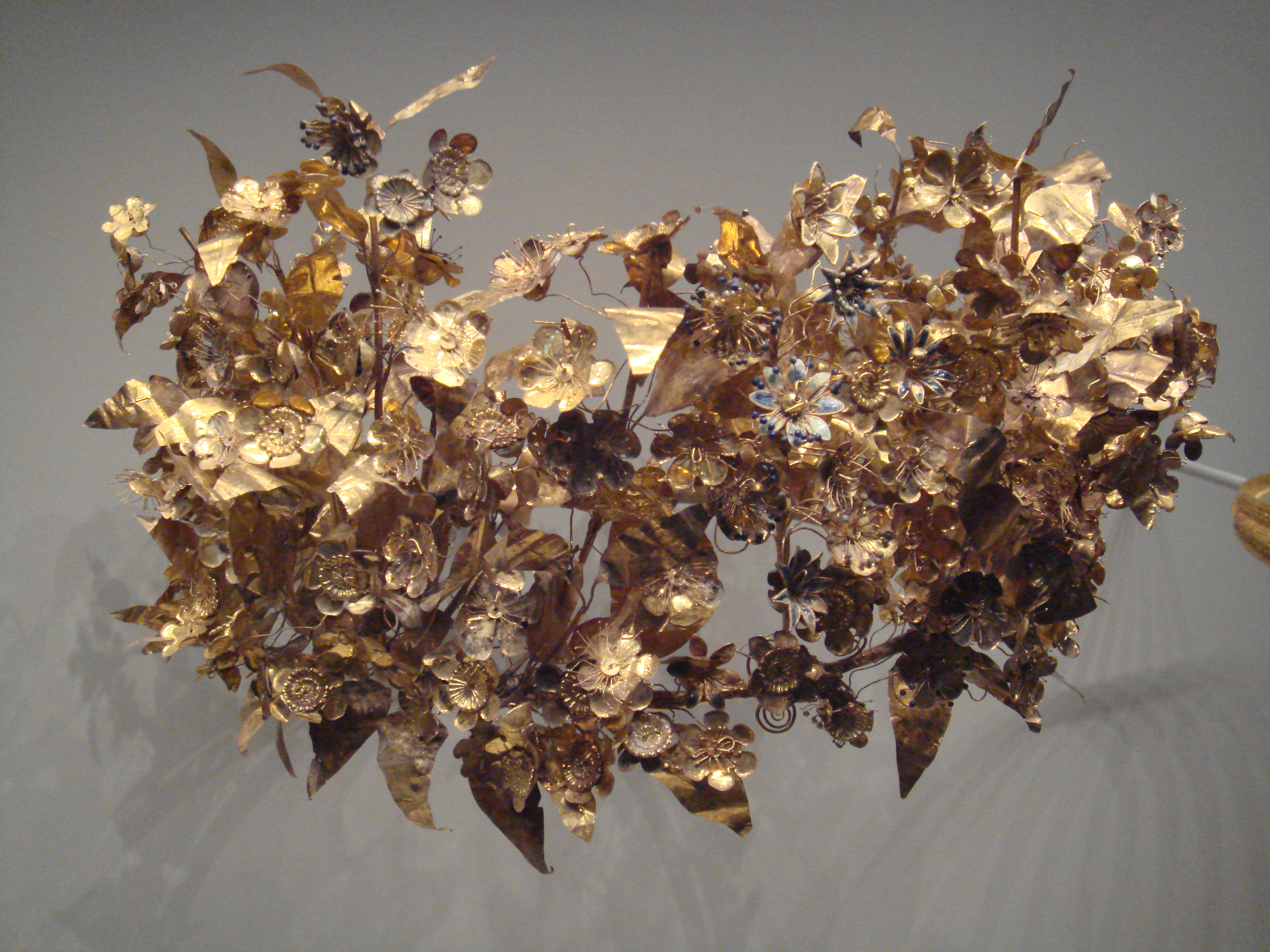
The Funerary Wreath

As we were prowling the alleys of Rome on Monday discussing our plans for WikiLoot, a prize-winning documentary film was airing on Italian national television about the role of American museums in the illicit antiquities trade.

“Looters of the Gods” is a 2010 DocArt production by Italian director Adolfo Conti that focuses on the Getty Museum and its acquisition of a gold funerary wreath in 1993. As we revealed in our 2005 articles in the LA Times, Marion True was first offered the golden wreath in a Swiss bank vault by two men claiming to represent Swiss collectors.  She concluded the men were impostors and had done “tremendous damage to a great object.” “I hope you will find a possible buyer for it,” True wrote to an intermediary in the deal, “but I am afraid that in our case it is something that is too dangerous for us to be involved with.”

Four months later, True and her bosses at the Getty changed their minds and agreed to acquire the wreath for $1.15 million, sending their payment to a bank account in the name of the impostors, who investigators later determined to be Greek smugglers. The funerary wreath had been recently looted from the royal Macedonian tombs of Northern Greece, possible from a relative of Alexander the Great.

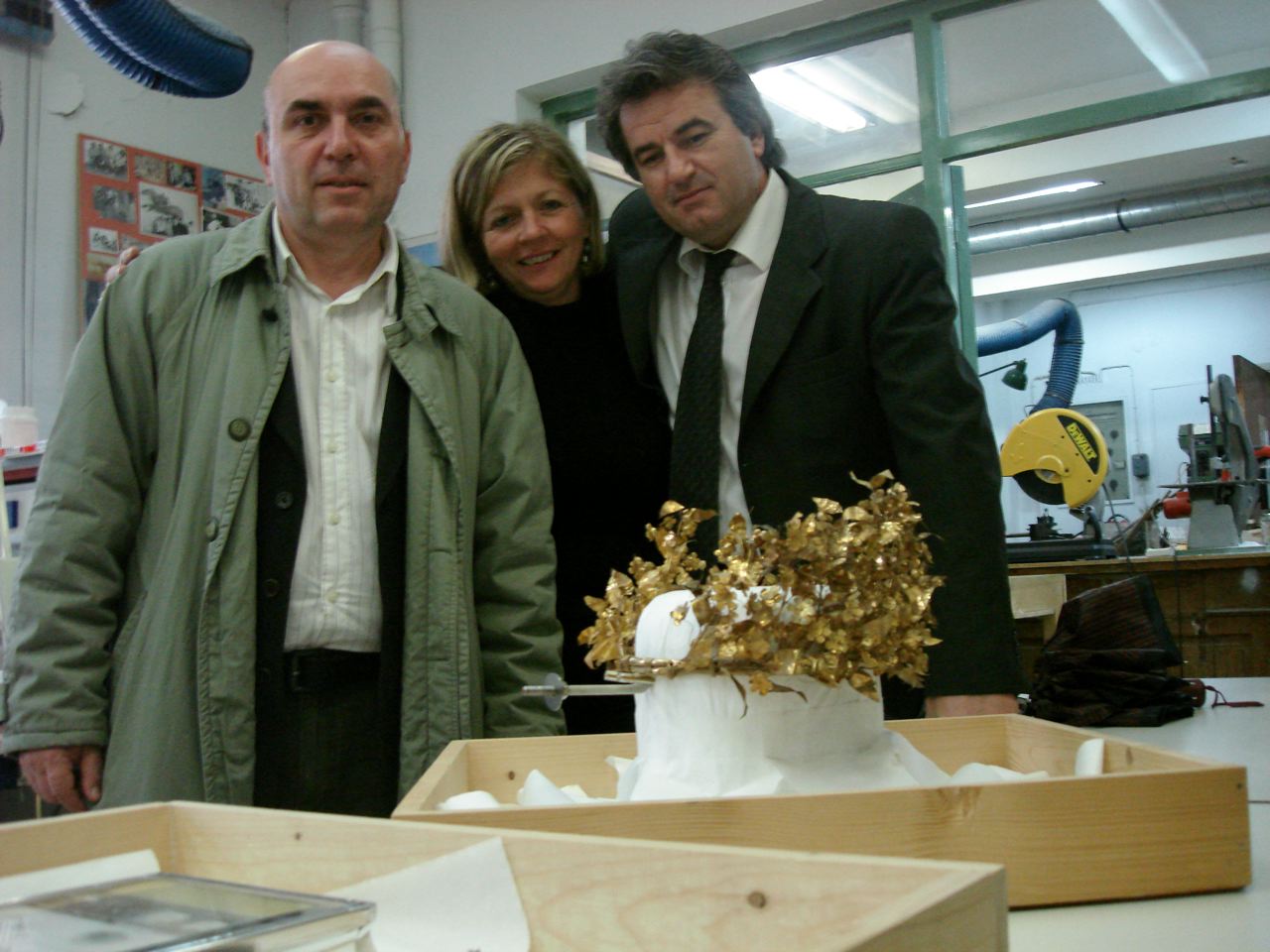
Nikolas Zirganos with members of the Greek art sqaud, celebrating the return of the golden funerary wreath.

The documentary film follows the investigation of our friend Nikolas Zirganos, the Greek investigative reporter who we teamed up with to crack the case of the funerary wreath. His intrepid reporting pieced together the criminal investigation by Greek and German authorities that ultimately led to True’s criminal indictment by Greece. The time limit on the charges expired before she could go to trial, but in December 2006, the Getty agreed to return the wreath to Greece. The film also features Italian prosecutor Paolo Ferri and his investigation of the Getty and other American museums in the illicit antiquities trade.

Here’s a preview of “Looters of the Gods”:

Off to Amelia: Chasing Aphrodite Honored at Art Crime Conference

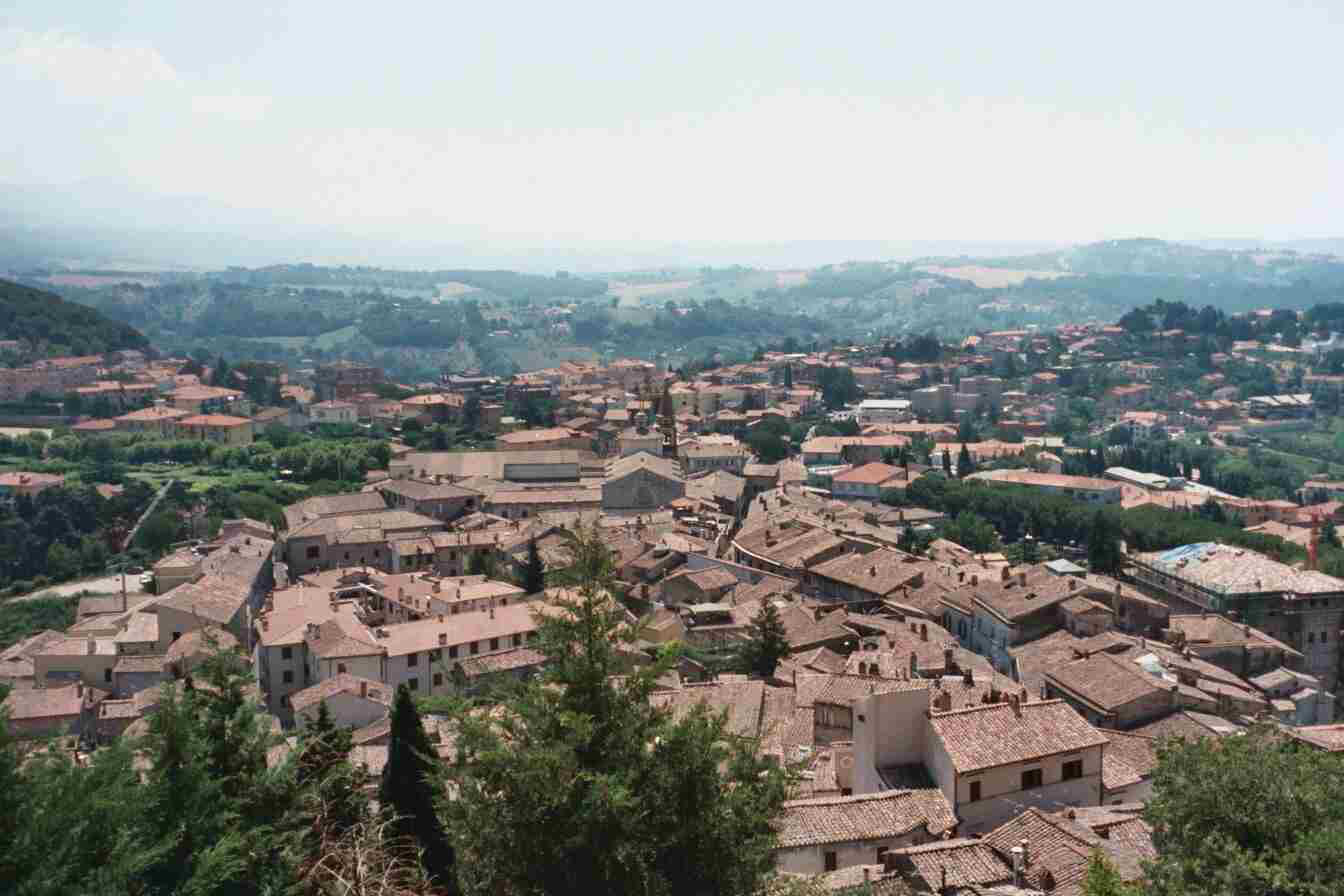
We’re off to Amelia, Italy this week for the 4th annual conference of the Association for Research into Crimes Against Art (ARCA).

The program includes talks by some of the leading experts on the illicit antiquities trade, including Italian journalist Fabio Isman discussing the latest developments and Italian prosecutor Paolo Ferri on the use of international law to combat the trade.

There will also be panels on the display of contested antiquities at museums, strategies for combatting the illicit trade, a review of recent legal cases and a panel on forgeries and fraud.

On Saturday, Chasing Aphrodite will be honored with the Vallombroso Award for Art Crime Research. Jason will be accepting the award and discussing his latest initiative to combat the illicit trade, WikiLoot. It will be an opportunity to talk about the potential for the project, as well as the concerns some have expressed.

We’ll take good notes and will report back from Amelia soon. Ciao!

Letter to Cuno: Dismissal of Educators Sparks Discord Inside Getty Museum

Last month, more than 50 Getty Museum staff members signed a letter to Getty Trust CEO James Cuno and his bosses, the Board of Trustees, objecting to recent cuts in the museum’s education department. (See below for full text.)

For those not familiar with the Getty culture, grumbling about management has long been a varsity sport there, but such open displays of dissent are more rare.

The anger is focused on Cuno’s decision to eliminate 12 of the Getty’s 17 gallery teachers — a unique position in the museum world that put the Getty in a leading role in arts education. The paid teachers, many of whom had Masters in the arts, will be replaced by volunteer docents, “educated individuals who themselves want deep experiences with art, and who will in turn seek to deepen student and visitor engagement with artworks,” according to the posted Getty job announcements. (We’ve previously written about Cuno’s cuts here and here.)

image from hyperallergic.com

The cuts will allow more visiting students to get guided tours and are aimed at saving some $4 million annually than can be used for new acquisitions of art, the Getty has said. But some from inside and outside of the Getty have questioned the wisdom of targeting educators. (Be sure to read the comments at those links, including the response from Cuno.)

Several museum staffers have contacted us in recent weeks with their concerns, calling Cuno’s less-is-more position “Orwellian.” The running joke among staff is that with Cuno’s focus on acquisitions, the Getty should change its web address from getty.edu to getty.acq. Some have suggested other areas for savings in the Getty’s $270 million a year operation. For example: Timothy Potts, who will take over as director of the Getty Museum in September, recently asked that the Getty replace the furniture in his future office. The existing furniture — which Potts referred to as “Pee Wee Herman furniture” — has been moved out and mid-century modern pieces are being sought to replace them. Also: The Skidata ticket machines being installed in the garage for the new automated parking system were recently sent back to the factory for custom painting, a museum staffer tells us. It appears they come in two standard colors, neither of which matched the Getty’s travertine. (This is not to mention the six-figure salaries of top Getty officials.)

Such examples may seem petty, but it was symbolic excesses amid belt-tightening that fueled the deep anger at Cuno’s predecessor Barry Munitz, who was ultimately driven from his job in 2006 for self-dealing with Getty funds. (Ironically, back then Getty museum officials were also upset that Munitz was too focused on hobbies like education policy, and not willing to dedicate the necessary funds to build the Getty’s collection.) It will be worth watching how these sentiments unfold in the months before the arrival of Potts.

The Getty Board

Here is the full text of the May letter from museum staff, with Cuno’s response below it:

May 4, 2012
Dear Dr. Cuno and the Board of Trustees:

We support and share your objective “to maintain the Museum’s very high standards of excellence in all areas.” While we will strive to maintain these high standards in the face of staffing reductions, the drastic and sudden changes to the Education Department’s structure and philosophy will significantly jeopardize our efforts.

The Getty Museum has been at the forefront in the museum field not only for its excellent exhibitions and collections, but also for our approach to education in both theory and practice. A key aspect of this has always been our professional and highly-trained gallery teaching positions. All of the Gallery Teachers and program staff have extensive knowledge of art history, child development theories, and teaching pedagogy, particularly as it relates to object-based and informal learning. Like all of the professionals in the museum, we stay abreast of the research which determines best practices in our field. Indeed, after 20 years of research, our colleague Elliott Kai-Kee has co-written the book on what exemplary gallery teaching can and ought to be. Across the country, colleagues in other museums have used the ideas articulated in the book as a model for the kind of transcendent experience they want their visitors to have in their own galleries. Yet, we find ourselves suddenly in the midst of deep changes to the Getty’s teaching philosophy without a rigorous analysis of how best to meet the institution’s current priorities without sacrificing quality.

The removal of the Gallery Teachers and the plan to replace them with docents with a mere four months lead time is emblematic of the nature of these changes. The Getty’s professional Gallery Teachers are unique in the museum world and have been symbolic of the institution’s deep commitment to quality educational experiences, particularly for school children. Many of the Gallery Teachers have master’s degrees in art history, fine art or classical studies, all of which result in unique perspectives that provide insight into the complex history or creation of an object. Moreover, the Gallery Teachers’ deep knowledge of the collection, in addition to their status as employees, allows for the much-needed ability to teach any tour at a moment’s notice for any type of audience—from a VIP group to students who are English language learners. We agree in holding our curatorial and conservation staff to the highest standards, and we are disappointed that the front line professionals who interact with the public will no longer be held to the same high standards.

After the staff meeting on April 4, we were optimistic that the administration’s stated support for arts education in LAUSD would translate to a commitment to the quality of students’ experience in our galleries. Instead, the sudden elimination of key staff will result in the hurried substitution of volunteers for experienced educators and an overall reduction of professional development programs for teachers. We are deeply concerned that volunteers who may not have had any prior teaching experience will have a difficult time learning about our collection and the needs of the diverse LAUSD school population within a two-month training period. Unfortunately, the students of LAUSD will once again be the victims of cuts to professional, highly trained teaching staff.

It is deeply unfortunate that the standards that make the Getty Museum a leader in the field of education have now been compromised. In the future, we hope to work together to devise effective, thoughtful strategies for teaching in the galleries that would meet our core mission while maintaining a standard of excellence.

Sincerely,
Getty Staff Members

Cuno responded on June 1 with the following email to museum department heads:

Dear Colleagues,

As you may know, I received a letter from numerous Museum staff members regarding the recent changes in Museum Education. It is very important that everyone have a chance to express their views on decisions taken by Getty administration and I very much appreciated the candor and constructive tone with which the letter was written.

Since there were no typed names and departmental affiliations to help identify the letter’s signatories with any confidence, I am asking you to share this with your colleagues if you think it is appropriate.

Our goal in transitioning from a wholly professional gallery teacher staff to a mixture of professional and volunteer teaching staff was to provide many more guided tours for our school group visitors than we currently provide.

Last years total attendance in our School Programs was 114,000. Of these, 74,000 were Title One students (a U.S. Department of Education program that provides support for school districts with the highest student concentration of poverty) and 40,000 non-Title One. Of the total attendance, only 39,000 experienced guided tours by gallery instructors; 67,000 were self-guided, or experienced the museum and its galleries with minimal assistance from us. An expanded docent teaching corps, carefully selected and expertly trained by our experienced gallery instructors, along with the development of multi-media tours, will enable us to meet our goals within the constraints of our budget.

I have the greatest confidence in our Museum educators. Under Toby’s leadership, they attract and train an excellent corps of volunteer teachers. And given that volunteer-led tours are the norm in our profession, our shift of emphasis positions us to play a leadership role in this aspect of Museum Education. We are grateful to the contributions our gallery instructors have made and will make in this regard. Having the ability to serve more of our visitors with a guided tour at a level of instruction appropriate to their needs was an important consideration as we thought about reorganizing the gallery instruction program.

Thank you again for your letter. And thank you for your good work.

Sincerely,

Jim

The Antiquities Trade as Organized Crime: Glasgow Team Digs Deep into the Market For Ancient Art

An exciting new research effort has been launched by some of the most prominent researchers of the illicit antiquities trade.

Simon Mackenzie, Neil BrodieSuzie Thomas and Donna Yates* at the University of Glasgow have received £1 million over four years from the European Research Council to pursue new research of the illicit trade in ancient art.

The program, called “Global Traffic in Cultural Objects,” will be based at Glasgow’s Scottish Centre for Crime and Justice Research. Here’s how the team describes their goal:

“National and international laws intended to regulate or suppress the trade have been only partially successful, and the illicit trade has been linked to further criminal problems such as corruption and physical violence…By developing new empirical approaches and drawing upon criminological theory, this project will work towards a regulatory regime that goes beyond straightforward law enforcement, allowing the legitimate exchange of cultural objects while suppressing the illicit market.”

The project’s four main endeavors are:

1. Mapping and measurement. Through a series of case studies, the project will examine publicly available sales data to establish whether they can be used to estimate flows of illicit material through the market, and therefore to assess the effectiveness of any implemented regulation.

2. Qualitative data-gathering and analysis. Through ethnographic interviews of market agents such as dealers, collectors, museum curators and university academics, the project will gather information about the trade in licit and illicit cultural objects, and opinions about suitable regulation and opportunities for novel regulatory interventions. It will also, by means of a major case study, trace the path taken by a defined category of illicit material from ground to market, thereby offering greater depth to the analysis.

3. Regulation theory and practice. There will be a comprehensive review of the academic and policy literature as regards comparable transnational criminal markets and their regulation. Regulatory successes and failures will be identified, and considered in relation to the traffic in cultural objects, utilizing information obtained through themes 1 and 2. The project will also consider whether the traffic in cultural objects is ‘knotted’ together with other criminal activities in such a way as to render it insoluble as an isolated problem.

4. Knowledge mobilization. The project will establish a website that will make available project outputs and data, and that will also contain an ‘encyclopedia’ of material relevant to the project and to the traffic in cultural objects more generally.

Simon Mackenzie

We recently interviewed Simon Mackenzie, a criminologist who has been studying the antiquities trade since 2002, about his perspective on the illicit antiquities trade. (We’ve edited a bit for clarity and length.)

Chasing Aphrodite: What is known and not known about the illicit antiquities trade? How does our knowledge of it compare with our knowledge of other types of crime?

Simon Mackenzie: Compared to the trade in narcotics, we know virtually nothing. The narcotics trade has been heavily researched. There are specialist areas within the fields — country experts, modes of regulation. There’s been all sorts of research into the people producing drugs, the mechanisms for supply and demand. For people studying cultural heritage traffic, its a good place to start. The trade wild life is more comparable to the antiquities trade in terms of the state of research. There is some research and lots of policy activity. We see a remarkably high level of NGO involvement in awareness raising around wild life trafficking.

People are always talking about the illicit antiquities trade as something that is under-researched, with a small number of people working in the field. But when you think about it, it’s not too bad. Clemency Coggins really started the field in the 1960s. The last 40 years, from UNESCO onwards, has been a period of relatively high activity compared to other criminal problems – quite a lot has happened. There’s been increasing regulation of museums and ethical codes adopted. Once you start looking into the literature — for example, ethnographic studies of markets by Morag Kersel , the work of Christopher Chippindale  and David Gill, Ricardo Elia, Patty Gerstenblith. It has been a small field, but there are a good spread of methodological approaches, with respectable and reliable researchers.

Neil Brodie (left)

CA: Estimates of the size of illicit trade range from tens of millions to as much as $2 billion annually. Why?

SM: It’s amusing, or depressing, or tragic. I teach a course on transnational criminal markets — human organ, radiological material, etc. The first largest international market is drugs. The second is arms. Third is everything else — wild life says it’s the third largest, antiquities says it’s the third largest, several others also claim to be the third largest. The evidence disappears and nobody has any idea how big it is. Part of our project is to create more accurate sizing statistics.
I don’t want to say it doesn’t matter, but we know there is a lot of looting going on and we have first hand accounts of widespread looting. We see regular occurrences of looted objects in Western markets, in prestigious institutions and auction houses. We know we have a serious problem here and something needs to be done about it, whether it’s $6 billion of $50 million.

CA: Is organized crime involved in antiquities trade?

SM: There is clearly organized crime in the antiquities market, as we conventionally conceive of organized crime. The more interesting question is whether antiquities trafficking is in itself an organized crime. It’s not what we would think of as organized crime on its face because the actors are often quite respectable figures. It seems counter-intuitive to say that museums and auction houses are organized crime. But look at the definition of organized crime: three or more people operating over a sustained period of time in a serious criminal way. Antiquities trafficking meets that definition. So you can make a technical argument quite easily.

The more interesting question to ask is: why do we care whether it’s organized crime? The policy response to organized crime, the regulatory response, is much greater, more of an international threat. So the distinction can be quite important on a policy basis.

The reason why organized criminals are involved in the antiquities trade is because it’s under-regulated. But you can take the organized criminal out of the antiquities trade and you’ll still have looting. It’s a story of supply and demand on an international basis. The trade attracts organized criminals, but they don’t define the shape of it because it is created and sustained by more conventional trade actors.

Suzie Thomas

CA: The trade in illicit antiquities is often seen, especially in the United States, as a victimless crime. The public sometimes has trouble grasping the harm. Your thoughts?

SM: It’s difficult. The general public is not particularly interested in the context of any particular object dug up in a far flung corner of the world. And yet, museums and cultural debates are a strong current full of voices who feel very strongly about people’s culture and human rights. So in one sense, it’s certainly true that sometimes people don’t get that broken old pots are important to mankind. But when you elevate that to a greater concern with history and culture and knowledge and civilization, what that means and how we might find our way forward, people do care quite deeply about that. These are fundamentals.

CA: What do you think of the current regulatory regimes for the antiquities trade? Your thoughts on de-criminalization?

SM: Most criminologists agree that supply-side interventions are going to be problematic, particularly on their own. The drug trade and prohibition are  pretty good examples of trying to control something where there’s a high level of demand in a globalized economy. None of these have particularly good records of success. Most of the current ideas seems to be about reducing demand or, alternatively, taking an end-to-end type solution — take both ends seriously and start to unwind the economic cultural and social forces underpinning the market. Once you see that, strict legal responses begin to look problematic. It’s very difficult for the law to seriously engage with an entrenched, large-scale global trade. The nature of regulatory intervention in the cultural heritage market has largely been legal. Mostly its been about UNESCO, passing laws in source countries, prohibition of theft, and passing laws in market countries to prevent purchase. The interesting question for regulation is how do we build up systems around these laws we have.

Donna Yates

Some scholars, such as Paul Bator, have argued that increasing regulation produces the black-markets — that regulators are culpable for the illicit trade. I’ve never really bought into that. It’s a dead end: if you believe that, what do you do, stand back? You can talk about decriminalizing cannabis use, where the moral limitations are so widely disputed so there’s a general debate about whether it should be a crime. But not many people would seriously argue that knowingly steeling cultural property is ok. It’s reasonably clear that all sides say it’s wrong. Therefore the idea that we should decriminalize it doesn’t seem to do much except legitimate illicit stuff. It wouldn’t stop the illicit trade. It might make it worse.

*UPDATE: We’ve added Donna Yates, who recently joined the Glasgow team fresh from her PhD work at Cambridge. 

The Year of Aphrodite: Book Launch Plus 365

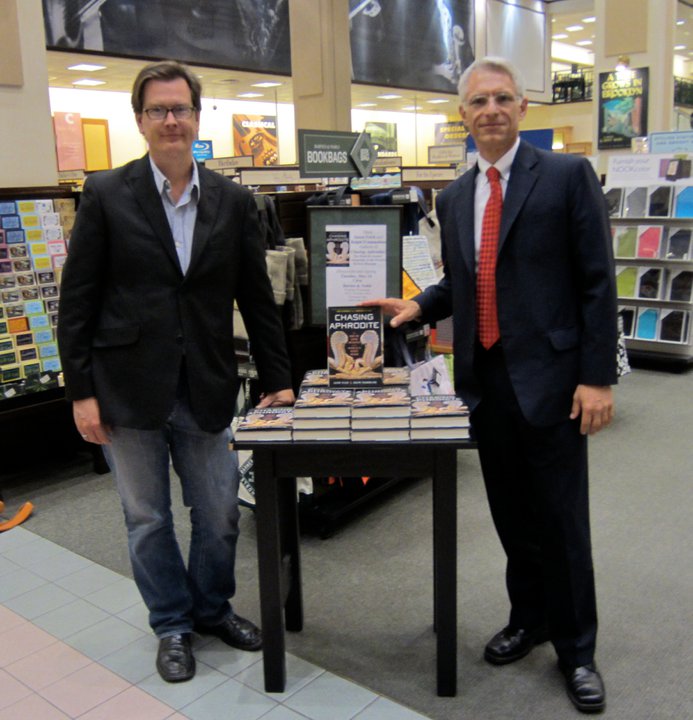
One year ago, Chasing Aphrodite hit bookstores. The amazing success we’ve enjoyed over the past twelve months is humbling, and we thought it a good opportunity to thank you, our most dedicated fans. Thank you for everything you’ve done to help spread the word.

Here are some highlights from the past year:

We’ve written magazine cover-stories and excerpts; newspaper Op-Eds and several articles; and nearly 100 muckraking blog posts, including several exclusive scoops.

We’ve fired off 2,000 tweets with the latest looting news; and fed our 300 Facebook friends with a steady stream of news and updates about museums and the illicit antiquities trade.

We’ve revealed suspect art at the Met, the Getty, the Seattle Art Museum, the ClevelandDumbarton Oaks, The Norton SimonTampaToledoDallasKimbellLACMA, the WaltersBoston MFASan Antonio MuseumIndiana UniversityHarvardPrincetonYaleRISDSotheby’s and elsewhere.

We’ve received rave reviews from readers and critics (a few sour ones too) and have been interviewed by an alphabet soup of outlets: NPR, PBS, VOA, KPCC, KCRW, KQED, KPFK, etc.

We’ve (briefly) made the bestseller list, and sold more copies that the publisher (and authors) expected — we’re currently in the third printing. Chasing Aphrodite has been honored with the SAFE Beacon Award, the ARCA Prize for Art Crime Scholarship and, most recently, the California Book Award.

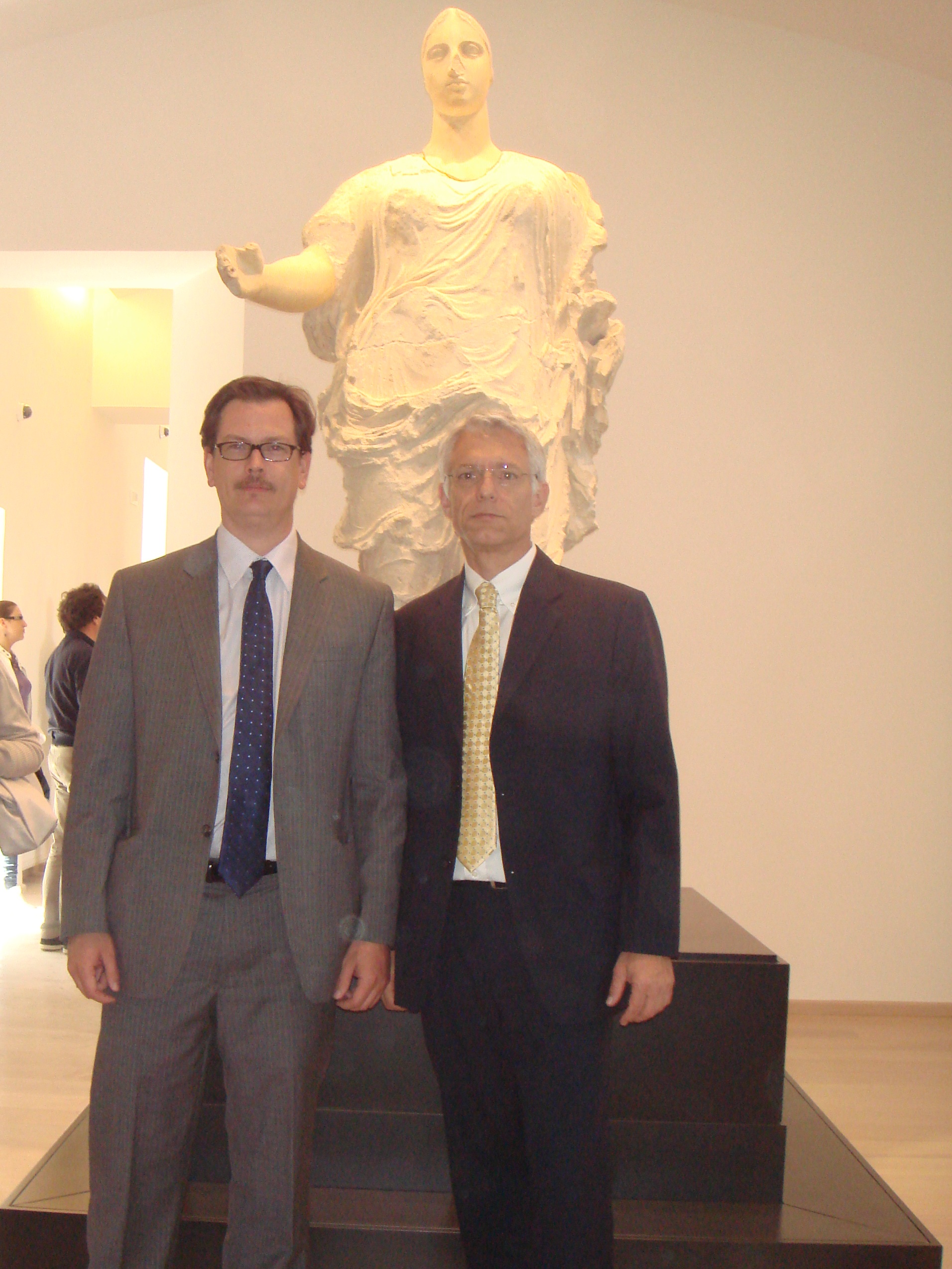
The authors in front of the goddess in her new home.

We escorted a goddess back to her homeland.

We’ve given talks at Google; The Pacific Palisades Historical Society; UCLA; The National Press Club; Society for the Preservation of Greek Heritage/Friends of the New Acropolist Museum; The Jonathan Club of Los Angeles; Chapman University; Central Michigan University; The Walters Art Museum; UPenn Law School; UPenn Museum; The Harvard Club of New York City; The National Arts Club; Princeton University; Villanova Law School; Rutgers University; New York University; Cardozo Law School;  Archaeological Institute of America (NY Chapter); SAFE; The Benson Family Farm; Elliot Bay Bookstore in Seattle; Powell’s Books in Portland; The Commonwealth Club of San Francisco;  Loyola Law School; University of Kore in Enna, Sicily; Book Soup on Hollywood Blvd; Barnes and Noble of Thousand Oaks; and the LA Festival of Books.

Looking forward, we’re hard at work on WikiLoot, our new initiative to crowdsource the fight against the illicit antiquities trade.

Thanks to you, our dedicated readers, for helping us achieve all this and more over the past year.

Jason and Ralph

PS: It’s not too late to recommend Chasing Aphrodite to a friend. But you better hurry up: last we checked, Amazon only had 11 copies left!

Artifacts and Fictions in Baltimore: Roger Atwood on the Walters’ Pre-Colombian Collection

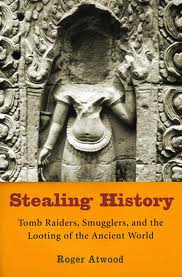
Today we’re publishing a guest post from Roger Atwood, author of “Stealing History: Tomb Raiders, Smugglers and the Looting of the Ancient World.”   We reached out to Roger for his thoughts when we heard about an exhibition of suspect pre-Colombian material at the Walters Art Museum in Baltimore. Atwood has written extensively about looting in Latin America, and took a recent trip to the Walters to see the collection. Here is what he found.

The Walters Art Museum in Baltimore has mounted a show of ancient artifacts from Latin America that belong, or once belonged, to the collector John Bourne.  According to the show’s catalogue, Bourne has already given some of the pieces to the museum while others have been promised, a long, gradual donation that maximizes the donor’s tax deduction. Aside from a few likely fakes, whose presence the Walters candidly admits, the objects all date from before the arrival of Europeans in 1492.

Collector John Bourne, circa 1947

The collection has a long and checkered history. Bourne originally intended to give it, or at least part of it, to the Museum of New Mexico’s Palace of the Governors unit in Santa Fe, which, in fact, displayed it for several years after 1997. The collection brought the Palace of the Governors some problems, to put it mildly. Four objects in the collection were seized by the FBI in 1998 and held for nearly two years, pending probes into allegations that the pieces were looted and smuggled out of Peru. The investigation ultimately fizzled, leading to no charges and the return of the pieces. But the Museum of New Mexico got some nasty publicity from that case, and one can only assume the Walters and its lawyers were fully cognizant of the risks of a repeat of it before accepting this dubious gift. I tell the story of the Bourne case in detail in my 2004 book Stealing History: Tomb Raiders, Smugglers, and the Looting of the Ancient World, based on interviews and documents acquired through the Freedom of Information Act.

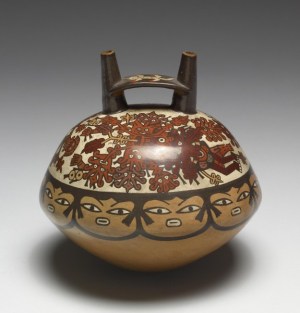
A couple of weeks ago I took a train to the handsome city of Baltimore and saw the Bourne collection in its new home. It’s a revealing show with some lovely artifacts, including some I don’t remember seeing in Santa Fe. The painted Nasca stirrup bottles (right), masterpieces of design and economy dating from about 500 CE, alone were worth the trip.

Yet I came away thinking that, perhaps without realizing it, the organizers have given an object lesson in the dangers of collecting antiquities that have no record of archaeological excavation. What I wrote in Stealing History – that “not a single piece on display” in the Bourne collection “gives a specific provenance, archaeological history or other sign it emerged from any place but a looter’s pit” – remains true but needs some amending.

First, there are the fakes. To its credit, the Walters is completely up front about the fact that some pieces in the Bourne collection are probably not what they claim to be. “[T]he atypical imagery of these objects calls into question their authenticity,” says the wall label next to a pair of Maya eccentric flints. It adds, helpfully, that tests are inconclusive “because modern replicas are made using the same kinds of tools and techniques as well as the same sources of flint” as the real ones. So, in this case, we’re learning more about technique for making fakes than about Maya flints.
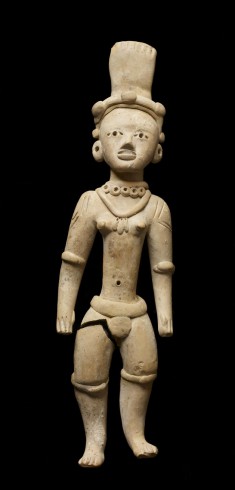
Another sculpture looks like a bad pastiche of old and new, or, as the wall panel says, a “modern assembly of a variety of ancient parts.” Meant to look Moche, the piece shows a wooden, crouching warrior of ungainly proportions, with a clamshell perched on its head like a fez and a backflap on its lower back that seems to have been made for a much smaller object. “Together, the C-14 [radiocarbon dating] and iconographic data suggest that the piece – in its current state – postdates Moche culture by at least 700 years,” says the show’s catalogue. The operative phrase there is “at least,” for the piece has a funny, cinematic kind of look, like a prop from “The Curse of the Andes”.

What do fakes have to do with the problem of looting? Fakes and unprovenanced, authentic antiquities often turn up together in collections because neither was found through the transparent process of archaeological excavation. They flock together.  Collectors might think their connoisseurship protects them from fakes, but they get hoodwinked all the time. This is not a sign of denseness or gullibility, necessarily; it just comes with the territory if you’re in the business of acquiring undocumented antiquities. If the Getty, with all its experts and budget, could buy a dubious piece like the Kouros, then what hope is there for a single collector such as John Bourne, no matter what the credentials of the people advising him?

The Walters is more coy on the implications of all this. Has the collector gained a tax benefit for the donation of what are quite possibly, if the Walters’ analysis is correct, worthless fakes?  Why is it even showing them? The show constantly refers to authentication and laboratory analysis on the pieces; indeed, it’s one of the main themes of the exhibit.  One piece, a Zapotec pottery figure actually has a copy of its thermoluminescence analysis report right on the wall, indicating the piece dates from 450 to 800 CE. Wall texts and the catalogue go on about CT scans and minute studies of chemical compositions.

I spoke on the phone with the director of the Walters, Gary Vikan, who said that the museum decided to go ahead and show what its conservators believed to be fakes because “there is a value in being candid and open about our own research.” He added, “our business is to gather and share knowledge, not to vindicate” a collector’s decisions. Two conservators worked full-time for two-and-a-half years analyzing the pieces, he said.

To the viewer, all this research could signal that the Walters has doubts about the larger integrity of the collection. But it also suggests the museum is trying to compensate for the lack of any archaeological information about the pieces by running them through gauntlets of laboratory tests. It’s as if the museum is trying to scratch its way to some information – any information – about pieces that are so patently lacking any hard archaeological data.

And that leads me to the second problem associated with undocumented artifacts that this exhibit so richly demonstrates: the lack of information. For all the museum’s months of laboratory work, we know strikingly little about where these pieces came from, in what context they were found, and what function or meaning they had. This is because they were, presumably, all purchased from the cast of looters, dealers and assorted hoodlums that make up the supply end of the Latin American antiquities market. Whatever information those sellers claim to have on the origin of the artifacts they sell is usually conjecture or lies.

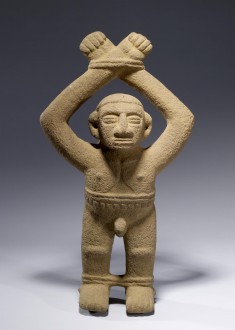
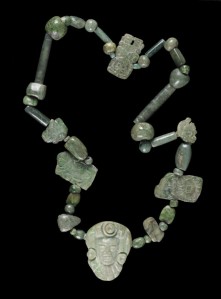
An earthenware crocodile effigy claimed to be from Costa  Rica is said to date from 500 to 1350 CE, an absurdly wide spread that stratigraphic data or radiocarbon materials found in proper excavation could narrow down to decades. A Mayan jadeite pendant (left) dates from “250 to 450 CE” and could come from Guatemala, Belize, Mexico or Honduras, says the catalogue. In other words, from two centuries and any one of hundreds of sites over four countries.   It’s a nice piece, but how helpful is that? True, it is difficult for a private collector to buy archaeologically excavated material, since it rarely comes on the market. But a museum of the Walters’ caliber could certainly arrange loans of properly excavated pieces if wants to show pre-Columbian antiquities.

The show takes pains to stress that Bourne purchased many artifacts on trips to Latin American hinterlands starting in the 1940s, before most current rules on removing and selling cultural property were in effect. The catalogue describes Hiram Bingham-style adventures, Bourne cutting through forest to reach the lost city of Bonampak and finding artifacts in situ.  These accounts are entertaining and I don’t doubt their authenticity, but other facts make you wonder if he had other sources. Bourne himself told the FBI in 1998 that he bought merchandise from the late Ben Johnson, a notorious Los Angeles dealer in high-end pillage whose dealings were exposed in the Sipán trial of 1989.

What little information we’re given on the origin of the Bourne pieces amounts to a roll call of the most pitilessly looted parts of Latin America: the north coast of Peru, the Petén lowlands of Guatemala, rural Veracruz.  Commercial looters erased incalculable amounts of archaeological data and a valuable economic resource to gather prizes for middlemen and collectors. It’s a story of exploitation and greed that is still rarely acknowledged  by big collecting museums.

A clear example of that destructive cycle – collectors buy loot, looters destroy sites to get more loot to sell, over and over – was the pillage at Sipán in northern Peru in 1987. Before the Getty’s Aphrodite, before the Marion True trial, the case of Sipán showed everyone the power of the antiquities trade to consume heritage.  That case led to the 1990 emergency ban on the import of a long list of types of Peruvian antiquities, arguably the most important step by the federal government to tackle the illicit trade up to that time, and, later, a bilateral agreement between Peru and the United States imposing broad import restrictions that remains in effect today. (By way of disclosure, I should say that I spoke in favor of a five-year renewal of that agreement before the State Department’s Cultural Property Advisory Committee in 2007.)

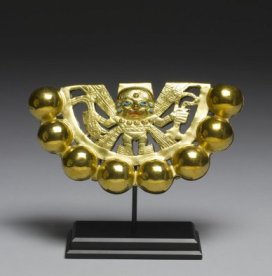
The Bourne collection (now the Walters collection) includes a piece widely attributed to Sipán, a golden belt rattle (left) [Note: An earlier version of this post had an incorrect image. The mistake was ours, not Atwood’s.]  It wasn’t on display when I visited Baltimore but it appears in the catalogue, which calls the piece “Moche style, North Coast, Peru.” The Sipán tomb was looted by the Bernal brothers in February 1987. Its fabulous artifacts spread quickly through the elite antiquities racket before police fenced off the site and allowed archaeologists to excavate it. They found two more, undisturbed tombs that have enriched our understanding of pre-Columbian society.

The word “style” after Moche is a wink-wink that the Walters is not sure of the piece’s authenticity, as Vikan pointed out to me.  I spoke with one of the museum’s conservators, Jessica Arista, who said the surface of the belt rattle showed marks from metal tools that did not exist in ancient Peru. “There are a lot of modern polishing marks,” she said. Also, said Arista, the metal itself looked too fresh to be ancient and a corrosive pigment seems to have been applied to it, possibly with the intention of making it look older.  A sample from the piece was detached and sent to the Museum of Fine Arts in Boston for analysis, she said. The piece was found to be 72 percent gold, 13 percent silver and 10 percent copper, figures similar to those found in authentic pieces, she said. (The catalogue gave slightly different numbers: 86.6 percent gold, five percent silver and 8.4 percent copper.) But the interior of the metal lacked the leaching and compositional variation that you would expect from a truly ancient piece, she said. Also, the microscopically thin gilding that you would see on the surface seems to be missing.

Still, the information is not conclusive, said Arista. The museum would need detailed comparisons with authentic Sipán pieces to give a more definitive answer on the piece’s authenticity. The Walters has not made contact with the Sipán museum in Lambayeque, Peru to arrange such a comparison, she said.

I mentioned to her that many Sipán pieces, including the backflap seized by the FBI in Philadelphia in 1997, had been soaked and scrubbed with Brillo pads while in the hands of looters and smugglers. This, I suggested, could account for the modern tool marks and the metal’s shiny appearance (which I’d also noticed in Santa Fe.) Perhaps, she said, but the metal’s inner composition, not just the surface, raises red flags about the piece’s authenticity.

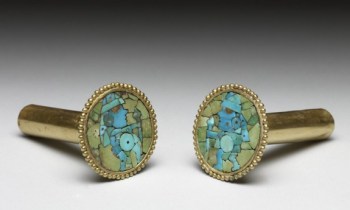
The belt rattle was one of four from the Bourne collection seized by the FBI in 1998. (Another, a golden monkey head looted from a nearby site called La Mina around 1988, was restituted to Peru last year, with the cooperation of the Palace of the Governors. A pair of Moche earflares, seen at right, also seized by the FBI remain on display at the Walters. ) While the artifacts were held by the FBI, the Peruvian archaeologist who excavated Sipán, Walter Alva, went to Santa Fe and examined the belt ornament. If he had any doubts about its authenticity, he never raised them with me or the FBI.  Alva doubted the authenticity of other Peruvian pieces in the Bourne group, but not that one.  In Stealing History, I quote Christopher Donnan of UCLA, an expert on Moche iconography, as saying he also believed it an ancient Sipán artifact. I’ve never heard an authority on Moche archaeology say anything different.

So if the Sipán belt rattle turns out to be a fake – well, there are some very good forgers out there, and kudos to the Walters’ conservation team for exposing it.

But if it’s not, then the Walters will have some explaining to do. Its presence at the Walters would make a mockery of the museum’s policy (stated by Vikan here at minute 18) of not acquiring pieces that do not have a clear chain of ownership from before the UNESCO agreement of 1970.  Vikan says in the catalogue that the museum will “promptly and openly respond to any claims for repatriation … from possible source countries.”  Indeed, in a sign of transparency, the Walters has posted the collection – including the now-suspect Sipán belt rattle – on the American Association of Museum Directors’ Object Registry of antiquities acquired since 2008 that lack clear provenance dating back to 1970.

But why wait until source countries make repatriation claims? You wonder what other controversies over title might lurk behind the Bourne collection. This would be a good opportunity for a major American museum to recognize proactively a source country’s title to dubious objects, rather than make Peru or Guatemala jump through hoops — or wait for the storm as the Met did with the Euphronios krater, today recognized as property of the government of Italy.  Museums badly need to get the provenance problem past them and institute policies they can live by, permanently and consistently.  At its heart, the question is about more than ownership.  It’s about accountability, a subject on which the Walters exhibit demonstrates how far museums have come. It also shows how far they have to go.

ROGER ATWOOD investigated the illicit antiquities trade in 2002-03 with a fellowship from the Alicia Patterson Foundation. His website is http://rogeratwood.com/

The Harvard List: Turkey wants Dumbarton Oaks to Return the Sion Treasure

Among the dozens of objects that the government of Turkey is asking American museums to return are 40 Byzantine relics at Harvard University’s Dumbarton Oaks Museum.

(We’ve previously reported on Turkey’s requests in the LA Times and detailed the objects being sought from the Met, the Getty, and the Cleveland.)

The silver and gold liturgical objects known as the Sion Treasure consist of plates, candlesticks, crosses and plaques. Some 40 pieces of the treasure are at Dumbarton Oaks, while another 10 or so are at the Antalya Museum in Turkey, with a few more said to be in private collections.

There does not appear to be much doubt that the treasure was looted and smuggled out of Turkey in 1963 — decades after the nation’s patrimony law made such acts illegal. Dumbarton Oaks’ own publication of the Sion Treasure suggests as much repeatedly.

In 1986, Dumbarton Oaks organized a symposium about the treasure at the Walters Art Museum in Baltimore, which resulted in a 1992 book, “Ecclesiastical silver plate in 6th Century Byzantium,” edited by the museum’s Byzantium curator Susan A. Boyd. That publication includes this photograph of the looter’s hole where the treasure is believed to have been found.

The treasure’s precise findspot is later detailed at length: “Late in the summer of 1963, the Sion Treasure was found in the field called Buyuk Asar (big ruin) north of the hamlet Haciveliler (2km west of Kumluca, a modern town in southeastern Lycia,)” wrote German Byzantinist Hansgerd Hellenkemper. A marking on a nearby wall identified it as the ancient Lycian polis of Korydalla. The treasure was found some 30 meters from the ruins of an early Byzantine church, Hellenkemper added, suggesting it may have been buried by church leaders in the 7th Century to hide it from invading Arabs. She goes on to note that illegal excavations have made it difficult to know more about such treasures. “In the Eastern Mediterranean, a large number of Early Byzantine church treasures have been found, but an exact of nearly exact findspot is known for very few of them.”

Dumbarton Oaks’ acquisition history says the treasure was purchased in 1963 in Switzerland from the antiquities dealer George Zakos by Mrs. Robert Woods Bliss, a private collector who donated it to the museum the same year. Zakos has been repeatedly tied to the illicit antiquities trade — among other things as a major supplier to Robert Hecht and the source of the Metropolitan Museum’s looted Lydian Hoard, which was returned to Turkey in 1993 after a bitter six-year legal battle.

Turkey has been seeking to reunite the Dumbarton Oaks material with the rest of the Sion Treasure for decades. Nizeh Firatli of the Istanbul Archaeological Museum first noted the missing treasure at a 1964 meeting in Athens, and soon after Turkey first requested that Dumbarton Oaks return the treasure. Several subsequent requests have been sent over the ensuing years, and Turkey’s request was recently revived.

Dumbarton Oaks director Jan Ziolkowski

Dumbarton Oaks did not respond to repeated requests for comments on Turkey’s request — a curious position for an institution that serves as a research library. We eventually contacted Harvard University’s press office, which released the following statement on behalf of director Jan M. Ziolkowski: “Dumbarton Oaks has made the Sion Treasure available for exhibition, research and study for nearly a half-century. We are confident that we have proper title to these antiquities and, while representatives from Turkey have inquired about them on occasion over the years, they haven’t responded to requests for any documentation that might raise questions about the provenance of this important part of the collection.”

We asked both Ziolkowski and Harvard for additional information about why they believe the museum has proper legal title to the treasure. Given the suspect source of the treasure and Dumbarton Oaks’ own publication of details of its looting in 1963, what further “documentation” is Harvard waiting for? So far, our follow-up questions have been met with silence.