Category Archives: News

Arnold-Peter Weiss and the Rhode Island School of Design

*UPDATED: See below for additional information from RISD and Harvard Art Museums.

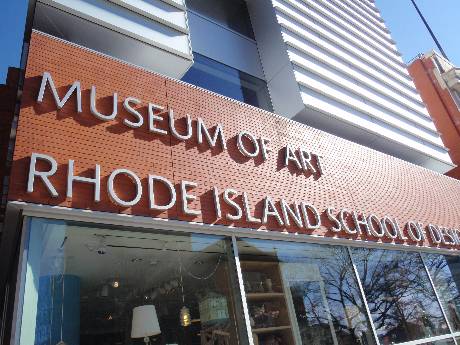
Dr. Arnold-Peter Weiss, the Rhode Island coin collector arrested Jan. 3 for felony possession of an ancient coin that authorities say he knew was recently looted from Sicily, has deep ties to the Rhode Island School of Design. He is a former trustee of the university and currently serves as former* chairman of the board of the university’s museum, to which he has donated several objects.

According to the criminal complaint against Weiss, he told a confidential informant wearing a wire that he knew where the coin “was dug up two years ago.” Weiss is innocent until proven guilty, and his lawyer has not responded to two requests for comment. If the allegations hold up in court, its appears to be a fresh example of the alarming link between the black market in looted antiquities and (apparently) respectable collectors and museums that we detail in Chasing Aphrodite.

By participating in the illicit antiquities trade, museums and collectors betray  their professed educational mission and encourage the destruction of context that happens as objects are looted and laundered through the black market.

Weiss appears to understand the importance of context in ancient art. In September 2010, when RISD reinterpreted and reinstalled its gallery of ancient, medieval and early Renaissance art, Weiss and his wife, Dr. Yvonne Weiss, a pediatrician in Barrington, RI, were major sponsors of the renovation.

“As a collector of ancient coins,” Dr. Weiss said in a press release from RISD, “my hope for this gallery—and for the entire reinstallation of the Radeke Building—is to provide visitors of all ages with context for understanding these fascinating and beautiful objects.”

The museum describes its collection of Greek, Roman and Etruscan art as “one of the finest collections of any university museum in the country,” and contains about seven hundred ancient coins spanning more than 1500 years. Among the collection highlights on the museum’s website are several recent acquisitions. Collecting histories are not provided for most objects.
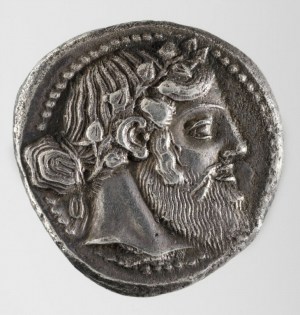
In 2010, Weiss donated a silver Greek tetradrachm, ca. 460 BCE from Naxos. The obverse is shown here. Details and the reverse, showing Silenos holding a kantharos, can be found on the museum’s website here.

A similar coin is listed here on the website of Nomos AG, the Swiss coin dealership that Weiss launched around 2007. The Nomos coin is said to be from the Randazzo (Sicily) Hoard of 1980 and is described as “one of the greatest and best known of all 5th century Greek coins.” It sold at auction recentlyfor  775,000 CHF, well over the 400,000 CHF estimate. Weiss’ partners at Nomos are Victor England and Eric McFadden of the Classical Numismatics Group and Alan Walker, who has a doctorate in Classical Archaeology from the University of Pennsylvania.

Note: The Syracuse Decadrachm previously listed here was not a donation by Dr. Weiss but an acquisition made by the museum in 1940, according to RISD director of marketing Donna Desrochers. 

Another Weiss donation to RISD is a Flemish oil painting by artist Hendrik van Steenwyck, ca. 1550-1603. Details can be found here.

We’ve contacted the museum’s curator of ancient art, Gina Borromeo, to request additional details about these objects and any others Weiss may have donated.

We’ve sent a similar request to the Harvard Art Museums, where Weiss’ bio says he is was on the collecting committee until this month. The collection of the Arthur M. Sackler Museum, in particular, has an impressive collection of ancient coins.

We’ll post answers here when we get them.

*Harvard UPDATE: Jennifer Aubin, the Harvard Art Museums public relations manager, provided the following information: “Dr. Peter Weiss was a member of our Collections Committee, an advisory group, from 2006–2012. We have no objects in our collections donated by or purchased from Dr. Weiss.” The Harvard Art Museums did acquire two coins through Weiss’ firm Nomos AG in 2009, both of which appear to have a long provenance. The first, a Drachm of Argos dating to 370-350 BC, can be traced back to an 1886 auction. The second, a fragment of a dekadrachm of Athens dated to 470 BC – 460 BC,  is seen in a 1968 edition of Revue Numismatique. (No images are available.) In addition, a gold wreath was loaned for exhibition by Drs. Yvonne and Arnold-Peter Weiss to the Harvard Art Museums from 2008–2010. No additional information was provided about the wreath.

Harvard UPDATE #2: In response to a follow up question about Weiss’ resignation “in 2012”, Aubin says Weiss resigned from the collections committee on January 9, 2012 — six days after his arrest.

*RISD UPDATE: Donna Desrochers, the director of marketing at RISD’s art museum, noted that Weiss’ online bio is out of date: His term as chairman of the board ended last June, and he no longer sits on the museum’s board. In addition, the Syracuse Decadrachm we listed above was not donated by Dr. Weiss. We’ve corrected the post according, and look forward to additional information from RISD.

ALSO:  Paul Barford at his Portable Antiquities Collecting blog reports an unconfirmed rumor on coin discussion groups that Interpol arrest warrants may have been issued for an American dealer and two Italian dealers. He has additional thoughts and information here, here and here.

ALSO: David Gill at Looting Matters digs up this quote from Weiss from a 2002 NYT story: “They [ancient coins] have good rates of return — not as good as when we were riding the Internet bubble, but the coin market hasn’t burst.”

EXCLUSIVE: NYC DA Says Prominent Surgeon Knew He Was Selling Looted Coin

A prominent Rhode Island surgeon and collector of ancient coins was arrested on January 3rd in the Waldorf-Astoria Hotel in New York City for felony possession of an ancient coin recently looted from Sicily.

Arnold-Peter C. Weiss, a world-renowned hand surgeon who teaches at Brown University, was selling ancient Greek coins at the 40th annual New York International Numismatic Convention. Weiss is the former treasurer of the American Numismatic Society, chairman of the board at RISD’s art museum and on the collecting committee of the Harvard Art Museums, according to his bio.

According to a criminal complaint filed with the NYC District Attorney’s office, Weiss was secretly recorded telling a confidential informant that he knew one of the coins he was selling had been recently looted: “There’s no paperwork, I know this is a fresh coin, this was dug up a few years ago,” the complaint quotes Weiss telling the informant. “This was dug up two years ago. I know where this came from.”

Weiss also told DA investigator John Freck that he knew the coin had been recently looted and belonged to the government of Italy, the complaint alleges. Under Italian law, all antiquities in the ground belong to the Italian state.

The coin in question was a 4th century BC silver tetradrachm from Katane, listed at $300,000 in the auction catalog. Weiss said he had bought the coin in 2001 for $250,000 and hoped to sell if for $350,000, the complaint says. According to Coin World, that and a second coin were seized: a 4th century BC silver decadrachm from Akragas, one of the most coveted coins in the world. It was listed at $2.5 million and expected to be the most expensive Greek coin ever sold.

Weiss has been accused of one count of criminal possession of stolen property, a felony. He is due in court on March 21 for “possible grand jury action,” said NYC DA’s spokeswoman Diem Tran. (Case number 1299081) We’ve posted a copy of the complaint here.

Weiss’ attorney Helen Cantwell did not return two calls seeking comment. We’ll update this post if she gets back to us. Coin World quoted Alan Walker, director of Nomos, the coin dealership where Weiss is a partner, saying: “All the coins are in the U.S. legally. All of the coins left Europe legally. It was all handled 100 percent by the law, as far as we know.”

The case is in the early stages yet, but given Weiss’ prominence in the numismatic community, it bears some early similarities to the criminal case against Fred Schultz, the head of the national antiquities dealers association, who was  convicted in 2002 of knowingly trafficking in looted antiquities from Egypt. The Schultz case proved a watershed in the art world, underscoring the fact that trafficking in looted antiquities was a violation of American law.

The case could also influence the on-going battles over whether coins should be included in bi-lateral agreements between the US and foreign nations aimed at preventing the traffic in looted antiquities. Numismatists have long argued that coins should be exempted from import restrictions. As the American Numismatic Society states on its website, “…Because most coins in private collections have been traded and held without any provenance, it is unreasonable to assume that a coin is stolen, illegally exported, or illegally imported merely because the holder cannot establish a chain of custody beyond receipt from a reputable source.”

That position may be more difficult to maintain in the face of a criminal case against Weiss, who was treasurer of the ANS from 2005 – 2009.

Hot Doc: US vs. Weiss criminal complaint

Hat-tip: David Gill at Looting Matters was the first to break the news of the arrest. His blog has excellent analysis of the illicit trade.

Update: Cultural Property Attorney Ricardo St Hilaire has a good analysis of the legal implications of the case, apparently a novel use of state law, at his blog. Paul Barford has also been following the case closely on his blog.

Update #2: In other news, Swiss authorities have seized a valuable 5th Century silver Thracian octadrachm that was recently sold at auction in Switzerland. The move came at the request of Greek authorities, who claim the coin was  illegally removed from the country. The name of the owner, who is facing criminal charges, was not released. See the AP story here.

The Best of Chasing Aphrodite 2011

Happy New Year!

We want to share our profound thanks for the 24,000 visits we’ve had since we launched this site with the release of Chasing Aphrodite last May. You’ve helped make the book a success while shining a light on art world shenanigans. Thank you for reading.

We’ve got many more revelations in store for you in 2012. If you’d like to keep receiving updates, be sure to subscribe via the box on the top right. You can also follow our more frequent comments on the latest news by liking our Facebook page or following us on Twitter.

We hope to see some of you at our upcoming events, which include talks at the National Press Club in DC on January 24th and Google and UCLA in February. You can get details and find our other event listings here.

Without further ado, here are your favorite posts of 2011:

1. An Exchange with Hugh Eakin at The New York Review of Books

Our exchange with Hugh Eakin in The New York Review of Books caught a lot of attention last year. We found the review flattering in several places, but also curiously littered with contradictions. Here is Hugh’s June  review, and our response. An abbreviated version of the exchange was printed in the NYROB’s August issue here.

2. The Secret FBI File: J. Edgar Hoover vs. J. Paul Getty

Was J. Paul Getty a Nazi collaborator? That is the provocative question that J. Edgar Hoover asked in 1940, when the FBI opened a secret investigation into J. Paul Getty’s possible ties to the Nazi regime. While reporting Chasing Aphrodite, we obtained Getty’s FBI file under the Freedom of Information Act. We posted the annotated file online and pulled out highlights of the investigation.

3. Getty Museum Returns Two Objects to Greece, Signs Collaboration Deal

In 2011, American museums continued to return looted antiquities to their country of origin, and the Getty Museum was no exception. In September, the Getty agreed to return two objects to Greece and formalized a broad cultural agreement that will lead to loans, joint research and other collaboration with the art-rich Hellenic Republic. The agreement mirrors similar deals struck with Italy and Sicily in the wake of a negotiated settlement to claims the Getty had for years purchased ancient art looted from those countries.

4. The Becchina Dossier: A New Window into the Illicit Trade

The conviction of Italian dealer Giacamo Medici set off the whirlwind of controversy detailed in the final chapters of Chasing Aphrodite. But Medici was just the opening move of the Italian investigation of the illicit antiquities trade. In 2001, Italian authorities raided the warehouse of Medici’s main rival, Gianfranco Becchina, seizing 13,000 documents, 6,315 antiquities and 8,000 photographs of objects, many of which appeared recently excavated.  Today, it is the Becchina Dossier that forms the center of Italy’s continuing investigation of the international trade in looted antiquities. Like the Medici files, the Becchina Dossier provides a striking record of the illicit trade, showing the path of thousands of looted objects from tombs across the Mediterranean to the display cases of leading museums around the world. Stay tuned as we’ll be making public more details from the Becchina case in 2012.

5. Chasing Persephone?

When the Getty’s statue of Aphrodite was returned to Italy in May, we were there to tell the story. In this report for the LA Times, Jason described how new theories about the goddess are being considered now that she’s back home. Who is the goddess? Does her slightly awkward marble head really belong atop the massive limestone body? Where precisely was she found? And what can she tell us about the ancient Greek colonists who worshiped her some 2,400 years ago? The fact that so little is known about the marble and limestone statue — one of the few surviving sculptures from the apex of Western art — illustrates the lasting harm brought by looting and the trade in illicit antiquities.

6. Jiri Frel: Scholar, Refugee, Curator…Spy?

In the early 1980s, the antiquities department at the J. Paul Getty Museum was a hotbed of whispered political intrigue. Rumors swirled that the department’s Czech curator, Jiri Frel, was a Communist spy. And many believed the deputy curator, former State Department official Arthur Houghton, was a CIA plant tasked with keeping an eye on Frel’s activities. Frel’s once-classified FBI file, obtained by the authors under the Freedom of Information Act, reveals that the US Government asked similar questions about Frel in 1971, when an investigation was conducted into his “possible intelligence connections.”

7. The Getty Fights to Keep its Bronze

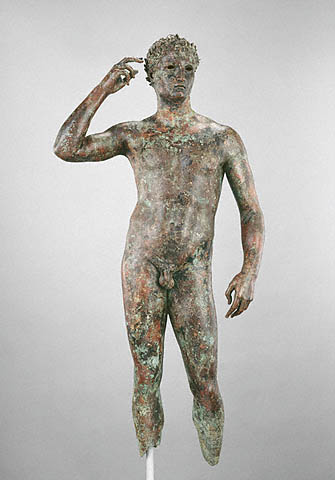
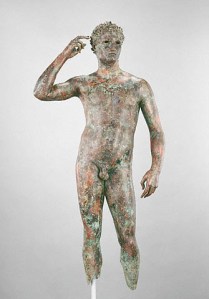
A week after sending its statue of Aphrodite back to Italy, the Getty was fighting to keep another ancient masterpiece: its priceless bronze statue of an athlete, whose 1964 discovery by Italian fisherman is featured in the opening chapter of Chasing Aphrodite. Here’s our report on the latest in the fight for the Getty  bronze.

8. Houghton on The McClain Doctrine and Crimes of Knowledge

Did American museum officials violate US laws when buying looted antiquities? We attempt to answer that hypothetical using internal Getty memos written by former curator Arthur Houghton, who spelled out the risk of violating the National Stolen Property Act when buying objects with unclear provenance.

9. The Truth about Marion True

When archaeologist Malcolm Bell reviewed Chasing Aphrodite in The Wall Street Journal in July, he largely agreed with our premise — that  American museums fueled the destruction of knowledge by acquiring looted antiquities and using what Bell calls a “fabric of lies” to obscure their complicity in an illicit trade. But Bell’s review took an odd turn when he recommended that former Getty antiquities curator Marion True, who was fired after we revealed her blatant conflicts of interest, be hired “for a major museum position.” We respond.

10. Looted Antiquities at American Museums: An On-Going Crime

For those who might be tempted to think the issues raised in Chasing Aphrodite are behind us, we discuss a recent law review article that argues that continued possession of unprovenanced antiquities (ie most of those in American collections) could be an on-going crime under US law.

BONUS: Finding Loot at Your Local Museum

Marion True once told her museum colleagues: “Experience has taught me that in reality, if serious efforts to establish a clear pedigree for the object’s recent past prove futile, it is most likely — if not certain — that it is the product of the illicit trade and we must accept responsibility for this fact.” In that same spirit, we gave fellow investigative reporters from around the world a few tips on how to find looted antiquities at their local art museum during the June meeting of Investigative Reporters and Editors (IRE).

In 2011, we put that advice to work with revelations about objects in several museum collections. Our New Year’s resolution: to do much more of the same in 2012!

Looted Antiquities at the Walters Art Museum?

In anticipation of our event at the Walters Art Museum in Baltimore on Sat, Oct 29th at 2pm, we took a look at the museum’s wonderful collection of ancient art. It appears to have dozens of objects purchased from dealers with ties to the black market.

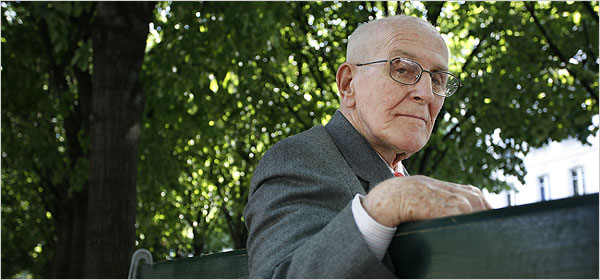
Robert Hecht poses in front of the famous looted Greek vase he sold the Met in 1972 for $1 million.

Most prominent of those dealers is Robert Hecht, a 92 year-old Baltimore native and heir to the Hecht department store chain. Hecht is currently on trial in Rome on charges of trafficking in looted antiquities over his nearly six decades as a prominent dealer based in Paris and New York. He has been well-known for trafficking in looted antiquities since 1972, when he sold the Metropolitan Museum of Art its famous Euphronios krater, which was returned to Italy. In his handwritten memoir, seized by Italian authorities in 2001, Hecht recounts a long career of buying looted objects from Italian middlemen and selling them to American museums.

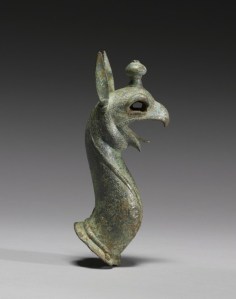
Among the more than a dozen pieces at the Walters purchased from Hecht is this griffin “protome,” which the Walters bought directly from the dealer in 1999. It is said to be Greek from 640 BC.

In his memoir, Hecht describes buying griffin protomes from his “faithful purveyor” Giacomo Medici, the Italian dealer who has been convicted of being a key middleman in Italy’s illicit antiquities trade. It’s not clear if the Walters’ protome is among those Hecht mentioned.

We asked Gary Vikan, museum director since 1994, about the protome and other Hecht objects in the collection.

“Most of the Hecht stuff goes back a long way,” Vikan said in an email. “The protome came from an old collection, said Bob [Hecht], and our file does not reveal the name, and the curator on hand at the time cannot fill in the name with her memory. The purchase was consistent with the AAMD code of ethics as it then existed, and Bob Hecht did not carry the baggage then that he does now.”

We’re fond of Vikan, but we find his answer on this one a bit troubling. After all, it was Vikan who a decade before the griffon acquisition had testified as a “due diligence” expert in the Peg Goldberg case involving looted Cypriot mosaics. In the case, Vikan said Goldberg had ignored “sirens blaring and red flags waving” — clear signs of looting when she purchased the mosaics. This appears to be what Vikan did in 1999 when approving the acquisition of the griffon from Hecht. The object has no documented ownership history beyond Hecht, who was known since the 1970s to invent bogus stories claiming that recently looted objects came from “old collections.”

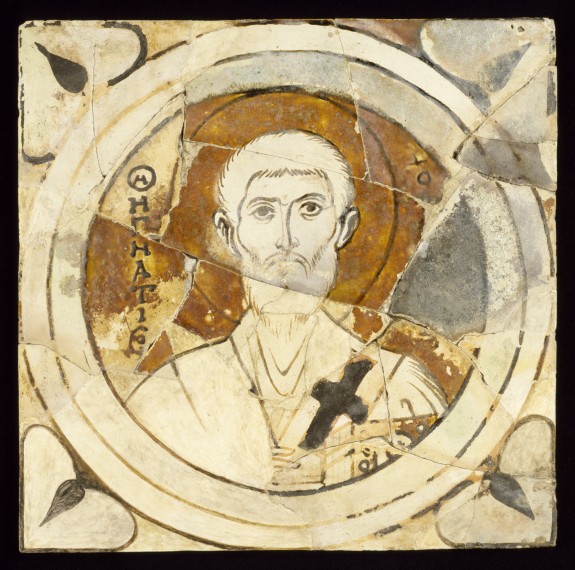
Hecht was also the source of several remarkable Byzantine floor tiles at the Walters, including this one depicting Ignatius the Bishop of Antioch, which was purchased from Hecht in 1950s. According to the Walters’ website, Hecht acquired them directly from a man in Turkey.

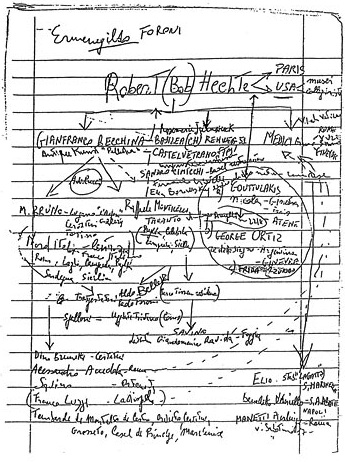
Another man who regularly supplied the Walters was Nicolas Koutoulakis, a prominent dealer who owned the Paris gallery Segredakis. His named appears in the “org chart” of the illicit antiquities trade found by Italian police in the 1990s with a direct link to Hecht.

Greek drinking cup purchased from Nicolas Koutoulakis.

Many of the Hecht and Koutoulakis objects in question — though not the griffons — were purchased by the Walters before 1970, the date of the UNESCO accord on cultural patrimony which most museums and archaeologists today accept as bright ethical line. But if the Hecht and Koutoulakis objects were looted from Italy or Greece, as is reasonable to suspect, they could be considered stolen property under US law, and the Walters would not hold clear title to them.

The Walters’ policy suggests that the museum will proactively investigate such objects: “If the Museum, as a result of its continuing research, gains information that establishes another party’s right to ownership of a work, the Museum will bring this information to the attention of the party, and if the case warrants, initiate the return of the work to that party, as has been done in the past.”

When we asked Vikan what he thought should be done with such objects, his answer was somewhat glib: “Put ’em out there!” We applaud the Waters for its transparency with provenance information — many museums do not post an object’s ownership history online. But in our view, putting suspect antiquities on display is not the same as a proactive investigation or notification of Italian or Greek authorities.

There’s no easy answer for how to handle the thousands of suspect objects still in American museum collections today. But waiting for Italian authorities to knock on your door has not always worked out well for other museums.

We look forward to exploring these issues with Gary and former Getty antiquities curator Arthur Houghton on Sat at 2pm.

A Call from Robert Hecht: I’m Not a Squealer

photo by Ed Alcock/NYT

Robert Hecht

Robert Hecht called the other day to say he’d received the copy of Chasing Aphrodite that we sent to his home on Boulevard La Tour Maubourg in Paris.

This chart showing the key players in the illicit antiquities trade was seized by Italian police in the 1990s.

Hecht is the American antiquities dealer who has dominated the trade for more than 50 years. Italian authorities believe he was also a mastermind of the international blackmarket in looted art — his name appeared at the top of an organization chart of looters, middlemen and dealers that Italian police found in the early 1990s. When Getty antiquities curator Marion True was indicted in 2005, Hecht was named as her co-defendant. His criminal trial in Rome on charges of trafficking in looted art continues today.

Here’s how we describe “the preeminent middleman of the classical antiquities trade” on page 30:

“Since the 1950s, Hecht had sold some of the finest pieces of classical art to emerge on the market. […] His network of loyal suppliers reached deep into the tombs and ruins of Greece, Turkey, and Italy. […] His clients included dozens of American and European museums, universities, and private collectors, including J. Paul Getty, whom Hecht had once persuaded to buy an intricately carved Roman bust. For decades, Hecht single-handedly dominated the antiquities market with his brilliance, brutality, and panache. He cited Virgil as readily as the lyrics of Gilbert and Sullivan, and he was known to break into operatic arias. He often drank to excess and was known to gamble his money away in all-night backgammon games. He tamed competitors with an unpredictable temper and eliminated rivals with anonymous calls to the police. Even those who sold directly to museums gave Hecht a cut of the deal, earning him the nickname ‘Mr. Percentage.'”

Robert Hecht poses in front of the famous looted Greek vase he sold the museum in 1972 for $1 million.

That’s the first of nearly thirty references to Hecht in Chasing Aphrodite. Even so, we felt it was short shrift for a man whose role in the art market is truly legendary. During our interviews and meetings with Hecht over the years, he was always a pleasure to deal with. He is an engaging dinner companion, often charming and talkative while being coy about the key details we were scratching for. Today, at 92 years old, he suffers from some health problems but retains the sharp wit he’s long been known for.

So, what did Hecht think of the book? “It was a well written book except for one lie, which I hope was not your invention,” he said.

Hecht was not disturbed by the allegations that he virtually ran the illicit antiquities trade for 50 years. He wasn’t upset about being called a gambler and an abusive alcoholic, or a participant in a massive tax fraud scheme, or the man largely responsible for the destruction of thousands of archaeological sites. The offending passage was the  reference to Hecht “eliminating rivals with an anonymous call to the police.” We based it on conversations with Italian law enforcement sources. Hecht assures us it is not true.

“The accusation of being a squealer is very serious,” Hecht said. “That is not in my blood.” Hecht said such accusations could be bad for business, which has been slow lately: “A customer might say, oh my god, you’re a spy for the police.” Hecht’s wife Elizabeth got on the phone next to explain that the charge had troubled her husband: “A lot of people we know did do that, but Bob never did. He’s not a rat, and does not wish to be known as such.”

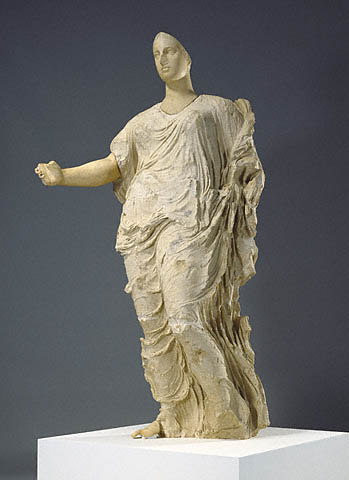
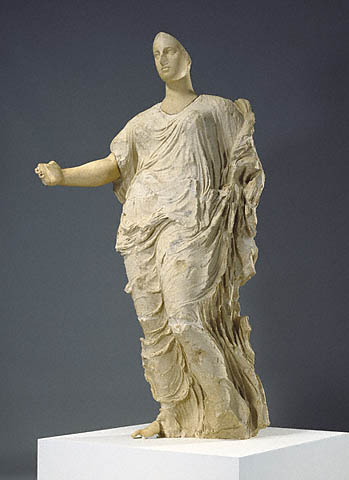
Cult Statue of a Goddess (Aphrodite)

Many in the trade recall how Hecht threatened to expose his rivals in a memoir he was writing. He never followed through on those threats — the unpublished memoir was seized by Italian authorities and is now among the most compelling evidence against him at trial.

But dropping a dime to the police is different. Going back over our notes, there is only one specific case Italian authorities cited in suspecting Hecht of being “a squealer.” It involved the Getty’s 1988 acquisition of the statue of Aphrodite from Hecht’s rival, London dealer Robin Symes.

Shortly after the whopping $18 million acquisition — a record at the time –Interpol Paris received an anonymous tip claiming the Aphrodite had been looted from Morgantina, Sicily. The tipster named the looters and middlemen in the transaction with detail that later proved remarkably accurate. Italian authorities have long suspected the source was Hecht, who lived in Paris at the time and may have been jealous of his rival Symes. But the Italians have no proof of their hunch, and Hecht flatly denies being the tipster.

Given his clear denial, and absent further supporting evidence from our Italian sources, we agreed to correct the record. Robert Hecht is many things, but to the best of our knowledge, he is not a squealer.

We’ve invited Hecht to join us later this month in his hometown of Baltimore, where we’ll be speaking at the Walters Museum on October 29th. He will be in the States that week and did not rule out the possibility of joining us.

Getty Museum Returns Two Objects to Greece, Signs Collaboration Deal

The Getty Museum agreed on Tuesday to return two antiquities to Greece and formalized a broad cultural agreement that will lead to loans, joint research and other collaboration with the art-rich Hellenic Republic.

The agreement mirrors similar deals struck with Italy and Sicily in the wake of a negotiated settlement to claims the Getty had for years purchased ancient art looted from those countries. The Getty resolved its differences with Greece in 2007 with the return of four contested antiquities, including a golden funerary wreath. Today’s agreement formalizes that accord.

The returned objects are:

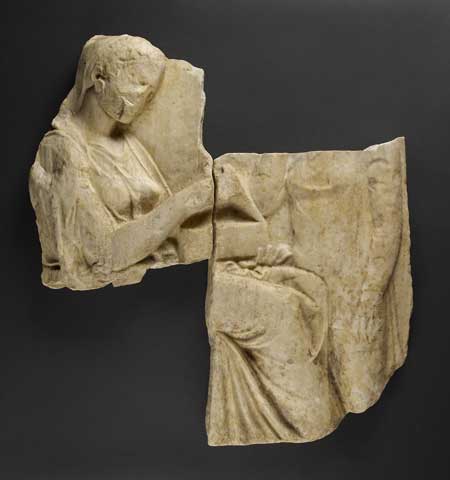
Fragments of a grave stone showing a seated woman (73.AA.115). Under former antiquities curator Jiri Frel, the Getty purchased the object for $20,000 in 1973 from Paris antiquities dealer Nicolas Koutoulakis, who has been linked to the illicit trade in Italy’s investigation. It adjoins a funerary relief currently in the Kanellopoulos Museum in Athens.

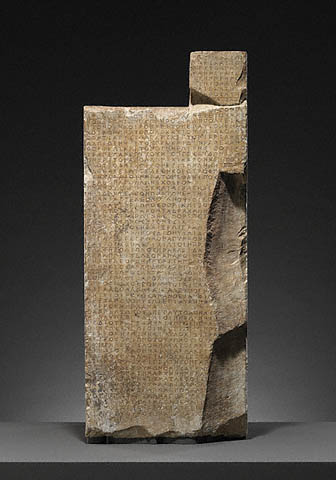
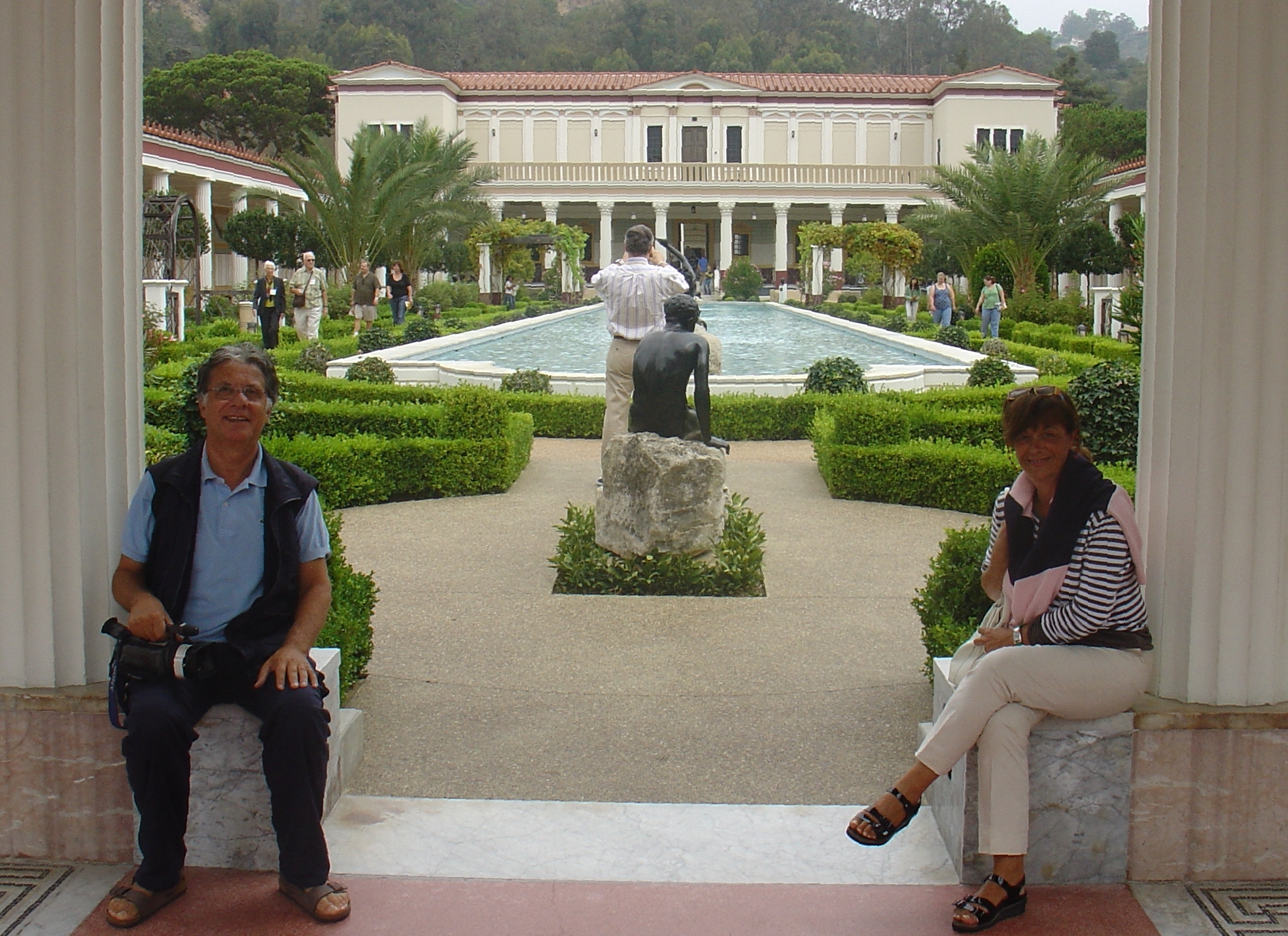
An inscribed tablet describing the religious calendar of Thorikos. (79.AA.113) It was purchased by the Getty in 1979 for $50,000 from Jacques Roux, whose name is not familiar to us. Currently on view in the Getty Villa, the object “describes sacrifices and festivals celebrated in Thorikos, in southeast Attica, in honor of local deities and heroes,” according to a Getty press release.

For those keeping score, the Getty has now returned 6 objects to Greece and 43 to Italy since 2005.

A few things worth noting about the deal, which the Getty touts as a “landmark agreement”:

— It was enthusiastically signed by Getty CEO Jim Cuno, who has long been an outspoken critics of repatriations. Before coming to the Getty in August, Cuno railed against repatriation claims from nations like Greece, calling them “nationalistic.” Today he’s shown in a Getty photo grinning broadly as he seals the deal with the Greek minister of Culture Pavlos Yeroulanos, who greatly impressed Getty officials. In an earlier post we asked: “Will the Getty change Cuno, or will Cuno change the Getty?” Looks like we’re starting to see an answer.

— The objects being returned were never demanded by Greece, were not the result of new information coming to light, and do not bear clear signs of being looted. (Thought the role of Koutalakis is certainly suspect.) Indeed, Getty Museum officials recommended their return, according to Getty spokesman Ron Hartwig. Scholars have long known the grave stone fragments matched a stele in a Greek museum. And the inscription’s cultural importance isn’t new. The returns were orchestrated by interim Getty antiquities curator Claire Lyons and her predecessor Karol Wight during informal discussions with Greek colleagues earlier this year.

Our take: The Getty should be applauded for these moves, another step in its embrace of cultural collaboration. But we’re curious: does this set a new precedent for returns by the Getty? For years, the Trust insisted it can only return objects if confronted with compelling reasons, such as evidence of criminal origins. Officials have gone as far as suggesting the museum’s tax exempt status could be in jeopardy if they relinquished objects without a such a cause. We see no compelling demand for return here. Re-uniting fragments and returning culturally important material are laudable moves, but why now? And what else at the Getty should be returned on similar grounds?

Hartwig, who we caught on a bad day, didn’t have a clear answer.

Beacon Award for Chasing Aphrodite authors

We’re honored to announce our work has been recognized with a Beacon Award from Saving Antiquities for Everyone (SAFE), the non-profit organization dedicated to the preservation of cultural heritage worldwide.

In announcing the 2011 award, SAFE cited the authors “for educating the public about how museum practices affect the preservation of cultural heritage. As investigative reporters at the Los Angeles Times, their dedication to uncovering the truth was essential in breaking open the case with the J. Paul Getty Museum. Through their recent book and continued effort to raise awareness online, many will learn, some for the first time, about the devastating effects of the illicit antiquities trade.”

SAFE will be presenting the award at a dinner in New York City on October 28th. You can find details on this and our other upcoming East Coast appearances here.

We’d also like to congratulate the 2012 Beacon Award Winner David Gill, the mind behind Looting Matters and soon to be Head of Humanities and Professor of Archaeological Heritage at University Campus Suffolk. We’ve followed David’s important research closely over the years and his blog is must-read for those interested in the illicit antiquities trade.

Loot at the Seattle Art Museum?

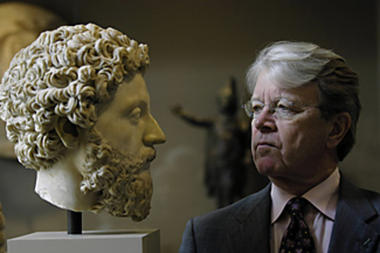
While in Seattle last month for a talk at Elliot Bay Bookstore, I stumbled across an interesting piece in the Seattle Art Museum’s permanent collection of ancient art: a marble Roman portrait head of the Emperor Claudius.

Why interesting? Here’s the provenance listed for the object: “Robin Symes Ltd.; Seattle Art Museum, Norman and Amelia Davis Collection.” That’s the same Robin Symes who brokered the sale to the Getty of the looted Griffins, Apollo and Lekanis, which the museum returned to Italy in 2007. He was also the dealer who sold the Getty its famous looted statue of Aphrodite, which was returned to Italy last year. (Symes was never indicted by Italian authorities, but his name comes up repeatedly as a key player in their investigation of the looted antiquities trade.)

I asked the Seattle Art Museum for details about the object. What was known about its ownership history? Was the museum concerned about possessing an object from a dealer known to traffic in looted art?

According to museum spokeswoman Cara Egan, the Claudius was acquired in 1993 from Symes. It had not been previously published, and had no known ownership history. (The Norman Davis endowment — named for a prominent Seattle collector of ancient coins — provided the funds for the purchase.)

“We proactively contacted the Italian authorities several times beginning in 2006 to alert them about the Claudius portrait and to research the object’s provenance,” said Egan. “We have not received a response back from them.”

The museum does not have any other objects in its collection known to have come through Symes or the other prominent dealers implicated in the Italian case, Egan said. The SAM continues to actively research the provenance of the piece and welcomes new information.

Egan did not provide any details about that research. We suggest the SAM consider contacting Greek authorities, who raided Symes’ estate on the island on Schinoussa. Among the items seized during the raid were photos of dozens of likely looted objects sold by Symes.


Notes on a Scandal: Our Advice for Italy and American Museums

The Art Newspaper is preparing an article looking back at the looting scandal that erupted between Italy and US museums in 2005 and continues today. They’ve asked us what advice we might have for both parties.
Here’s what we had to say:
“Now is a critical time for both parties. These next few years will determine whether the spirit of cooperation achieved after a painful period of scandal will amount to more than a mere pause in the antiquities wars. Both sides must to work hard to ensure it is a lasting peace.
Italian authorities helped promote dramatic changes in collecting practices in the United States. They should resist the temptation to continue strong-arm tactics (see Padgett), which will ultimately lose them the public support they have enjoyed. Rather, they should build on their success by extending the collaboration agreements they forged with the Met and the Getty to all American museums open to the exchange of cultural property and conservation know-how. They should continue to extend the period allowed for long-term loans, and find new ways to share their remarkable collections. Finally, they should find a way, within the bounds of the legal process, to publicly release the Medici archives and other evidence of the illicit trade. Museums should confront the truth, not live in fear of the next Polaroid to be leaked from the archives.
American museums have made remarkable changes in a relatively short period of time, rejecting the illicit trade and embracing a new era of loans and collaboration. To indicate their commitment to this path, they should double down on their efforts at transparency, publishing their complete antiquities collections online with detailed provenance information available to the public. They should take a proactive role in investigating their own ancient art, treating it with the seriousness they do their provenance research of possible Nazi loot. They should disclose the troubling information they are likely to find as a gesture of their good faith embrace of reform, and as an opportunity to build collaborative relationships with foreign governments like Italy.
Two key events will provide both sides the opportunity to build trust and show their embrace of the new ethos: The trial over the Getty Bronze and the Michael Padgett case. Italy and the Getty should find a way to settle their dispute over the bronze outside of court, using the principles both sides articulated in their 2007 agreement. This will involve some painful compromise. And the Padgett case should be resolved without the need for another criminal trial like that of Marion True — lengthy, destructive and ultimately fruitless.”
What’s your advice for Italy and American museums? Let us know in the comments below.

The Becchina Dossier: A New Window into the Illicit Trade

Italian culture reporter Fabio Isman has an important story in the current issue of the Art Newspaper [no link available yet] about Gianfranco Becchina, the retired Sicilian antiquities dealer who now faces trial in Rome for conspiracy to traffic in looted art.

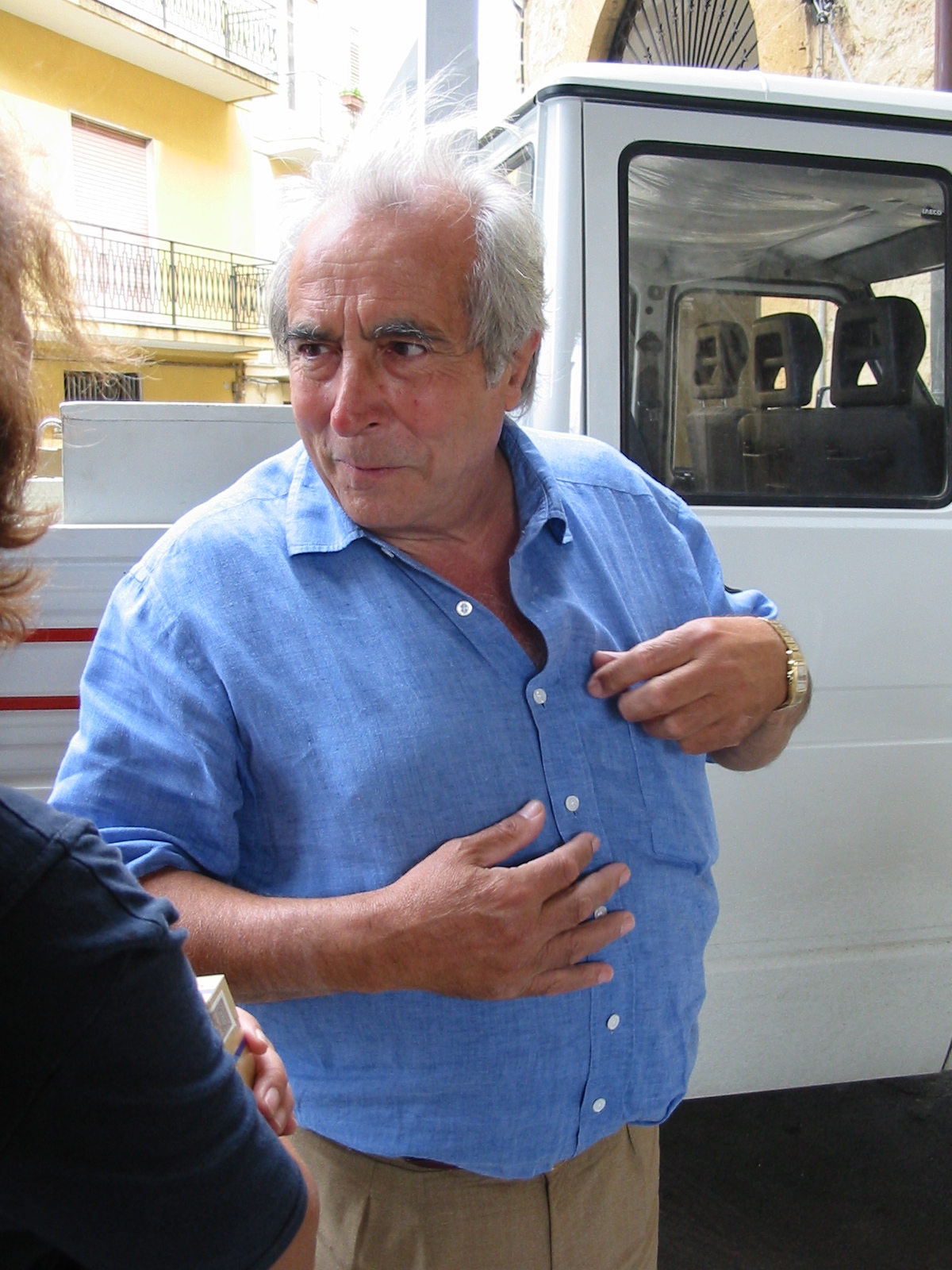
Sicilian dealer Gianfranco Becchina gives the authors a tour of his renovated pallazzo in Castelvetrano, Sicily.

While reporting our book, Italian authorities told us that Becchina’s role in the illicit antiquities trade may have exceeded that of his now notorious rival, Giacomo Medici, who was convicted in 2004 in the biggest looting case in Italian history. Becchina, now 72 and retired from the trade in his native Sicily, is appealing a February 2011 conviction for illegal dealing and has denied pending conspiracy charges, Isman writes.

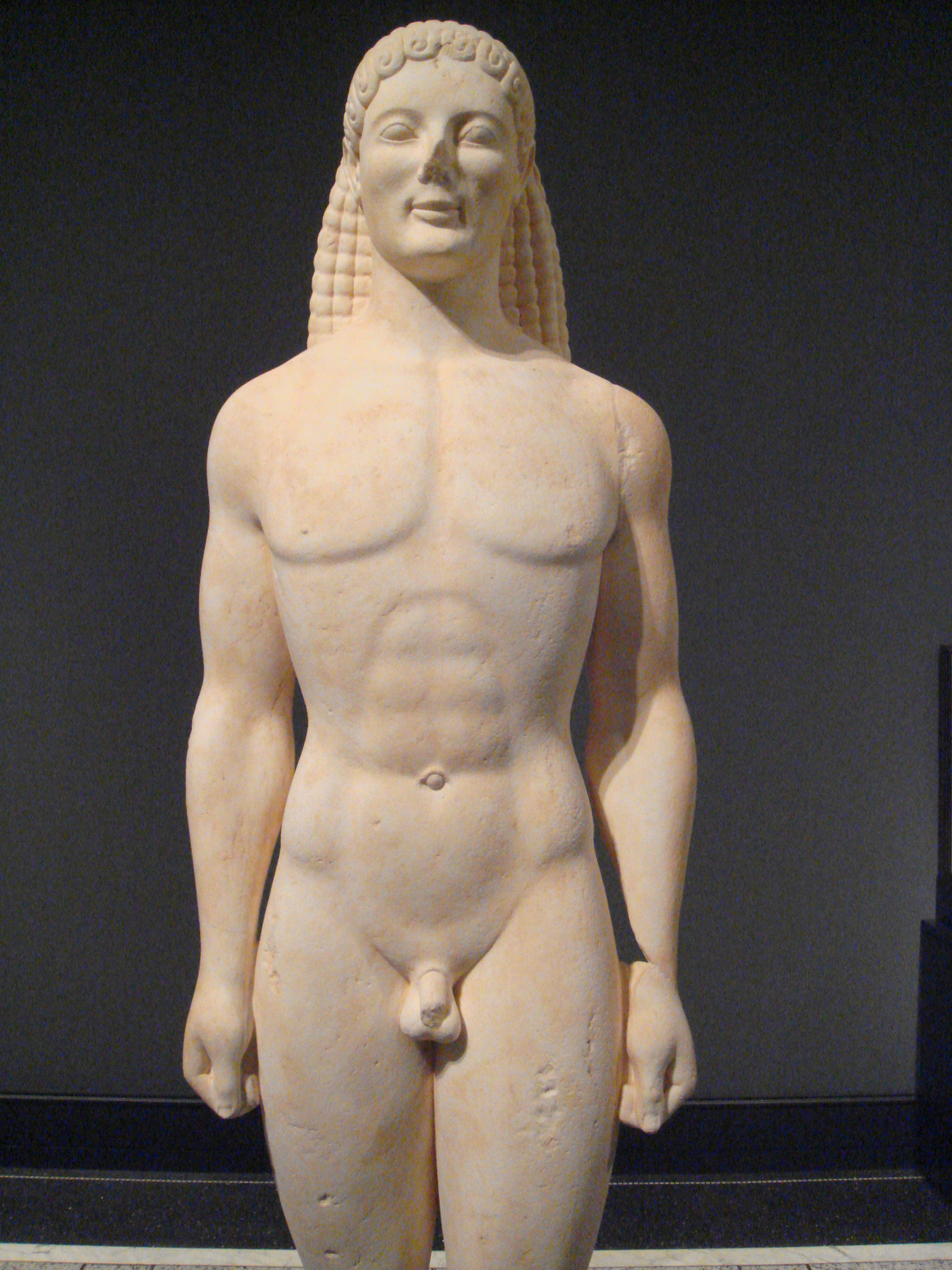
Becchina is perhaps best known as the dealer who sold the Getty its famous fake marble kouros. (See Chaps 4 and 5 of Chasing Aphrodite.) But that was just one sale in a 30-year career that Becchina meticulously archived in 140 binders containing more than 13,000 documents. The archive was seized by Swiss authorities in 2001, along with 6,315 antiquities and 8,000 photographs of objects, many of which appeared recently excavated, Isman reveals. The dossier shared with Italian investigators, who needed two months just to digitally photograph it.

The Getty bought the kouros in 1985 for $10 million. Today it is believed to be fake.

Today, the Becchina Dossier forms the center of Italy’s continuing investigation of the international trade in looted antiquities, which began in 1995 with the seizure of a similar cache  of records and Polaroids belonging to Medici. Like the Medici files, the Becchina Dossier provides a striking record of the illicit trade, showing the path of thousands of looted objects from tombs across the Mediterranean to the display cases of leading museums around the world.

Becchina has previously admitted to providing objects to the Getty, the Boston MFA, the Met and museums at Yale, Princeton, Columbia and the University of Washington, as well as the Ashmolean Museum in Oxford and museums in Japan. The archives reveal an even broader reach, Isman reports, including “the clandestine investigation of a million artifacts and police investigations into the affairs of 10,000 people.”

Among those tied to Becchina are the Toledo Museum of Art, the Miho Museum in Japan, the Lourve in Paris, the Merrin Gallery in New York, collectors Leon Levy and Shelby White and a large cast of middle men and looters familiar to those who have studied the illicit trade.

Italian investigators Maurizio Pellegrini and Daniella Rizzo have been combing the Becchina Dossier for several years.

Italian investigators Daniella Rizzo and Maurizio Pellegrini have had the painstaking task of combing through the dossier since its seizure, matching objects described there to known collections. Their work continues today. Isman’s revealing story is the first of what will likely be several uncovering the contents of the Becchina Dossier.

We too have reviewed the Becchina Dossier and will write more about it in the coming weeks. Stay tuned for that and stories about Becchina, who the authors visited in 2006 while reporting on the book.