Tag Archives: Getty Museum

The Best of Chasing Aphrodite 2011

Happy New Year!

We want to share our profound thanks for the 24,000 visits we’ve had since we launched this site with the release of Chasing Aphrodite last May. You’ve helped make the book a success while shining a light on art world shenanigans. Thank you for reading.

We’ve got many more revelations in store for you in 2012. If you’d like to keep receiving updates, be sure to subscribe via the box on the top right. You can also follow our more frequent comments on the latest news by liking our Facebook page or following us on Twitter.

We hope to see some of you at our upcoming events, which include talks at the National Press Club in DC on January 24th and Google and UCLA in February. You can get details and find our other event listings here.

Without further ado, here are your favorite posts of 2011:

1. An Exchange with Hugh Eakin at The New York Review of Books

Our exchange with Hugh Eakin in The New York Review of Books caught a lot of attention last year. We found the review flattering in several places, but also curiously littered with contradictions. Here is Hugh’s June  review, and our response. An abbreviated version of the exchange was printed in the NYROB’s August issue here.

2. The Secret FBI File: J. Edgar Hoover vs. J. Paul Getty

Was J. Paul Getty a Nazi collaborator? That is the provocative question that J. Edgar Hoover asked in 1940, when the FBI opened a secret investigation into J. Paul Getty’s possible ties to the Nazi regime. While reporting Chasing Aphrodite, we obtained Getty’s FBI file under the Freedom of Information Act. We posted the annotated file online and pulled out highlights of the investigation.

3. Getty Museum Returns Two Objects to Greece, Signs Collaboration Deal
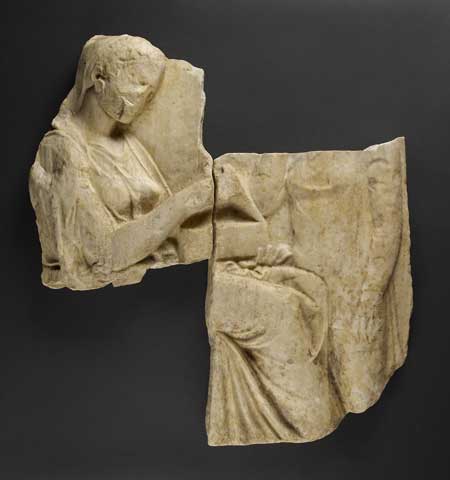
In 2011, American museums continued to return looted antiquities to their country of origin, and the Getty Museum was no exception. In September, the Getty agreed to return two objects to Greece and formalized a broad cultural agreement that will lead to loans, joint research and other collaboration with the art-rich Hellenic Republic. The agreement mirrors similar deals struck with Italy and Sicily in the wake of a negotiated settlement to claims the Getty had for years purchased ancient art looted from those countries.

4. The Becchina Dossier: A New Window into the Illicit Trade
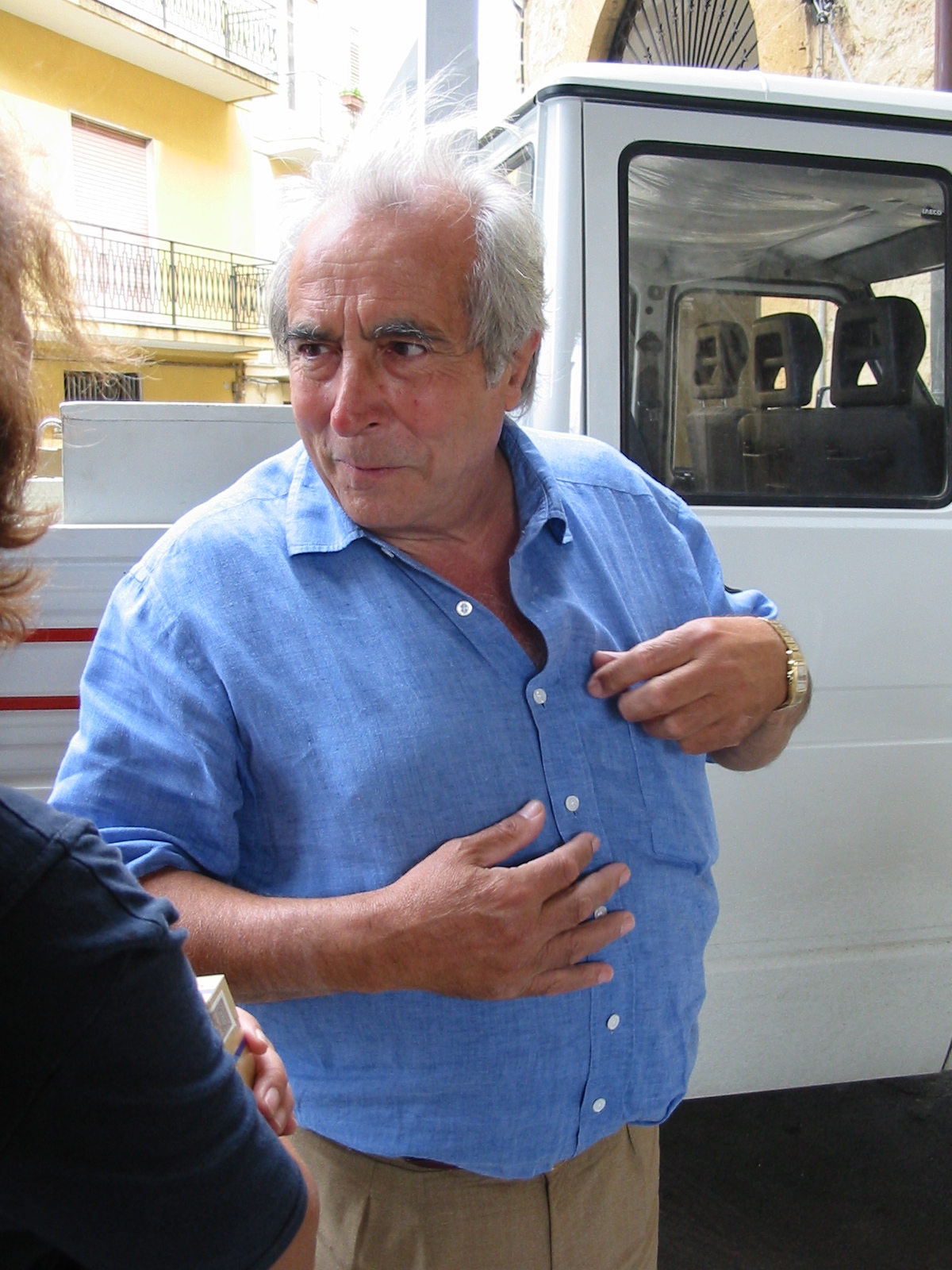
The conviction of Italian dealer Giacamo Medici set off the whirlwind of controversy detailed in the final chapters of Chasing Aphrodite. But Medici was just the opening move of the Italian investigation of the illicit antiquities trade. In 2001, Italian authorities raided the warehouse of Medici’s main rival, Gianfranco Becchina, seizing 13,000 documents, 6,315 antiquities and 8,000 photographs of objects, many of which appeared recently excavated.  Today, it is the Becchina Dossier that forms the center of Italy’s continuing investigation of the international trade in looted antiquities. Like the Medici files, the Becchina Dossier provides a striking record of the illicit trade, showing the path of thousands of looted objects from tombs across the Mediterranean to the display cases of leading museums around the world. Stay tuned as we’ll be making public more details from the Becchina case in 2012.
5. Chasing Persephone?

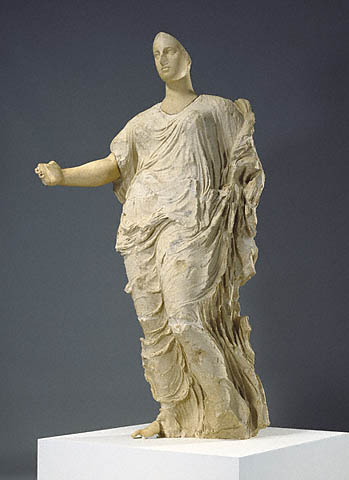
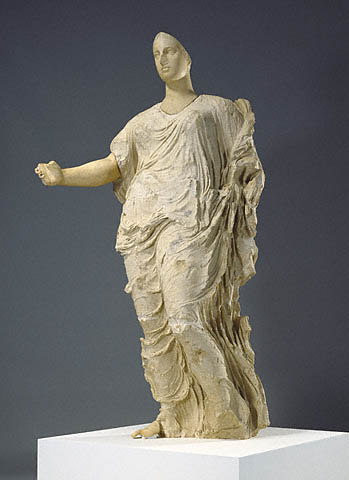
When the Getty’s statue of Aphrodite was returned to Italy in May, we were there to tell the story. In this report for the LA Times, Jason described how new theories about the goddess are being considered now that she’s back home. Who is the goddess? Does her slightly awkward marble head really belong atop the massive limestone body? Where precisely was she found? And what can she tell us about the ancient Greek colonists who worshiped her some 2,400 years ago? The fact that so little is known about the marble and limestone statue — one of the few surviving sculptures from the apex of Western art — illustrates the lasting harm brought by looting and the trade in illicit antiquities.

6. Jiri Frel: Scholar, Refugee, Curator…Spy?
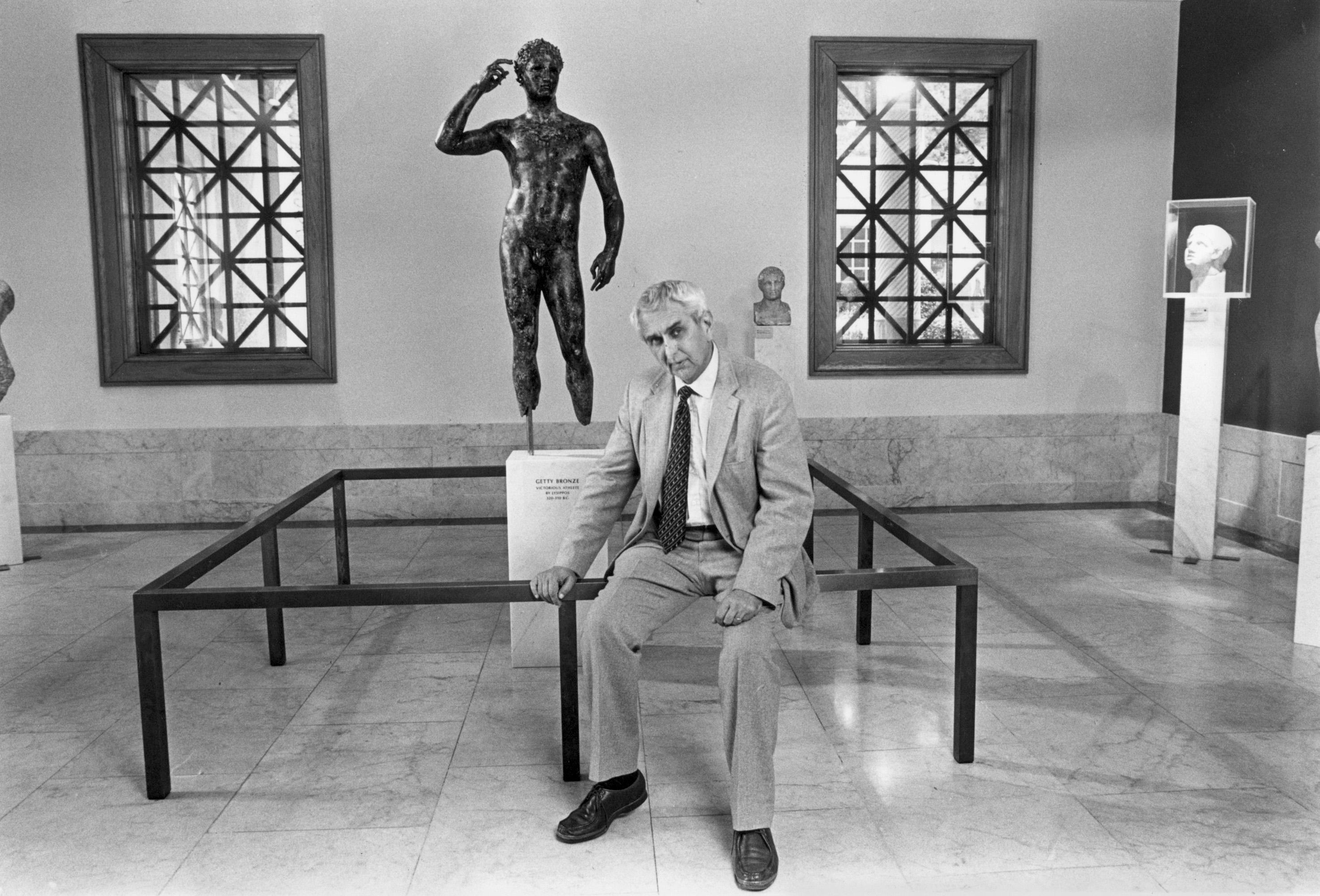
In the early 1980s, the antiquities department at the J. Paul Getty Museum was a hotbed of whispered political intrigue. Rumors swirled that the department’s Czech curator, Jiri Frel, was a Communist spy. And many believed the deputy curator, former State Department official Arthur Houghton, was a CIA plant tasked with keeping an eye on Frel’s activities. Frel’s once-classified FBI file, obtained by the authors under the Freedom of Information Act, reveals that the US Government asked similar questions about Frel in 1971, when an investigation was conducted into his “possible intelligence connections.”

7. The Getty Fights to Keep its Bronze
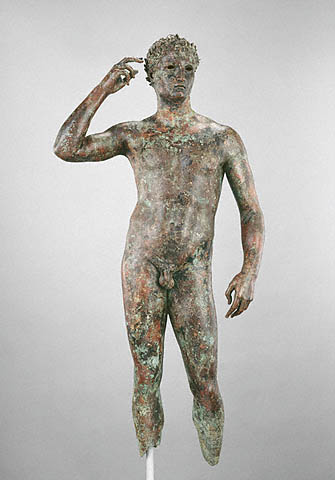
A week after sending its statue of Aphrodite back to Italy, the Getty was fighting to keep another ancient masterpiece: its priceless bronze statue of an athlete, whose 1964 discovery by Italian fisherman is featured in the opening chapter of Chasing Aphrodite. Here’s our report on the latest in the fight for the Getty  bronze.

8. Houghton on The McClain Doctrine and Crimes of Knowledge

Did American museum officials violate US laws when buying looted antiquities? We attempt to answer that hypothetical using internal Getty memos written by former curator Arthur Houghton, who spelled out the risk of violating the National Stolen Property Act when buying objects with unclear provenance.

9. The Truth about Marion True

When archaeologist Malcolm Bell reviewed Chasing Aphrodite in The Wall Street Journal in July, he largely agreed with our premise — that  American museums fueled the destruction of knowledge by acquiring looted antiquities and using what Bell calls a “fabric of lies” to obscure their complicity in an illicit trade. But Bell’s review took an odd turn when he recommended that former Getty antiquities curator Marion True, who was fired after we revealed her blatant conflicts of interest, be hired “for a major museum position.” We respond.

10. Looted Antiquities at American Museums: An On-Going Crime

For those who might be tempted to think the issues raised in Chasing Aphrodite are behind us, we discuss a recent law review article that argues that continued possession of unprovenanced antiquities (ie most of those in American collections) could be an on-going crime under US law.

BONUS: Finding Loot at Your Local Museum

Marion True once told her museum colleagues: “Experience has taught me that in reality, if serious efforts to establish a clear pedigree for the object’s recent past prove futile, it is most likely — if not certain — that it is the product of the illicit trade and we must accept responsibility for this fact.” In that same spirit, we gave fellow investigative reporters from around the world a few tips on how to find looted antiquities at their local art museum during the June meeting of Investigative Reporters and Editors (IRE).

In 2011, we put that advice to work with revelations about objects in several museum collections. Our New Year’s resolution: to do much more of the same in 2012!

Hot Doc: A Damage Assessment at the Getty Finds Forgery, Fraud and Fabricated Histories

The true cost of looting has always been hard to measure: how does one account for what is lost? Perhaps this is why some — Americans in particular, it seems — tend to think of looting as a victimless crime.

In truth, looting has many victims — the artifacts lost or damaged during the act itself; the defaced monuments and pockmarked archaeological sites left in its wake. Then there is the more pernicious effect of plunder and the black market it fuels — the corruption of our knowledge about the past.

Jiri Frel with The Getty Bronze

This is what the Getty Museum confronted in 1984, after the hasty departure of its charming and crooked antiquities curator Jiri Frel. In his decade at the Getty, Frel had used any means necessary to build the museum’s antiquities collection into one worthy of the Getty’s wealth. In 1984, when his criminal activity was discovered amidst an IRS investigation, he abruptly left the country, leaving colleagues at the museum to clean up the mess.

John Walsh, Getty Museum Director

A confidential June 1984 memo from acting antiquities curator Arthur Houghton to museum director John Walsh was an early attempt to account for the damage done by Frel’s collecting practices. We’ve posted it below as part of our Hot Docs series, a effort to publish some of the key confidential files we used while reporting Chasing Aphrodite.

Arthur Houghton III

“Changes or additions to the central files registry should be recorded for many of the objects in the antiquities collection,” Houghton noted with characteristic understatement. “The scope of the problem is quite large and involved a number of areas.”

Among the problems Houghton reported:

Falsified provenance: Many of the ownership histories of objects in the collection were “mythical.” Frel and his trusted dealers had made a parlor game of inventing bogus European collections like “Esterhauzy” to cover the fact that the objects being purchased were fresh from an illicit dig.

Bogus attributions: Frel had often gussied up the attribution of objects to make them more palatable to the public or the Getty’s own acquisition committee. Roman copies were listed as Greek originals; a 3rd century BC sculpture became the only surviving piece by a Greek master.

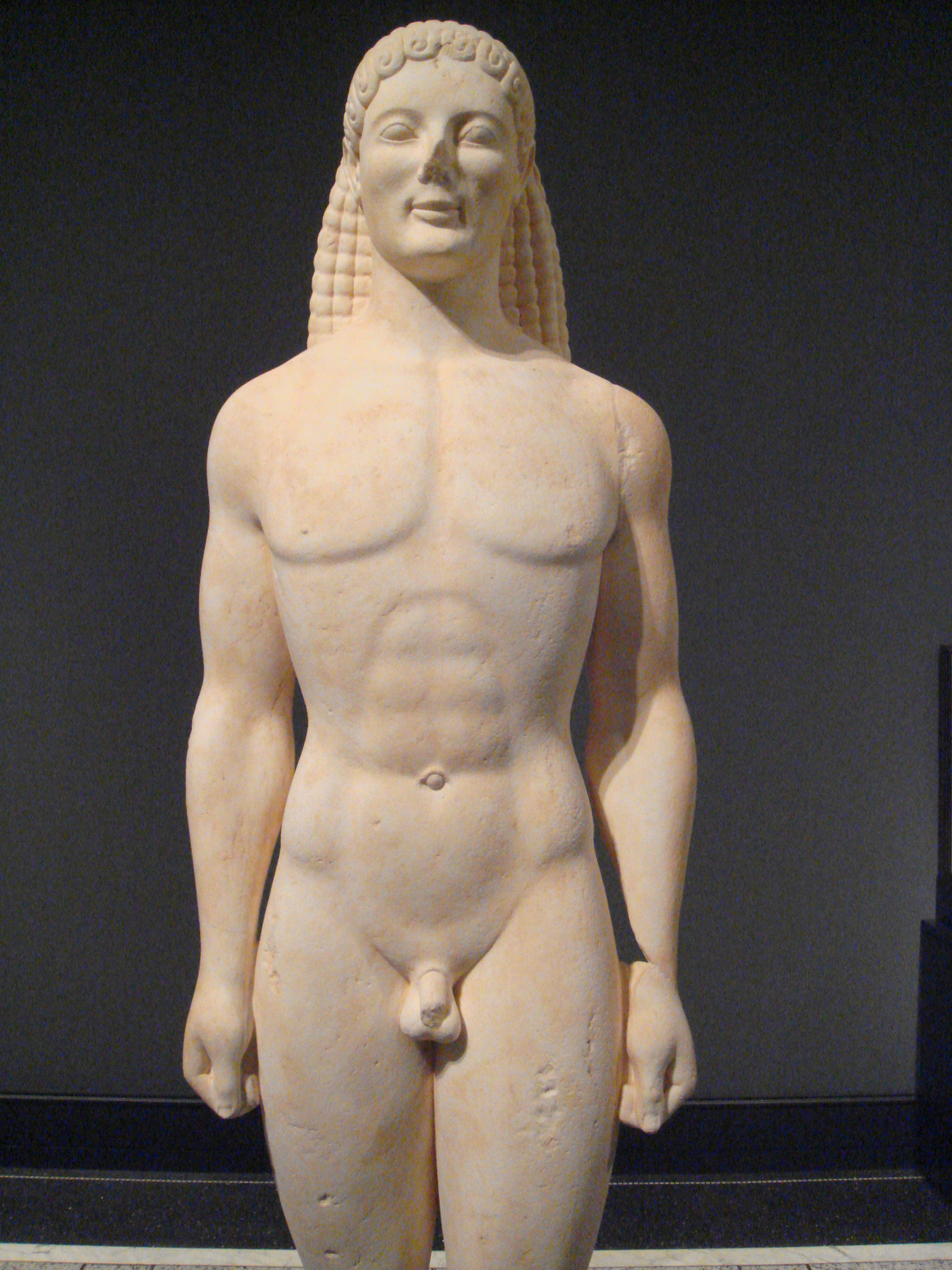
The Getty bought the kouros in 1985 for $10 million. Today it is believed to be fake.

Forgeries: Frel had bought several multi-million dollar fakes, either because he was fooled or (more likely) in exchange for a cut of the purchase price. The most famous is the nearly $10 million Getty Kouros, still on display today at the Getty Villa. As Houghton noted, “Several [fakes] are of major importance and involve very high values and the Museum’s reputation.”

Then there were the lies that mostly hurt the Getty: Frel had convinced the museum to dramatically overpay for objects, with some of the money likely coming back to him in kickbacks. He had inflated valuations of objects as part of a tax fraud scheme and invented phony donors — many still honored on Getty display placards– who he used to launder objects coming into the collection.

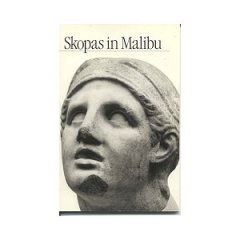
The Getty bought his sculpture in 1979, believing it was a head of Achilles by Skopas, a famous Greek sculptor. Subsequent research showed that it was a modern forgery.

In time, some of the most egregious distortions were corrected. The Getty kouros today is awkwardly labeled “Greek, about 530 B.C., or modern forgery,” and several other fakes were taken off display. But in many more cases, Houghton noted the damage to the historical record was irreversible. “Much of the suspected provenance and acquisition (including donation) information is fragmentary; and while many records can be corrected in time and with reasonably diligent attention, it will not be possible with reasonable discretion to probe into the true provenance or acquisition history or many objects in the collection.”

The truth, in other words, was lost.

Today, similar distortions  and fabrications litter the antiquities collections of America’s great museums, which are tax-exempt because their public mission is education. In doing business with the black market, museums have betrayed that mission and filled their shelves with what amount to beautiful lies.

HOT DOC: June 1984 confidential memo from Arthur Houghton to John Walsh.

Article: “An Art World Detective Story: The Getty’s Head of Achilles” Suzanne Muchnic, LA Times, 11/3/88

Looted Antiquities at American Museums: An On-Going Crime, law professor argues

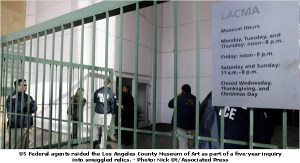
In January 2008, more than one hundred federal agents raided four Southern California museums. They seized scores of Southeast Asian antiquities that investigators said had been looted and illegally smuggled into Los Angeles before being donated at inflated values to the museums.

Since then, nothing much has happened in the case. But one legal expert is warning that the case represents a ticking time bomb for American museums, whose antiquities collections are still filled with looted antiquities.

If the raids result in convictions, the legal fallout could be devastating, argues Stephen K. Urice, a University of Miami law professor and one of the country’s foremost legal minds on cultural property.

Stephen K. Urice

“Continued possession of virtually all unprovenanced antiquities in public museums within the court’s jurisdiction would suddenly become actionable under the [National Stolen Property Act], and museums would be obligated to divest themselves of those collections promptly,” Urice writes. “Failure to do so would expose the antiquities to civil seizure and forfeiture proceedings, and the museums’ board and staff members to criminal liability.”

This doomsday scenario comes not from the alarmist fringes in the debate over antiquities but an avowed centrist. Urice is a former museum director with a PhD in archaeology, and was the founder of the University of Pennsylvania’s cultural law program. He has earned respect from archaeologists and museums alike for his dispassionate, middle-of-the-road analyses of museum policies and cultural property statutes.

That’s why Urice’s 39-page article in the Summer 2010 issue of the New Mexico Law Review is so striking. His analysis, now bubbling up in cultural circles, is too involved to present in full here. But in essence, it predicts a doomsday scenario based on a little noticed wrinkle in the NSPA, the key U.S. criminal law in antiquities looting cases.

LACMA Director Michael Govan asks federal agents to let him into the museum on the morning of the raid

In the 1977 McClain case, in which five Texas dealers were convicted of smuggling looted Mexican artifacts, prosecutors successfully asserted the antiquities were “stolen property” under US law if they were exported illegally from a foreign country with an enforced cultural property law that gives the government rightful owner of such artifacts. (According to the UNESCO Database of National Cultural Heritage Laws, 180 countries have passed one or more such statutes ).

Urice reasons that this interpretation is easily extended to most museum antiquities collections, where the bulk of objects could be considered contraband because they lack provenance (ownership history) and valid export licenses.

Museums have believed that the statute of limitations would protect them from such claims. But Urice notes that a 1986 change in the NSPA added possession of such objects as a crime. Since possession is an on-going act, Urice writes, “even in situations where the museum had taken possession of an antiquity decades ago, there would be no statute of limitations defense.”

This hasn’t come up in past antiquities cases since prosecutors went after collectors or dealers. The Southern California raids, however, specifically targeted museums, which under McClain arguably possess stolen property. Urice argues that a successful conviction in the case would trigger a chain reaction, forcing other museums in the court district (such as the Getty) to disgorge their unprovenanced artifacts or have their officers face criminal indictment.

In Urice’s view, this is an unacceptable – and unintended — outcome of the law that would strip American museums of an important teaching tool. What to do?

Urice suggests several remedies. Among them is a law exempting museums from the potential fallout of Southern California case and other antiquities claims under the NSPA. A second one is to replace the NSPA with a new law with input from archaeologists and collectors — a likely bitter and tortuous process.

One question not addressed in the article: Are Urice’s warnings a present-day reality? After all, federal courts in New York and Texas have both found the McClain Doctrine to be the ruling precedent, making possession of looted antiquities an on-going federal crime. In order to seize the objects, the government would only need to establish probable cause that the objects were illegally exported — the burden would be on the museum to prove legal export, something that can’t be done for most antiquities. All that’s missing is a US Attorney interested in making such a bold case.

Whatever the answer, Urice’s article makes clear the legal struggle over looted antiquities did not end with the Getty scandal.

If the Southern California case moves forward, the worse may be yet to come.

HOT DOC: Urice on Unprovenanced Antiquities and the National Stolen Property Act

Our coverage of the January 2008 museum raids:

Raids Suggest A Deeper Network of Looted Antiquities

Federal Probe of Stolen Art Goes National

Roxanna Brown: A Passion for Art, a Perilous Pursuit (3-part series)

Upcoming Events: Chasing Aphrodite at the National Press Club, Google and UCLA

Here are several new events we’ve lined up in the coming months :

January 23, Washington DC: The Society for the Preservation of Greek Heritage, the American Friends of the Acropolis Museum and the lawfirm Steptoe and Johnson will host Jason for an evening lecture and book signing at Steptoe and Johnson in Washington DC. Details TBA.


January 24th: The National Press Club, Washington DC.

Jason and Ralph will speak about Chasing Aphrodite, the press and transparency at American museums with former Getty antiquities curator Arthur Houghton and Walters Museum director Gary Vikan. Our moderator will be James Grimaldi, investigative reporter at the Washington Post. Q&A, book signing and reception to follow.

Details: Open to the public. 6pm at The National Press Club. 529 14th St. NW, 13th Floor. Phone: 202-662-7500 or www.press.org

February 10th, 2012: Google HQ, Mountainview CA.

Jason will talk about Chasing Aphrodite and how crowd-sourcing might be harnessed to fight the illicit antiquities trade at the Googleplex, Google’s Mountainview headquarters.

Details: Open to the public. 12- 1pm @ 1600 Amphitheatre Parkway in Mountain View, CA.

February 15, 2012: UCLA. Details TBA.

You can find updates at our events page here.

Our past events include: The Jonathan Club; Chapman University; Central Michigan University; The Walters Art Museum; UPenn Law School; UPenn Museum; The Harvard Club of New York City; The National Arts Club; Princeton University; Villanova Law School; Rutgers University; New York University; Cardozo Law School;  Archaeological Institute of America’s New York Chapter; SAFE; The Benson Family Farm; Elliot Bay Bookstore in Seattle; Powell’s Book in Portland; The Commonwealth Club of San Francisco;  Loyola Law School; Barnes and Noble of Thousand Oaks; Book Soup on Hollywood Blvd.;  The LA Festival of Books.

To suggest an event near you, please contact us: ChasingAphrodite@gmail.com.

Listen to Chasing Aphrodite on Deadline LA: The Getty Museum and the Black Market in Looted Art

Last week, Jason spent an hour talking with Barbara Osborn and Howard Blume, co-hosts of DEADLINE LA, KPFK’s roving eye on the media.

KPFK's Deadline LA

Olson and Blume are notoriously tough customers who boast of “pummeling” the news media for their coverage of the day’s top stories. But their praise for Chasing Aphrodite was effusive. Blume called it “fascinating” and “a page-turner.” Osborn said she couldn’t put the book down.

You can listen to both half-hour segments here. Part I focuses on the path of looted antiquities from tombs to American museums like the Getty.

Deadline LA: Part I

Part II focuses on the colorful history of the J. Paul Getty Museum:

Deadline LA Part II

Fall Book Tour wraps up after 14 events in 15 days. VIDEO: Chasing Aphrodite at UPenn.

We’ve just wrapped up our fall book tour — 14 events in about 15 days.

Thanks to everyone who came out to learn about museums and the illicit antiquities trade. And our sincere gratitude to our hosts at Rutgers, Princeton, UPenn Museum, UPenn Law School, Villanova Law School, NYU, The National Arts Club, The Harvard Club of NYC, Cardozo Law School, AIA, SAFE, The Walters Museum of Art, Chapman University and Central Michigan University.

Keep an eye on our events page for more events coming soon. If you’re interested in hosting an event near you, please contact us at ChasingAphrodite@gmail.com.

For those who missed us, here’s a video of our presentation at the UPenn Museum of Archaeology and Anthropology, where we were introduced by Dr. Richard Leventhal:

Did Museum Officials Violate US Laws? Houghton on The McClain Doctrine and Crimes of Knowledge

Whenever we talk with Arthur Houghton — the Getty’s former antiquities curator who we’ll be on stage with this Saturday at the Walters Art Museum in Baltimore — he asks a provocative question: did he or any other museum official violate U.S. law while buying looted antiquities?

The short answer, of course, is that no museum official at the Getty or elsewhere has been charged with, much less convicted of, a crime under US law. The real question, then, is: might they have?

Here’s an attempt to answer that hypothetical, using Houghton’s own writings while at the Getty Museum. As part of our “Hot Docs” series, we’ve annotated and posted transcriptions of the key documents via links below.

The Getty bought the kouros in 1985 for $10 million. Today it is believed to be fake.

Getty officials certainly knew they were buying objects from an antiquities market awash in illicit material. In April 1984, while the J. Paul Getty Museum was considering the acquisition of its infamous statue of a kouros, Houghton told the Getty’s outside counsel: “Probably 95% of antiquities on the market were found in the past three years. The only way one would obtain them was if one did not ask the specific question that would elicit the specific answer about provenance that made the material unbuyable.”

Days later, Houghton elaborated on the risks of acquiring such objects in a memo on the law to museum director John Walsh. Law enforcement authorities had made clear that under their reading of current law, museum officials could be criminally liable for acquiring such objects, Houghton wrote. “No action will be taken against the importer unless it is clear that the importer acted with certain knowledge that the material had been illegally exported from a country which had appropriate national ownership in place. If Customs believes that the importer had such knowledge, they could seek criminal penalties against the importer.”

The criminal law Houghton was referring to was the National Stolen Property Act. In the 1977 case US vs. McClain, a federal appeals court in the 5th Circuit had found that buying antiquities illegally exported from a country with a national patrimony law was equivalent to buying stolen property under US law. US government officials had made clear that this “McClain doctrine” could be applied well beyond the 5th Circuit. In effect, there was no difference between buying a looted antiquity and a hot car. The government could seize the stolen property and criminally charge those who imported it, Houghton wrote.

At the time, the Getty was buying such objects at a breakneck clip. As Houghton wrote a month later to deputy director Deborah Gribbon, “No other department of ancient art has an acquisition program as intense as ours nor one which, if it is to be maintained, requires such frequent contact with market sources.” In fact, the Getty was buying objects far faster that its staff could document them. “Some 30% of the collection has not been photographed, a significant number have no accession number, and there is no file by subject matter or chronological order to help find things,” Houghton wrote.

Harold Williams, CEO of the J. Paul Getty Trust

Word of the Getty’s potential legal exposure made its way to Harold Williams, the CEO of the Getty Trust and a lawyer who had run the SEC. Williams wrote to Walsh about the troubling rumors he had heard about the antiquities market: “Indeed, much of the conversation is to the effect that 90% of the objects on the market are presumed to have been recently come out of Italy or Greece.” Williams wanted answers, and Walsh punted to his “ethical tutor” Houghton, who was asked to explain how the museum could continue to acquire undocumented antiquities under such conditions.

John Walsh, Getty Museum Director

Houghton’s answer came in the form of another memo, this one entitled “Ethics and the Acquisition of Antiquities.” It lays out the two views on collecting undocumented antiquities: those of archaeologists, who favor restrictions, and those of curators, who feel a “special obligation” to acquire objects. In the end, Houghton concludes that the Getty is justified in the acquisition of undocumented antiquities because it is better prepared that most museums to protect, conserve and display these objects.

But how to navigate the law and the McClain Doctrine, which suggested such acquisitions could violate US law? Houghton’s solution was “optical due diligence.” In essence, the Getty would create the appearance of propriety and high ethical standards while buying what it wanted, being careful to avoid the “certain knowledge” of an object’s illicit origins that could land a museum official in jail.

Cult Statue of a Goddess (Aphrodite)

Houghton resigned from his post in 1986, but his rationale for continuing to collect undocumented antiquities became the basis for the Getty’s new acquisition policy the following year. That policy change allowed the Getty to buy a statue of Aphrodite despite clear signs it had been recently looted from Southern Italy.

Did Getty museum officials have the “certain knowledge” about the Aphrodite required for criminal charges under the McClain Doctrine?

Walsh’s handwritten notes from a meeting with Williams that September would suggest they did: “We know it’s stolen…Symes [the dealer offering the Aphrodite] a fence.”

Today, both men claim the conversation was hypothetical, not about the Aphrodite. Would that defense have held up in criminal court? Thanks to the statute of limitations, we’ll never know.

We look forward to seeing Arthur again on Sat, October 29th at the Walters Museum of Art in Baltimore. Details are here.

Hot Docs: 

Houghton on the Law

Houghton on Antiquities Ethics

1987 Acquisition Policy

Fall Book Tour: Chasing Aphrodite across the East Coast

Here’s the line up for this week in New York City and beyond. Hope to see you there. To suggest an event near you, please contact us at ChasingAphrodite@gmail.com

October 26th: The National Arts Club in New York City hosts Jason for 6:30pm lecture and book signing. 15 Gramercy Park South. (Members and guests only.)


October 26th: Archaeological Institute of America The Institute’s New York Society will host Ralph for an evening talk about Chasing Aphrodite. Details here.

October 27: Harvard Club of NYC will be hosting us for a lecture, book signing and dinner. (Members only.)

October 28: Beacon Award Dinner. SAFE will host a dinner honoring Jason and Ralph for “their dedication to uncovering the truth” about the role of museums in the illicit antiquities trade. Details here.


October 29: Walters Museum of Art in 
Baltimore. Museum Director Gary Vikan will be moderating a public talk with Ralph, Jason and Arthur Houghton, the former interim Getty antiquities curator and a staunch advocate of collector’s rights. Discussion at 2pm, followed by book signing. Details here.


A Call from Robert Hecht: I’m Not a Squealer

photo by Ed Alcock/NYT

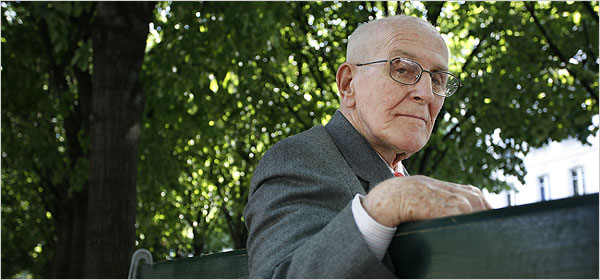
Robert Hecht

Robert Hecht called the other day to say he’d received the copy of Chasing Aphrodite that we sent to his home on Boulevard La Tour Maubourg in Paris.

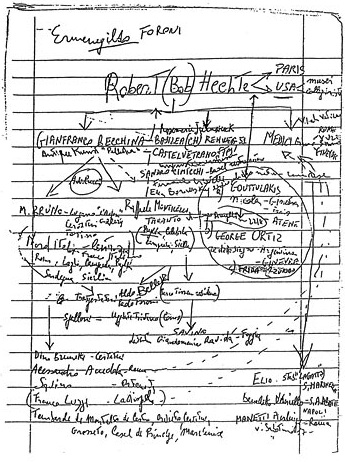
This chart showing the key players in the illicit antiquities trade was seized by Italian police in the 1990s.

Hecht is the American antiquities dealer who has dominated the trade for more than 50 years. Italian authorities believe he was also a mastermind of the international blackmarket in looted art — his name appeared at the top of an organization chart of looters, middlemen and dealers that Italian police found in the early 1990s. When Getty antiquities curator Marion True was indicted in 2005, Hecht was named as her co-defendant. His criminal trial in Rome on charges of trafficking in looted art continues today.

Here’s how we describe “the preeminent middleman of the classical antiquities trade” on page 30:

“Since the 1950s, Hecht had sold some of the finest pieces of classical art to emerge on the market. […] His network of loyal suppliers reached deep into the tombs and ruins of Greece, Turkey, and Italy. […] His clients included dozens of American and European museums, universities, and private collectors, including J. Paul Getty, whom Hecht had once persuaded to buy an intricately carved Roman bust. For decades, Hecht single-handedly dominated the antiquities market with his brilliance, brutality, and panache. He cited Virgil as readily as the lyrics of Gilbert and Sullivan, and he was known to break into operatic arias. He often drank to excess and was known to gamble his money away in all-night backgammon games. He tamed competitors with an unpredictable temper and eliminated rivals with anonymous calls to the police. Even those who sold directly to museums gave Hecht a cut of the deal, earning him the nickname ‘Mr. Percentage.'”

Robert Hecht poses in front of the famous looted Greek vase he sold the museum in 1972 for $1 million.

That’s the first of nearly thirty references to Hecht in Chasing Aphrodite. Even so, we felt it was short shrift for a man whose role in the art market is truly legendary. During our interviews and meetings with Hecht over the years, he was always a pleasure to deal with. He is an engaging dinner companion, often charming and talkative while being coy about the key details we were scratching for. Today, at 92 years old, he suffers from some health problems but retains the sharp wit he’s long been known for.

So, what did Hecht think of the book? “It was a well written book except for one lie, which I hope was not your invention,” he said.

Hecht was not disturbed by the allegations that he virtually ran the illicit antiquities trade for 50 years. He wasn’t upset about being called a gambler and an abusive alcoholic, or a participant in a massive tax fraud scheme, or the man largely responsible for the destruction of thousands of archaeological sites. The offending passage was the  reference to Hecht “eliminating rivals with an anonymous call to the police.” We based it on conversations with Italian law enforcement sources. Hecht assures us it is not true.

“The accusation of being a squealer is very serious,” Hecht said. “That is not in my blood.” Hecht said such accusations could be bad for business, which has been slow lately: “A customer might say, oh my god, you’re a spy for the police.” Hecht’s wife Elizabeth got on the phone next to explain that the charge had troubled her husband: “A lot of people we know did do that, but Bob never did. He’s not a rat, and does not wish to be known as such.”

Cult Statue of a Goddess (Aphrodite)

Many in the trade recall how Hecht threatened to expose his rivals in a memoir he was writing. He never followed through on those threats — the unpublished memoir was seized by Italian authorities and is now among the most compelling evidence against him at trial.

But dropping a dime to the police is different. Going back over our notes, there is only one specific case Italian authorities cited in suspecting Hecht of being “a squealer.” It involved the Getty’s 1988 acquisition of the statue of Aphrodite from Hecht’s rival, London dealer Robin Symes.

Shortly after the whopping $18 million acquisition — a record at the time –Interpol Paris received an anonymous tip claiming the Aphrodite had been looted from Morgantina, Sicily. The tipster named the looters and middlemen in the transaction with detail that later proved remarkably accurate. Italian authorities have long suspected the source was Hecht, who lived in Paris at the time and may have been jealous of his rival Symes. But the Italians have no proof of their hunch, and Hecht flatly denies being the tipster.

Given his clear denial, and absent further supporting evidence from our Italian sources, we agreed to correct the record. Robert Hecht is many things, but to the best of our knowledge, he is not a squealer.

We’ve invited Hecht to join us later this month in his hometown of Baltimore, where we’ll be speaking at the Walters Museum on October 29th. He will be in the States that week and did not rule out the possibility of joining us.

Hot Docs: Marion True the Crusader

Former Getty Antiquities Curator Marion True

One of the most scathing rebukes of the collecting practices of American museums in recent memory came not from a grumpy archaeologist, a nosy journalist or an overzealous foreign prosecutor. It came from one of the museum field’s rising stars: Getty antiquities curator Marion True.

In June 2000, True delivered a gutsy speech to an audience of museum peers that denounced them for relying on “distorted, patronizing and self-serving” arguments to justify their collecting of ancient art. Over the course of the next hour, True dismantled the various justifications museums had long used to buy ancient art that was almost certainly looted.

The speech, whose full text we’ve posted and annotated here, is remarkable not just for True’s scathing remarks but also for their venue: the annual gathering of the Association of Art Museum Directors. The group is the museum profession’s most powerful, consisting of representatives from the country’s largest and wealthiest collecting institutions. As such, the AAMD wields immense clout on matters of institutional policy, including collection practices.

Philippe de Montebello, former director of the Met

Under the sway of former directors Philippe de Montebello of the Met and James Cuno of the Art Institute of Chicago (now CEO of the Getty), the AAMD had long resisted the 1970 UNESCO Convention, which calls for import restrictions and international cooperation to stop trafficking in illicit antiquities. Instead, AAMD’s guidelines were riddled with caveats and loopholes that allowed member institutions to buy undocumented antiquities as long as the pieces were artistically “significant.” In her speech, True was calling out the power structure of American museums.

James Cuno, CEO of the J. Paul Getty Trust

Her speech was inspired by an earlier panel at Columbia University on the Elgin Marbles. The discussion “had nearly devolved into a fistfight” when a fellow panelist suggested the Parthenon sculptures needed to remain the British Museum because the Greeks were “unworthy custodians and therefore did not deserve to have it” [sic]. “As the three front rows of the audience were primarily of Greek nationals or Greek Americans, this statements did not go down very well,” True noted dryly.

True said the debate had caused her to re-trace the evolution of what had become an increasingly nasty debate about cultural patrimony that pit foreign officials and archaeologists against American museums, dealers and collectors. “Given the seemingly noble intentions that inspired the foundation and development of American Art museums, how have they now come to be so often in direct conflict with the source countries and the academic communities that work on cultural heritage?”

Her answer laid the blame squarely at the feet of American museums, which had used similarly “demeaning arguments” to justify their acquisition of marquee objects and to brush off the concerns of foreign countries. She listed the most common arguments, many of which are still used today:

“–Because the contemporary population was ethnically not the same people as the creators even thought they inhabit the same territory;

–Because the police force in the source country does not do enough to protect its patrimony and maybe even is in collusion with the smugglers;

–Because art historians in the country are not up to the job of studying their own patrimony but have had to look to the British German and American scholars for leadership;

–Or because the national laws governing the protection of cultural properties are repressive since they do not allow the free trade in the objects that US laws allow and,

–Or most perplexingly and inflammatory, in the case of Italy, because Mussolini had continued to enforce the laws instituted in the 18th century to protect Italian artistic heritage, that we would be enforcing the laws of a fascist regime.”

“Surely,” True said, “we should not have to rely on such distorted, patronizing and self-serving observations to justify collecting ancient art in this country.”

Next, she turned her sights on dealers and collectors, who still “vehemently denied” the extent of looting that has been clearly documented by archaeologists and governments. Their claims that the illicit trade was small were “contradicted by the evidence,” including their own political machinations to gut American laws prohibiting the import of such objects. It was time to accept that most undocumented antiquities came not from “old European collections,” as dealers and museums were fond of claiming, but from recent chance finds or illegal excavations, True said.

Likewise, the claim made by Sothebys and other auction houses that sellers preferred not to reveal provenance information “flew in the face of logic” because such information would only increase an object’s value. And the common practice of asking governments for evidence of whether a piece had been looted “conveniently ignores” the fact that, by definition, such objects are “undocumented,” she said.

She concluded with a knock-out punch: “Most museums have long preferred to consider objects innocent until proven guilty,” she said, citing the Getty’s own 1987 acquisition policy and the writings of James Cuno while at the Harvard Arts Museums. “But experience has taught me that in reality, if serious efforts to establish a clear pedigree for the object’s recent past prove futile, it is most likely—if not certain—that it is the product of the illicit trade and we must accept responsibility for this fact.

“It has been our unwillingness to do so that is most directly responsible for the conflicts between museums, archaeologists and the source countries.”

In one fell swoop, True had laid bare the cynical path of many museum masterpieces—a path few insiders had ever been willing to publicly acknowledge.

But as powerful and succinct as True’s presentation was, her listeners could have been forgiven a measure of skepticism. While it represented one side of Marion True – the crusader for reform — they knew another: the accomplished curator and competitor who for a decade had used those very same tactics to fill the Getty with some of the best undocumented pieces in the world. Indeed, True’s intimate knowledge of museums’ efforts to navigate the illicit trade was based on her personal experience.

As it happened, the day after True gave her speech a judge in Switzerland ruled that Italian officials could take possession of hundreds of Polaroids and documents that had been seized in a 1995 raid of an antiquities dealer’s Geneva warehouse. The Polaroids showed scores of looted artifacts as they appeared fresh from the ground. Eventually Italian investigators traced the greatest number to the Getty and Italian prosecutors started planning a prosecution of Marion True.

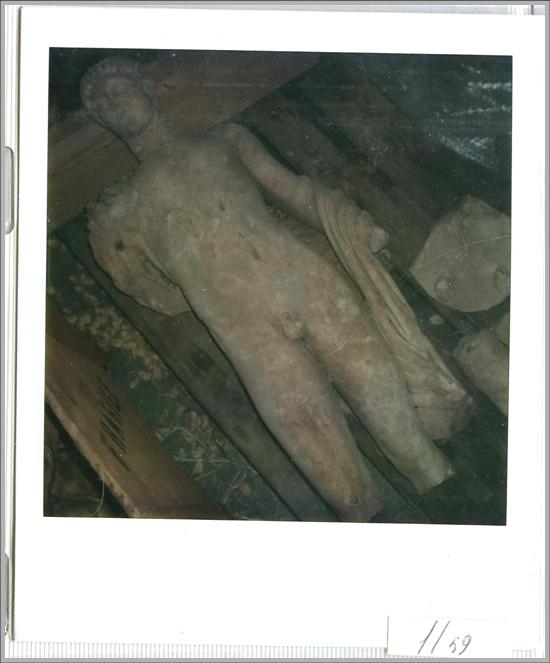
A Polaroid of the Getty's Statue of Apollo showing it soon after being looted

Soon after, an internal Getty probe found similar photos in True’s own curatorial files showing, in the words of the Getty’s outside counsel, “objects in a state of disrepair or in a location from which they may have been excavated.” The Getty’s attorney concluded it would take little for the Italians to link True to a conspiracy or to support a claim that the curator “knew or should have known that many objects acquired by the Getty were illegally excavated from Italy.”

Among their best evidence, he noted, would be True’s own 2000 speech before her peers at the AAMD.