Tag Archives: looting

Arnold Peter Weiss’ 46 donations to RISD Museum of Art

The Rhode Island School of Design has provided a complete list of donations made by former museum chairman Arnold Peter Weiss, the Providence doctor and collector of ancient coins who was arrested in New York last month for possession of a coin he allegedly knew had been recently looted in Sicily. (See our earlier stories here, here and here.)

Dr. Arnold Peter Weiss

Weiss donated 46 objects to the museum between 1997 and 2010, according to museum spokeswoman Donna Desrochers. Sixteen of those donations were ancient coins. We’ve posted the complete list of the Weiss donations, with images, here.

Below are the ownership histories for the ancient coins, with select images:

Six Lycian staters, 1997.42.1-6 cf. L. Mildenberg, “Mithrapata und Perikles,” Atti, Congresso Internazionale di Numismatica, Roma 11-16 Settembre 1961 (Rome 1965), 24, pl. 4; N. Olçay and O. Mørkholm, “The Coin Hoard from Podalia,” Numismatic Chronicle, 1971, nos. 26, 27, 414-418.

Stater of Locris Opuntia, 2001.81.1 ex CNG private purchase, 1999; ex US dealer; ex Edward Gans Collection, 1940s-50s
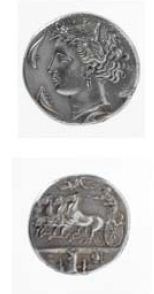
RISD 2001.81.2

Tetradrachm of Amphipolis, 2001.81.2 CNG Mail Bid Sale 49, 19 March 1999, lot 158 ex California collection, early 1970s-1990; ex English collection, 1940s

Decadrachm of Syracuse, 2001.81.3; ex CNG direct purchase; ex Zurich auction, late 1990s; ex Swiss collection, early 1900s

Tetradrachm of Amphipolis, 2007.89.1
ex Gemini III, 9 January 2007, lot 88; ex LHS Numismatik, auction 95, 25 October 2005, lot 559; ex MMAG auction XIX, 5-6 June 1959, lot 372; ex Charles Gillet Collection, Lausanne
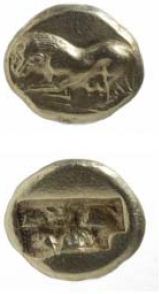
RISD.2007.89.2

Stater of unknown Ionian mint, 2007.89.2
ex NFA auction XVIII, 1987, lot 95 ex von Hoffmann Collection; cf. Price, “A Field in Western Thrace” (Coin Hoards 2, no. 1, 1976)

Tetradrachm of Thebes, 2008.60.1
ex CNG Triton IX, BCD Boiotia Collection, 10 January 2006, lot 439; ex BCD Collection; ex MMAG XXII 1961 auction, lot 467

Tetradrachm of Rhodes, 2008.60.2
ex CNG Triton IX, 10 January 2006, lot 966; ex CNG Mail Catalogue Sale 63, 21 May 2003, lot 557; ex Leu private purchase, 2001; ex Marmaris hoard 1970/71 (ICGH 1209)
RISD 2010.56.1

Persian daric, 2008.60.3
ex CNG private purchase, 2005
ex Edward Gans, 1964, lot 78

Bronze 2-litrae of Syracuse, 2008.60.4
ex Gorny and Mosch, auction 156, 6 March 2007, lot 1139
ex Gorny and Mosch, auction 107, 2 April 2001, lot 75
ex Moretti Collection, Basel, 1920s

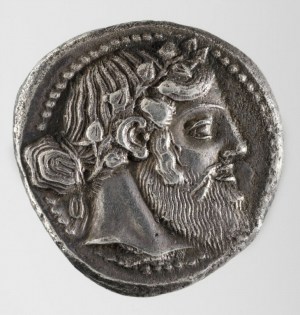
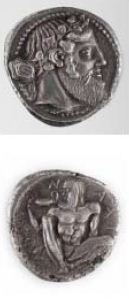
Tetradrachm of Naxos, 2010.56.1
ex Leu private sale, 2010; ex Leu, 1980s; cf. Ludwig Grabow, Rostock, 9 July 1930, lot 196
RISD 2010.56.2

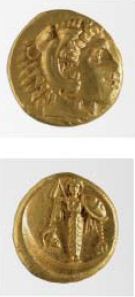
Stater of Mysia, 2010. 56.2
ex Jean Vinchon Numismatique, 2007; ex Bank Leu Numismatique AG, 1969; ex Charles Gillet, Lausanne, 1952

Stater of Mysia, 2010.56.3
ex Herren Collection; ex Ready (in commerce), 1929; ex Gulbenkian Collection, 1920s

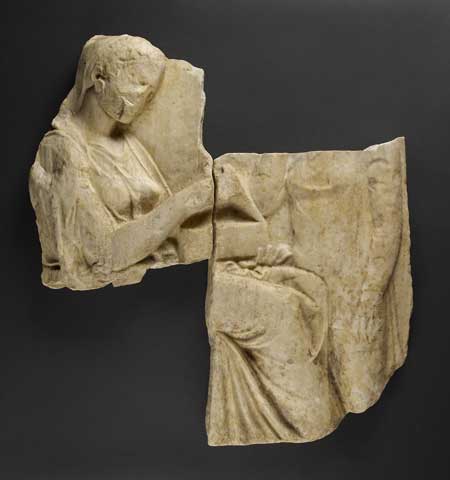
Another donation of interest, not an ancient coin, is this:

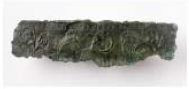
Etruscan bronze relief, 2002.114.2
ex Denyse Berend Collection, Paris and Geneva, early 1960s; ex Cahn, Basel
RISD 2002.114.2

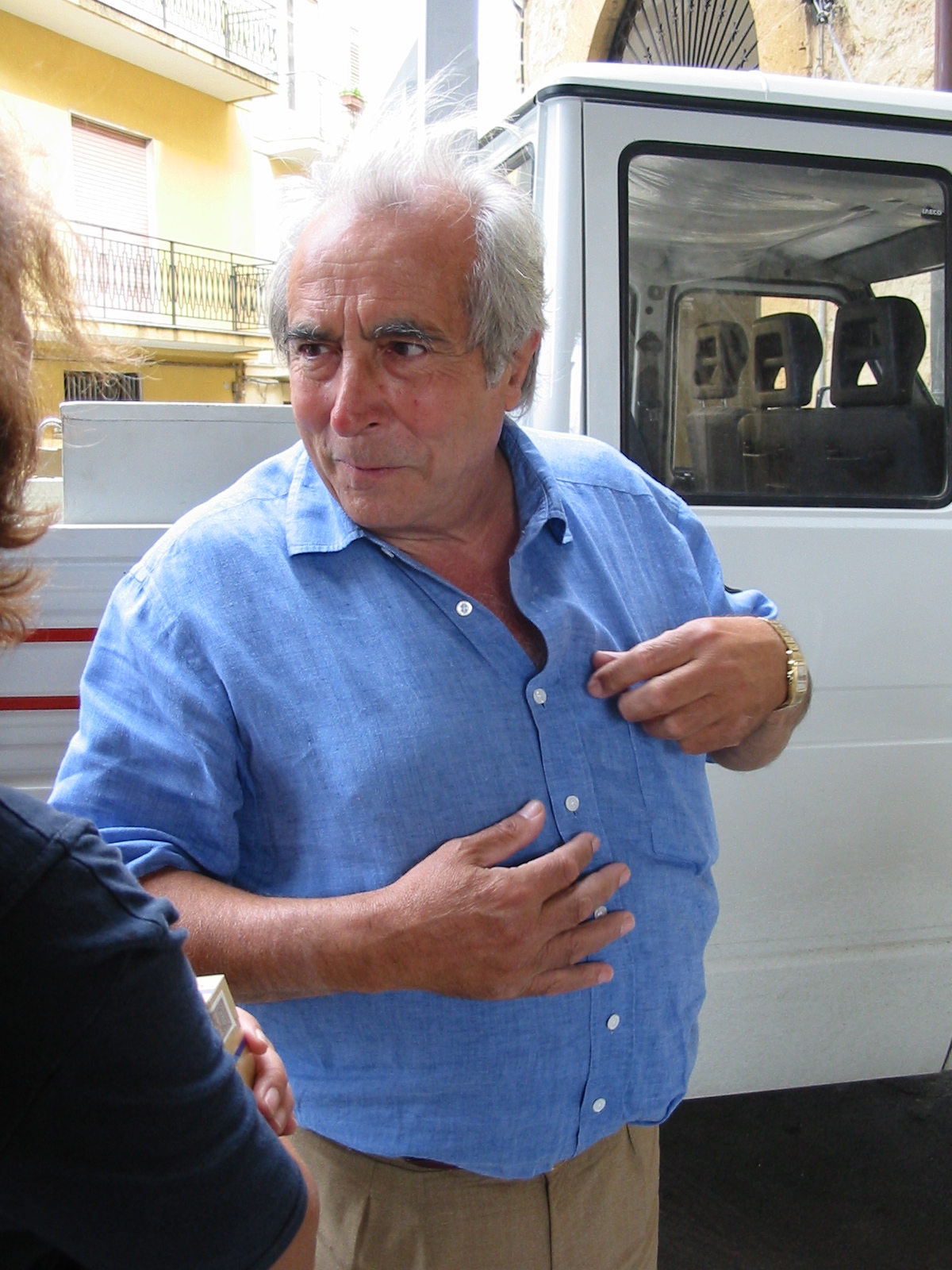
“Cahn” is likely Herb Cahn, the Classical numismatist and antiquities dealer who was investigated by Italian authorities for participating in the illicit trade, as recounted by Robert Hecht in his unpublished memoir.

Take away? Many of the coins appear to have ownership histories going back several decades. Others are vague (“ex-California collection”) or are linked to dealers whose names come up in the Italian investigation (Cahn; Bank Leu; NFA = Bruce McNall). We leave it to our more informed readers to draw their own conclusions about these donations, and welcome your thoughts in the comments field below. We are curious if Dr. Weiss took tax write-offs for these donations, and if so how the donations were valued.

We’re grateful to RISD for their transparency on this matter, and wish other universities would take a similar stance.

Hecht Trial Ends With No Verdict, Medici Conviction Affirmed

American art dealer Robert Hecht, 86, center, is approached by reporters as he leaves a Rome court for a break Friday Jan. 13, 2006

The criminal trial of Robert E. Hecht ended this week with no verdict, while Giacomo Medici’s conviction for trafficking looted antiquities was upheld last month by Italy’s high court.

Here is Jason’s story in the Los Angeles Times:

The trial of Robert E. Hecht Jr., the alleged mastermind of an international black market in ancient art, ended with no verdict this week when a three-judge panel in Rome found the time allotted for the trial had expired.

Hecht, a 92-year-old Baltimore native now confined to bed at his home in Paris, has cut a wide swath through the art world since the 1950s, supplying museums and collectors around the world with some of the finest examples of ancient Greek, Roman and Etruscan art.

“I have no idea of where an object was excavated,” he said in a phone interview on Thursday. “It could have been excavated 100 years ago, it could have been excavated an hour ago.”

Throughout that colorful career, Hecht has been dogged by allegations that his wares had been recently looted from archaeological sites and smuggled out of their homeland. It was a claim he never directly denied while maintaining his innocence of the Italian charges, which focused on an alleged conspiracy among dealers he considers rivals.

The ruling brings an ambiguous end to a sweeping investigation that traced relics looted from tombs in Italy through a network of smugglers, dealers and private collectors before appearing on display at museums in the United States, Europe and beyond.

The criminal case stemming from that investigation has dragged through Italian courts since 2005 and focused on Hecht and two co-defendants: Marion True, the former Getty antiquities curator, and Italian dealer Giacomo Medici.

True’s trial ended without a verdict in October 2010 when the statute of limitations on her charges expired. Medici, who opted for a fast-track trial, was convicted in 2004, a verdict upheld last month by Italy’s highest court, which imposed an eight-year prison sentence and a 10-million-Euro fine, the largest in Italian history for such a case.

Paolo Ferri, the original prosecutor in the case, expressed exasperation with the Italian legal system, which he said made it impossible to conclude the complex cases in the time allotted. In Italy, months can pass between hearing dates in criminal cases — there were only about 18 hearings in the Hecht case over the six years, Ferri said.

Ferri dismissed critics, mostly in the United States, who suggest that he had purposefully stretched out the cases because he lacked the evidence to convict.

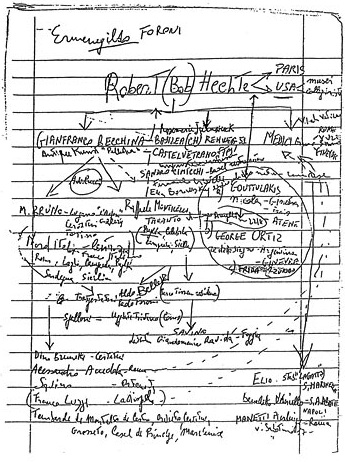
“There is plenty of evidence,” Ferri said, citing as an example Hecht’s own handwritten memoir, in which the dealer detailed his long career buying ancient art from Medici and other suppliers whom Hecht described as “clandestine diggers.” An organizational chart seized from a middleman in the illicit trade showed Hecht’s name at the top of a pyramid of suspected looters and smugglers.

This chart showing the key players in the illicit antiquities trade was seized by Italian police in the 1990s.

Evidence gathered during the investigation was compelling enough to convince American museums to voluntarily return more than 100 masterpieces of ancient art in their collections after they were linked to Hecht, Medici and other dealers. In 2007, the J. Paul Getty Museum offered to return 40 objects to Italy, including its prized statue of Aphrodite.

Confronted with evidence of their own role in an international black market, American museums also adopted strict new acquisition standards designed to prevent the purchase of recently looted antiquities, the excavation of which results in the destruction of archaeological sites around the world.

Still, the failure to bring the Hecht case to a verdict suggests Italy — whose national police force is widely considered a leader in policing archaeological sites — is still lacking a strong deterrent against further looting, a fact that Ferri acknowledged.

“The truth is the Italian legal system is out of order,” said Ferri, who retired in 2010.

As for Hecht, he said he holds no hard feelings about the arduous trial, which did not require him to attend hearings. In a voice weakened by age, he cited a favorite biblical passage:

“Forgive them, for they know not what they do.”

Hard not to feel like Bob is having the last laugh here. But he didn’t sound well when we spoke, and his wife Elizabeth told me he was happy to have this done before he goes.

Robert Hecht poses in front of the famous looted Greek vase he sold the museum in 1972 for $1 million.

Arnold-Peter Weiss and the Rhode Island School of Design

*UPDATED: See below for additional information from RISD and Harvard Art Museums.

Dr. Arnold-Peter Weiss, the Rhode Island coin collector arrested Jan. 3 for felony possession of an ancient coin that authorities say he knew was recently looted from Sicily, has deep ties to the Rhode Island School of Design. He is a former trustee of the university and currently serves as former* chairman of the board of the university’s museum, to which he has donated several objects.

According to the criminal complaint against Weiss, he told a confidential informant wearing a wire that he knew where the coin “was dug up two years ago.” Weiss is innocent until proven guilty, and his lawyer has not responded to two requests for comment. If the allegations hold up in court, its appears to be a fresh example of the alarming link between the black market in looted antiquities and (apparently) respectable collectors and museums that we detail in Chasing Aphrodite.

By participating in the illicit antiquities trade, museums and collectors betray  their professed educational mission and encourage the destruction of context that happens as objects are looted and laundered through the black market.

Weiss appears to understand the importance of context in ancient art. In September 2010, when RISD reinterpreted and reinstalled its gallery of ancient, medieval and early Renaissance art, Weiss and his wife, Dr. Yvonne Weiss, a pediatrician in Barrington, RI, were major sponsors of the renovation.

“As a collector of ancient coins,” Dr. Weiss said in a press release from RISD, “my hope for this gallery—and for the entire reinstallation of the Radeke Building—is to provide visitors of all ages with context for understanding these fascinating and beautiful objects.”

The museum describes its collection of Greek, Roman and Etruscan art as “one of the finest collections of any university museum in the country,” and contains about seven hundred ancient coins spanning more than 1500 years. Among the collection highlights on the museum’s website are several recent acquisitions. Collecting histories are not provided for most objects.

In 2010, Weiss donated a silver Greek tetradrachm, ca. 460 BCE from Naxos. The obverse is shown here. Details and the reverse, showing Silenos holding a kantharos, can be found on the museum’s website here.

A similar coin is listed here on the website of Nomos AG, the Swiss coin dealership that Weiss launched around 2007. The Nomos coin is said to be from the Randazzo (Sicily) Hoard of 1980 and is described as “one of the greatest and best known of all 5th century Greek coins.” It sold at auction recentlyfor  775,000 CHF, well over the 400,000 CHF estimate. Weiss’ partners at Nomos are Victor England and Eric McFadden of the Classical Numismatics Group and Alan Walker, who has a doctorate in Classical Archaeology from the University of Pennsylvania.

Note: The Syracuse Decadrachm previously listed here was not a donation by Dr. Weiss but an acquisition made by the museum in 1940, according to RISD director of marketing Donna Desrochers. 

Another Weiss donation to RISD is a Flemish oil painting by artist Hendrik van Steenwyck, ca. 1550-1603. Details can be found here.

We’ve contacted the museum’s curator of ancient art, Gina Borromeo, to request additional details about these objects and any others Weiss may have donated.

We’ve sent a similar request to the Harvard Art Museums, where Weiss’ bio says he is was on the collecting committee until this month. The collection of the Arthur M. Sackler Museum, in particular, has an impressive collection of ancient coins.

We’ll post answers here when we get them.

*Harvard UPDATE: Jennifer Aubin, the Harvard Art Museums public relations manager, provided the following information: “Dr. Peter Weiss was a member of our Collections Committee, an advisory group, from 2006–2012. We have no objects in our collections donated by or purchased from Dr. Weiss.” The Harvard Art Museums did acquire two coins through Weiss’ firm Nomos AG in 2009, both of which appear to have a long provenance. The first, a Drachm of Argos dating to 370-350 BC, can be traced back to an 1886 auction. The second, a fragment of a dekadrachm of Athens dated to 470 BC – 460 BC,  is seen in a 1968 edition of Revue Numismatique. (No images are available.) In addition, a gold wreath was loaned for exhibition by Drs. Yvonne and Arnold-Peter Weiss to the Harvard Art Museums from 2008–2010. No additional information was provided about the wreath.

Harvard UPDATE #2: In response to a follow up question about Weiss’ resignation “in 2012”, Aubin says Weiss resigned from the collections committee on January 9, 2012 — six days after his arrest.

*RISD UPDATE: Donna Desrochers, the director of marketing at RISD’s art museum, noted that Weiss’ online bio is out of date: His term as chairman of the board ended last June, and he no longer sits on the museum’s board. In addition, the Syracuse Decadrachm we listed above was not donated by Dr. Weiss. We’ve corrected the post according, and look forward to additional information from RISD.

ALSO:  Paul Barford at his Portable Antiquities Collecting blog reports an unconfirmed rumor on coin discussion groups that Interpol arrest warrants may have been issued for an American dealer and two Italian dealers. He has additional thoughts and information here, here and here.

ALSO: David Gill at Looting Matters digs up this quote from Weiss from a 2002 NYT story: “They [ancient coins] have good rates of return — not as good as when we were riding the Internet bubble, but the coin market hasn’t burst.”

The Best of Chasing Aphrodite 2011

Happy New Year!

We want to share our profound thanks for the 24,000 visits we’ve had since we launched this site with the release of Chasing Aphrodite last May. You’ve helped make the book a success while shining a light on art world shenanigans. Thank you for reading.

We’ve got many more revelations in store for you in 2012. If you’d like to keep receiving updates, be sure to subscribe via the box on the top right. You can also follow our more frequent comments on the latest news by liking our Facebook page or following us on Twitter.

We hope to see some of you at our upcoming events, which include talks at the National Press Club in DC on January 24th and Google and UCLA in February. You can get details and find our other event listings here.

Without further ado, here are your favorite posts of 2011:

1. An Exchange with Hugh Eakin at The New York Review of Books

Our exchange with Hugh Eakin in The New York Review of Books caught a lot of attention last year. We found the review flattering in several places, but also curiously littered with contradictions. Here is Hugh’s June  review, and our response. An abbreviated version of the exchange was printed in the NYROB’s August issue here.

2. The Secret FBI File: J. Edgar Hoover vs. J. Paul Getty

Was J. Paul Getty a Nazi collaborator? That is the provocative question that J. Edgar Hoover asked in 1940, when the FBI opened a secret investigation into J. Paul Getty’s possible ties to the Nazi regime. While reporting Chasing Aphrodite, we obtained Getty’s FBI file under the Freedom of Information Act. We posted the annotated file online and pulled out highlights of the investigation.

3. Getty Museum Returns Two Objects to Greece, Signs Collaboration Deal

In 2011, American museums continued to return looted antiquities to their country of origin, and the Getty Museum was no exception. In September, the Getty agreed to return two objects to Greece and formalized a broad cultural agreement that will lead to loans, joint research and other collaboration with the art-rich Hellenic Republic. The agreement mirrors similar deals struck with Italy and Sicily in the wake of a negotiated settlement to claims the Getty had for years purchased ancient art looted from those countries.

4. The Becchina Dossier: A New Window into the Illicit Trade

The conviction of Italian dealer Giacamo Medici set off the whirlwind of controversy detailed in the final chapters of Chasing Aphrodite. But Medici was just the opening move of the Italian investigation of the illicit antiquities trade. In 2001, Italian authorities raided the warehouse of Medici’s main rival, Gianfranco Becchina, seizing 13,000 documents, 6,315 antiquities and 8,000 photographs of objects, many of which appeared recently excavated.  Today, it is the Becchina Dossier that forms the center of Italy’s continuing investigation of the international trade in looted antiquities. Like the Medici files, the Becchina Dossier provides a striking record of the illicit trade, showing the path of thousands of looted objects from tombs across the Mediterranean to the display cases of leading museums around the world. Stay tuned as we’ll be making public more details from the Becchina case in 2012.

5. Chasing Persephone?

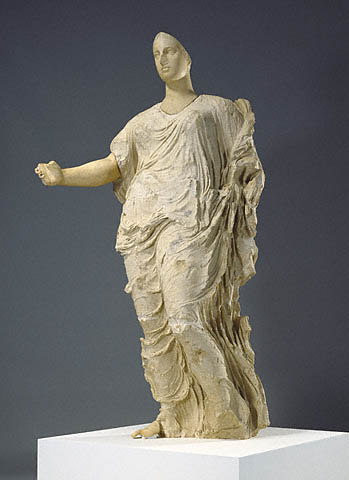
When the Getty’s statue of Aphrodite was returned to Italy in May, we were there to tell the story. In this report for the LA Times, Jason described how new theories about the goddess are being considered now that she’s back home. Who is the goddess? Does her slightly awkward marble head really belong atop the massive limestone body? Where precisely was she found? And what can she tell us about the ancient Greek colonists who worshiped her some 2,400 years ago? The fact that so little is known about the marble and limestone statue — one of the few surviving sculptures from the apex of Western art — illustrates the lasting harm brought by looting and the trade in illicit antiquities.

6. Jiri Frel: Scholar, Refugee, Curator…Spy?

In the early 1980s, the antiquities department at the J. Paul Getty Museum was a hotbed of whispered political intrigue. Rumors swirled that the department’s Czech curator, Jiri Frel, was a Communist spy. And many believed the deputy curator, former State Department official Arthur Houghton, was a CIA plant tasked with keeping an eye on Frel’s activities. Frel’s once-classified FBI file, obtained by the authors under the Freedom of Information Act, reveals that the US Government asked similar questions about Frel in 1971, when an investigation was conducted into his “possible intelligence connections.”

7. The Getty Fights to Keep its Bronze

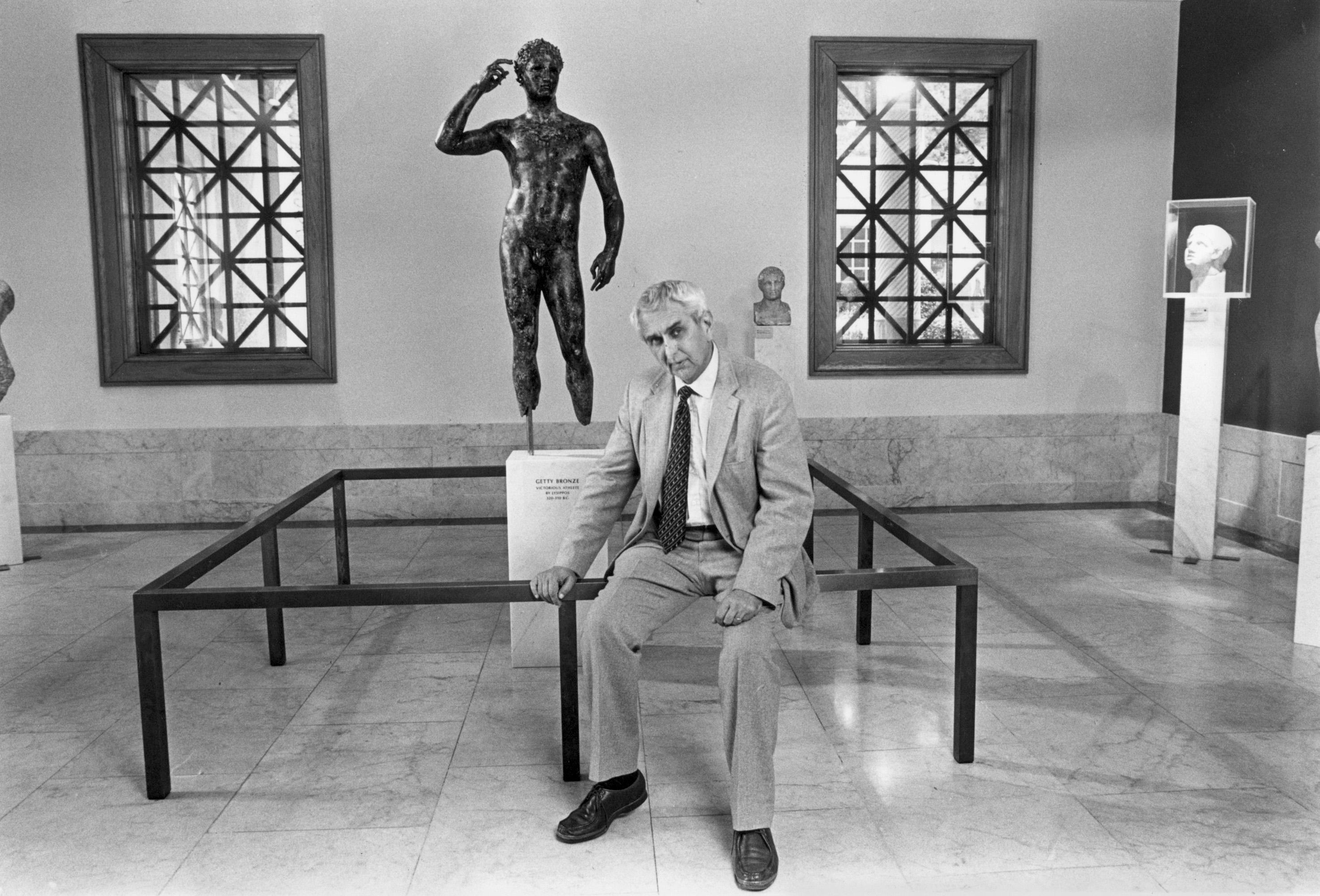
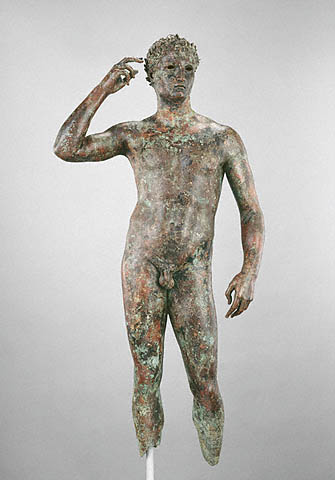
A week after sending its statue of Aphrodite back to Italy, the Getty was fighting to keep another ancient masterpiece: its priceless bronze statue of an athlete, whose 1964 discovery by Italian fisherman is featured in the opening chapter of Chasing Aphrodite. Here’s our report on the latest in the fight for the Getty  bronze.

8. Houghton on The McClain Doctrine and Crimes of Knowledge

Did American museum officials violate US laws when buying looted antiquities? We attempt to answer that hypothetical using internal Getty memos written by former curator Arthur Houghton, who spelled out the risk of violating the National Stolen Property Act when buying objects with unclear provenance.

9. The Truth about Marion True

When archaeologist Malcolm Bell reviewed Chasing Aphrodite in The Wall Street Journal in July, he largely agreed with our premise — that  American museums fueled the destruction of knowledge by acquiring looted antiquities and using what Bell calls a “fabric of lies” to obscure their complicity in an illicit trade. But Bell’s review took an odd turn when he recommended that former Getty antiquities curator Marion True, who was fired after we revealed her blatant conflicts of interest, be hired “for a major museum position.” We respond.

10. Looted Antiquities at American Museums: An On-Going Crime

For those who might be tempted to think the issues raised in Chasing Aphrodite are behind us, we discuss a recent law review article that argues that continued possession of unprovenanced antiquities (ie most of those in American collections) could be an on-going crime under US law.

BONUS: Finding Loot at Your Local Museum

Marion True once told her museum colleagues: “Experience has taught me that in reality, if serious efforts to establish a clear pedigree for the object’s recent past prove futile, it is most likely — if not certain — that it is the product of the illicit trade and we must accept responsibility for this fact.” In that same spirit, we gave fellow investigative reporters from around the world a few tips on how to find looted antiquities at their local art museum during the June meeting of Investigative Reporters and Editors (IRE).

In 2011, we put that advice to work with revelations about objects in several museum collections. Our New Year’s resolution: to do much more of the same in 2012!

Hot Doc: A Damage Assessment at the Getty Finds Forgery, Fraud and Fabricated Histories

The true cost of looting has always been hard to measure: how does one account for what is lost? Perhaps this is why some — Americans in particular, it seems — tend to think of looting as a victimless crime.

In truth, looting has many victims — the artifacts lost or damaged during the act itself; the defaced monuments and pockmarked archaeological sites left in its wake. Then there is the more pernicious effect of plunder and the black market it fuels — the corruption of our knowledge about the past.

Jiri Frel with The Getty Bronze

This is what the Getty Museum confronted in 1984, after the hasty departure of its charming and crooked antiquities curator Jiri Frel. In his decade at the Getty, Frel had used any means necessary to build the museum’s antiquities collection into one worthy of the Getty’s wealth. In 1984, when his criminal activity was discovered amidst an IRS investigation, he abruptly left the country, leaving colleagues at the museum to clean up the mess.

John Walsh, Getty Museum Director

A confidential June 1984 memo from acting antiquities curator Arthur Houghton to museum director John Walsh was an early attempt to account for the damage done by Frel’s collecting practices. We’ve posted it below as part of our Hot Docs series, a effort to publish some of the key confidential files we used while reporting Chasing Aphrodite.

Arthur Houghton III

“Changes or additions to the central files registry should be recorded for many of the objects in the antiquities collection,” Houghton noted with characteristic understatement. “The scope of the problem is quite large and involved a number of areas.”

Among the problems Houghton reported:

Falsified provenance: Many of the ownership histories of objects in the collection were “mythical.” Frel and his trusted dealers had made a parlor game of inventing bogus European collections like “Esterhauzy” to cover the fact that the objects being purchased were fresh from an illicit dig.

Bogus attributions: Frel had often gussied up the attribution of objects to make them more palatable to the public or the Getty’s own acquisition committee. Roman copies were listed as Greek originals; a 3rd century BC sculpture became the only surviving piece by a Greek master.

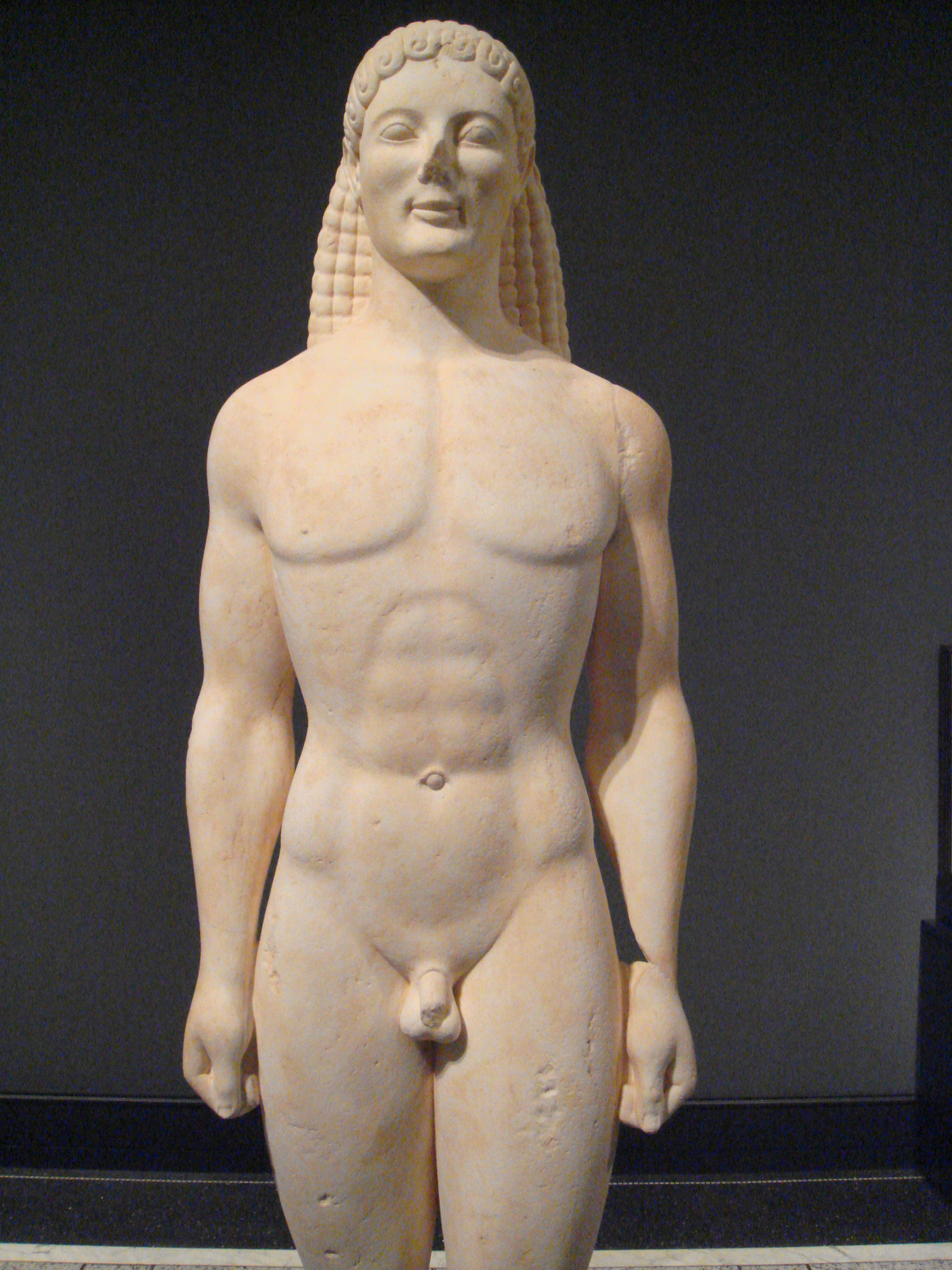
The Getty bought the kouros in 1985 for $10 million. Today it is believed to be fake.

Forgeries: Frel had bought several multi-million dollar fakes, either because he was fooled or (more likely) in exchange for a cut of the purchase price. The most famous is the nearly $10 million Getty Kouros, still on display today at the Getty Villa. As Houghton noted, “Several [fakes] are of major importance and involve very high values and the Museum’s reputation.”

Then there were the lies that mostly hurt the Getty: Frel had convinced the museum to dramatically overpay for objects, with some of the money likely coming back to him in kickbacks. He had inflated valuations of objects as part of a tax fraud scheme and invented phony donors — many still honored on Getty display placards– who he used to launder objects coming into the collection.

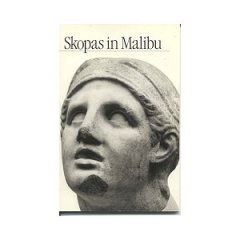
The Getty bought his sculpture in 1979, believing it was a head of Achilles by Skopas, a famous Greek sculptor. Subsequent research showed that it was a modern forgery.

In time, some of the most egregious distortions were corrected. The Getty kouros today is awkwardly labeled “Greek, about 530 B.C., or modern forgery,” and several other fakes were taken off display. But in many more cases, Houghton noted the damage to the historical record was irreversible. “Much of the suspected provenance and acquisition (including donation) information is fragmentary; and while many records can be corrected in time and with reasonably diligent attention, it will not be possible with reasonable discretion to probe into the true provenance or acquisition history or many objects in the collection.”

The truth, in other words, was lost.

Today, similar distortions  and fabrications litter the antiquities collections of America’s great museums, which are tax-exempt because their public mission is education. In doing business with the black market, museums have betrayed that mission and filled their shelves with what amount to beautiful lies.

HOT DOC: June 1984 confidential memo from Arthur Houghton to John Walsh.

Article: “An Art World Detective Story: The Getty’s Head of Achilles” Suzanne Muchnic, LA Times, 11/3/88

Looted Antiquities at American Museums: An On-Going Crime, law professor argues

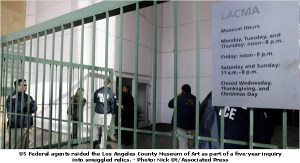
In January 2008, more than one hundred federal agents raided four Southern California museums. They seized scores of Southeast Asian antiquities that investigators said had been looted and illegally smuggled into Los Angeles before being donated at inflated values to the museums.

Since then, nothing much has happened in the case. But one legal expert is warning that the case represents a ticking time bomb for American museums, whose antiquities collections are still filled with looted antiquities.

If the raids result in convictions, the legal fallout could be devastating, argues Stephen K. Urice, a University of Miami law professor and one of the country’s foremost legal minds on cultural property.

Stephen K. Urice

“Continued possession of virtually all unprovenanced antiquities in public museums within the court’s jurisdiction would suddenly become actionable under the [National Stolen Property Act], and museums would be obligated to divest themselves of those collections promptly,” Urice writes. “Failure to do so would expose the antiquities to civil seizure and forfeiture proceedings, and the museums’ board and staff members to criminal liability.”

This doomsday scenario comes not from the alarmist fringes in the debate over antiquities but an avowed centrist. Urice is a former museum director with a PhD in archaeology, and was the founder of the University of Pennsylvania’s cultural law program. He has earned respect from archaeologists and museums alike for his dispassionate, middle-of-the-road analyses of museum policies and cultural property statutes.

That’s why Urice’s 39-page article in the Summer 2010 issue of the New Mexico Law Review is so striking. His analysis, now bubbling up in cultural circles, is too involved to present in full here. But in essence, it predicts a doomsday scenario based on a little noticed wrinkle in the NSPA, the key U.S. criminal law in antiquities looting cases.

LACMA Director Michael Govan asks federal agents to let him into the museum on the morning of the raid

In the 1977 McClain case, in which five Texas dealers were convicted of smuggling looted Mexican artifacts, prosecutors successfully asserted the antiquities were “stolen property” under US law if they were exported illegally from a foreign country with an enforced cultural property law that gives the government rightful owner of such artifacts. (According to the UNESCO Database of National Cultural Heritage Laws, 180 countries have passed one or more such statutes ).

Urice reasons that this interpretation is easily extended to most museum antiquities collections, where the bulk of objects could be considered contraband because they lack provenance (ownership history) and valid export licenses.

Museums have believed that the statute of limitations would protect them from such claims. But Urice notes that a 1986 change in the NSPA added possession of such objects as a crime. Since possession is an on-going act, Urice writes, “even in situations where the museum had taken possession of an antiquity decades ago, there would be no statute of limitations defense.”

This hasn’t come up in past antiquities cases since prosecutors went after collectors or dealers. The Southern California raids, however, specifically targeted museums, which under McClain arguably possess stolen property. Urice argues that a successful conviction in the case would trigger a chain reaction, forcing other museums in the court district (such as the Getty) to disgorge their unprovenanced artifacts or have their officers face criminal indictment.

In Urice’s view, this is an unacceptable – and unintended — outcome of the law that would strip American museums of an important teaching tool. What to do?

Urice suggests several remedies. Among them is a law exempting museums from the potential fallout of Southern California case and other antiquities claims under the NSPA. A second one is to replace the NSPA with a new law with input from archaeologists and collectors — a likely bitter and tortuous process.

One question not addressed in the article: Are Urice’s warnings a present-day reality? After all, federal courts in New York and Texas have both found the McClain Doctrine to be the ruling precedent, making possession of looted antiquities an on-going federal crime. In order to seize the objects, the government would only need to establish probable cause that the objects were illegally exported — the burden would be on the museum to prove legal export, something that can’t be done for most antiquities. All that’s missing is a US Attorney interested in making such a bold case.

Whatever the answer, Urice’s article makes clear the legal struggle over looted antiquities did not end with the Getty scandal.

If the Southern California case moves forward, the worse may be yet to come.

HOT DOC: Urice on Unprovenanced Antiquities and the National Stolen Property Act

Our coverage of the January 2008 museum raids:

Raids Suggest A Deeper Network of Looted Antiquities

Federal Probe of Stolen Art Goes National

Roxanna Brown: A Passion for Art, a Perilous Pursuit (3-part series)

Upcoming Events: Chasing Aphrodite at the National Press Club, Google and UCLA

Here are several new events we’ve lined up in the coming months :

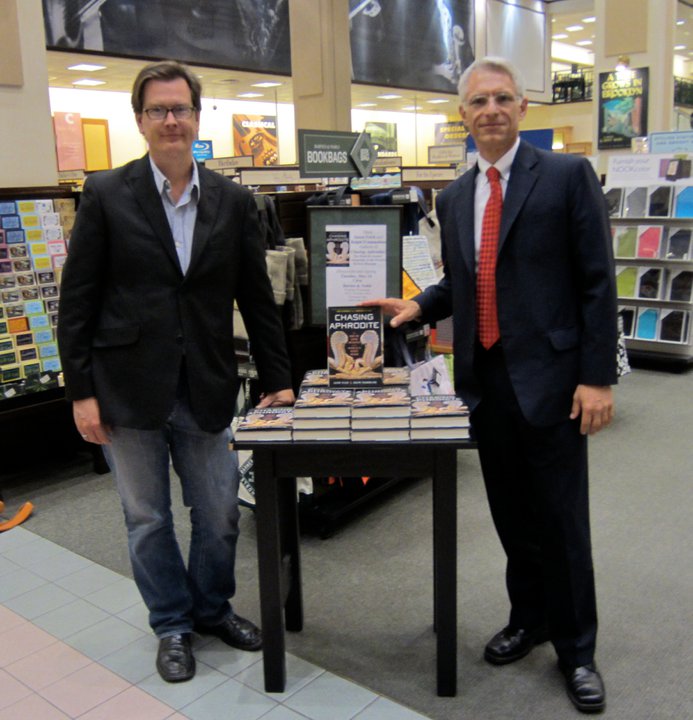
January 23, Washington DC: The Society for the Preservation of Greek Heritage, the American Friends of the Acropolis Museum and the lawfirm Steptoe and Johnson will host Jason for an evening lecture and book signing at Steptoe and Johnson in Washington DC. Details TBA.


January 24th: The National Press Club, Washington DC.

Jason and Ralph will speak about Chasing Aphrodite, the press and transparency at American museums with former Getty antiquities curator Arthur Houghton and Walters Museum director Gary Vikan. Our moderator will be James Grimaldi, investigative reporter at the Washington Post. Q&A, book signing and reception to follow.

Details: Open to the public. 6pm at The National Press Club. 529 14th St. NW, 13th Floor. Phone: 202-662-7500 or www.press.org

February 10th, 2012: Google HQ, Mountainview CA.

Jason will talk about Chasing Aphrodite and how crowd-sourcing might be harnessed to fight the illicit antiquities trade at the Googleplex, Google’s Mountainview headquarters.

Details: Open to the public. 12- 1pm @ 1600 Amphitheatre Parkway in Mountain View, CA.

February 15, 2012: UCLA. Details TBA.

You can find updates at our events page here.

Our past events include: The Jonathan Club; Chapman University; Central Michigan University; The Walters Art Museum; UPenn Law School; UPenn Museum; The Harvard Club of New York City; The National Arts Club; Princeton University; Villanova Law School; Rutgers University; New York University; Cardozo Law School;  Archaeological Institute of America’s New York Chapter; SAFE; The Benson Family Farm; Elliot Bay Bookstore in Seattle; Powell’s Book in Portland; The Commonwealth Club of San Francisco;  Loyola Law School; Barnes and Noble of Thousand Oaks; Book Soup on Hollywood Blvd.;  The LA Festival of Books.

To suggest an event near you, please contact us: ChasingAphrodite@gmail.com.

Listen to Chasing Aphrodite on Deadline LA: The Getty Museum and the Black Market in Looted Art

Last week, Jason spent an hour talking with Barbara Osborn and Howard Blume, co-hosts of DEADLINE LA, KPFK’s roving eye on the media.

KPFK's Deadline LA

Olson and Blume are notoriously tough customers who boast of “pummeling” the news media for their coverage of the day’s top stories. But their praise for Chasing Aphrodite was effusive. Blume called it “fascinating” and “a page-turner.” Osborn said she couldn’t put the book down.

You can listen to both half-hour segments here. Part I focuses on the path of looted antiquities from tombs to American museums like the Getty.

Deadline LA: Part I

Part II focuses on the colorful history of the J. Paul Getty Museum:

Deadline LA Part II

Fall Book Tour wraps up after 14 events in 15 days. VIDEO: Chasing Aphrodite at UPenn.

We’ve just wrapped up our fall book tour — 14 events in about 15 days.

Thanks to everyone who came out to learn about museums and the illicit antiquities trade. And our sincere gratitude to our hosts at Rutgers, Princeton, UPenn Museum, UPenn Law School, Villanova Law School, NYU, The National Arts Club, The Harvard Club of NYC, Cardozo Law School, AIA, SAFE, The Walters Museum of Art, Chapman University and Central Michigan University.

Keep an eye on our events page for more events coming soon. If you’re interested in hosting an event near you, please contact us at ChasingAphrodite@gmail.com.

For those who missed us, here’s a video of our presentation at the UPenn Museum of Archaeology and Anthropology, where we were introduced by Dr. Richard Leventhal:

Did Museum Officials Violate US Laws? Houghton on The McClain Doctrine and Crimes of Knowledge

Whenever we talk with Arthur Houghton — the Getty’s former antiquities curator who we’ll be on stage with this Saturday at the Walters Art Museum in Baltimore — he asks a provocative question: did he or any other museum official violate U.S. law while buying looted antiquities?

The short answer, of course, is that no museum official at the Getty or elsewhere has been charged with, much less convicted of, a crime under US law. The real question, then, is: might they have?

Here’s an attempt to answer that hypothetical, using Houghton’s own writings while at the Getty Museum. As part of our “Hot Docs” series, we’ve annotated and posted transcriptions of the key documents via links below.

The Getty bought the kouros in 1985 for $10 million. Today it is believed to be fake.

Getty officials certainly knew they were buying objects from an antiquities market awash in illicit material. In April 1984, while the J. Paul Getty Museum was considering the acquisition of its infamous statue of a kouros, Houghton told the Getty’s outside counsel: “Probably 95% of antiquities on the market were found in the past three years. The only way one would obtain them was if one did not ask the specific question that would elicit the specific answer about provenance that made the material unbuyable.”

Days later, Houghton elaborated on the risks of acquiring such objects in a memo on the law to museum director John Walsh. Law enforcement authorities had made clear that under their reading of current law, museum officials could be criminally liable for acquiring such objects, Houghton wrote. “No action will be taken against the importer unless it is clear that the importer acted with certain knowledge that the material had been illegally exported from a country which had appropriate national ownership in place. If Customs believes that the importer had such knowledge, they could seek criminal penalties against the importer.”

The criminal law Houghton was referring to was the National Stolen Property Act. In the 1977 case US vs. McClain, a federal appeals court in the 5th Circuit had found that buying antiquities illegally exported from a country with a national patrimony law was equivalent to buying stolen property under US law. US government officials had made clear that this “McClain doctrine” could be applied well beyond the 5th Circuit. In effect, there was no difference between buying a looted antiquity and a hot car. The government could seize the stolen property and criminally charge those who imported it, Houghton wrote.

At the time, the Getty was buying such objects at a breakneck clip. As Houghton wrote a month later to deputy director Deborah Gribbon, “No other department of ancient art has an acquisition program as intense as ours nor one which, if it is to be maintained, requires such frequent contact with market sources.” In fact, the Getty was buying objects far faster that its staff could document them. “Some 30% of the collection has not been photographed, a significant number have no accession number, and there is no file by subject matter or chronological order to help find things,” Houghton wrote.

Harold Williams, CEO of the J. Paul Getty Trust

Word of the Getty’s potential legal exposure made its way to Harold Williams, the CEO of the Getty Trust and a lawyer who had run the SEC. Williams wrote to Walsh about the troubling rumors he had heard about the antiquities market: “Indeed, much of the conversation is to the effect that 90% of the objects on the market are presumed to have been recently come out of Italy or Greece.” Williams wanted answers, and Walsh punted to his “ethical tutor” Houghton, who was asked to explain how the museum could continue to acquire undocumented antiquities under such conditions.

John Walsh, Getty Museum Director

Houghton’s answer came in the form of another memo, this one entitled “Ethics and the Acquisition of Antiquities.” It lays out the two views on collecting undocumented antiquities: those of archaeologists, who favor restrictions, and those of curators, who feel a “special obligation” to acquire objects. In the end, Houghton concludes that the Getty is justified in the acquisition of undocumented antiquities because it is better prepared that most museums to protect, conserve and display these objects.

But how to navigate the law and the McClain Doctrine, which suggested such acquisitions could violate US law? Houghton’s solution was “optical due diligence.” In essence, the Getty would create the appearance of propriety and high ethical standards while buying what it wanted, being careful to avoid the “certain knowledge” of an object’s illicit origins that could land a museum official in jail.

Cult Statue of a Goddess (Aphrodite)

Houghton resigned from his post in 1986, but his rationale for continuing to collect undocumented antiquities became the basis for the Getty’s new acquisition policy the following year. That policy change allowed the Getty to buy a statue of Aphrodite despite clear signs it had been recently looted from Southern Italy.

Did Getty museum officials have the “certain knowledge” about the Aphrodite required for criminal charges under the McClain Doctrine?

Walsh’s handwritten notes from a meeting with Williams that September would suggest they did: “We know it’s stolen…Symes [the dealer offering the Aphrodite] a fence.”

Today, both men claim the conversation was hypothetical, not about the Aphrodite. Would that defense have held up in criminal court? Thanks to the statute of limitations, we’ll never know.

We look forward to seeing Arthur again on Sat, October 29th at the Walters Museum of Art in Baltimore. Details are here.

Hot Docs: 

Houghton on the Law

Houghton on Antiquities Ethics

1987 Acquisition Policy