Author Archives: Chasing Aphrodite

FBI: Ancient Coin Dealer Gantcho Zagorski Indicted on Federal Tax Charges

A federal grand jury indicted Gantcho Zagorski, a 59-year old U.S. dealer in ancient coins, on three counts of aiding and assisting in the filing of false income tax returns, the FBI announced Tuesday.

Hadrian-RICII-297-Eastern

Zagorski sold ancient coins online via EBay under the name Diana Coins and Paganecoins, the indictment states. Diana Coins LLC was founded in 2008 in Hackensack, N.J., public records show. Records also list Zagorski as the owner of Balkan Import Auto Sales, Inc. in Venice Florida, where he has lived. He currently resides in Chicago, authorities said. Calls to his federal public defender attorney were not returned late Thursday.

The indictment alleges:

Zagorski owned and operated a business that sold ancient coins to domestic and international customers, primarily on eBay, from his residence in Hackensack. Zagorski, along with his wife and, at times, his daughter, operated the coin-selling business under the names Diana Coins, Paganecoins, and Diana Coins LLC. For calendar years 2006, 2007, and 2008, Zagorski provided his tax preparer with false and fraudulent information by understating the amount of gross receipts and sales earned by his business. Zagorski then caused to be filed with the IRS those federal income tax returns for 2006, 2007, and 2008 containing that false and fraudulent information.

The indictment also says that Zagorski claimed gross receipts and sales of $230,000 – $314,000 between 2006 and 2008, amounts the indictment claims were “underreported.” Each of the three tax counts carries a maximum penalty of three years in prison and a $250,000 fine.

The indictment does not address the legality of the coins he was selling. Here is the complete indictment:

BREAKING: Judge rules in favor of Cambodia, Denies Sotheby’s Motion to Dismiss Claim to Khmer Statue

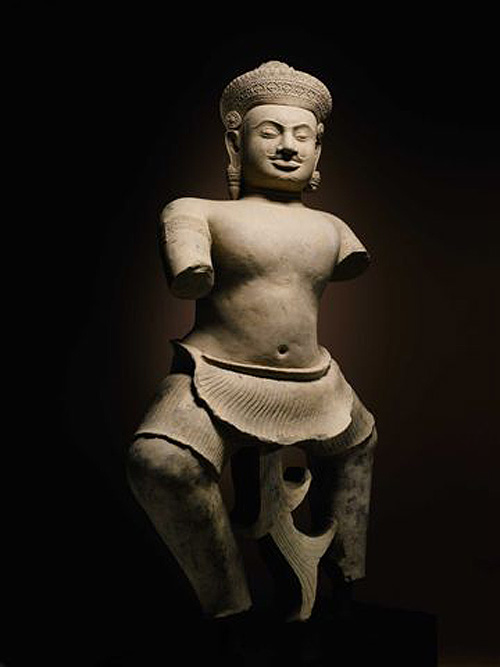
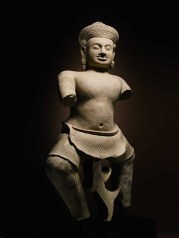
A New York judge has denied Sotheby’s motion to dismiss Cambodia’s claim — brought on its behalf by the US government — that a 10th century Khmer statue was looted and should be returned.

Koh Ker wrestler

District court judge George B. Daniels ruled on Thursday that the government has “sufficiently pled facts regarding Sotheby’s knowledge that the Statue was stolen at the time of import into the United States.” He also found the government had presented sufficient evidence that Douglas Latchford, the British collector who initially sold the statue, “knew the statue had been looted from Koh Ker.”

The ruling, which dismissed several of Sotheby’s key arguments, is not a final ruling but allows the case to proceed. You can find our complete coverage of the case, including past legal filings, here.

Here is Daniels’ 18-page ruling:

Test Case: Peter Tompa on CPAC, the Supreme Court and the Trade in Ancient Coins

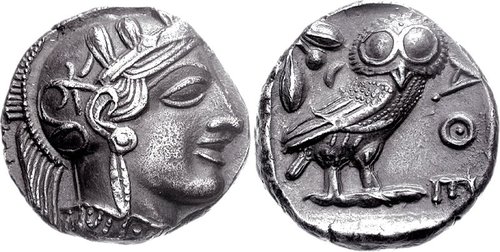
Athens Tetradrachm, ex Morcom Collection

On Monday morning, the Supreme Court of the United States is expected to respond to a petition from the Ancient Coin Collectors Guild challenging federal import restrictions on ancient coins with unclear ownership histories.

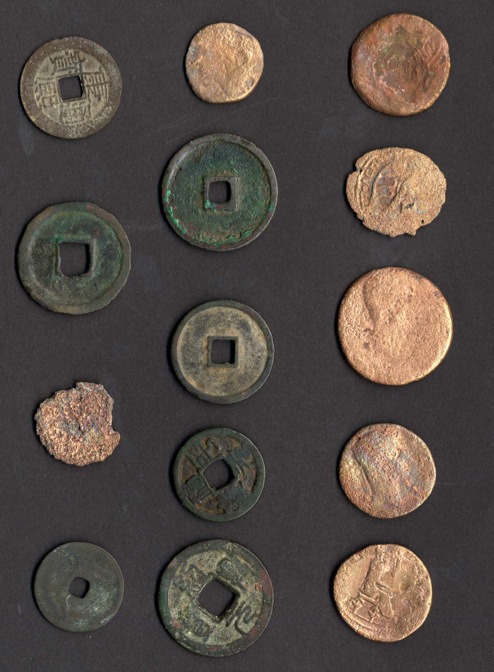
The ACCG case started in 2009 when the Guild illegally imported 23 Chinese and Cypriot coins of unclear provenance from London in an effort to challenge import restrictions granted to those countries by the State Department under the Cultural Property Implementation Act (CPIA). The coins were seized by US Customs officials and ACCG challenged the seizure in court. Both a district court and an appellate court have upheld the seizure and rejected the Guild’s arguments. If the Supreme Court refuses to hear the case, as is expected, the test case is effectively dead.

UPDATE: As expect, this morning the Court declined to hear the case.

So what was this costly legal experiment all about? We thought it a good opportunity to ask the man behind the lawsuit: Peter Tompa.

Tompa is a a lawyer, a collector of ancient coins and a registered lobbyist for several groups of coin collectors, for whom he frequently advocates at CPAC hearings at the State Department, one of the few places where issues relating to looting and the antiquities trade intersects with the federal government. He is also the author of the Cultural Property Observer blog, which champions “the longstanding interests of collectors in the preservation, study, display and enjoyment of cultural artifacts against an ‘archaeology over all’ perspective.” On the blog, he clearly relishes his role as a bête noire to archaeologists and foreign governments that are alarmed by the link between looting and the antiquities trade.

The dialogue between archaeologists and antiquities collectors like Tompa in online forums frequently starts with substance and quickly descends into sniping and personal attacks. Both groups share a passion for the ancient world but very different values about how to enjoy and preserve it. In an effort to open a more civil dialogue on the issues, we decided to launch our own test case and invited Tompa to answer a few questions here.

Chasing Aphrodite: You’re a collector of ancient coins and a registered lobbyist for several coin collecting groups. Broadly speaking, what’s the ultimate goal for these groups?

Peter Tompa: To ensure the continued access of Americans to ancient coins of the sort openly collected world-wide.

CA: Coin collectors seemingly have every reason to deplore the loss of archaeological context, and yet they often find themselves on opposite sides of the argument as archaeologists. Why is that?

att-tompa-peter2

PT: The single-minded obsession with archaeological context puzzles most coin collectors. Numismatists derive their own context by studying the inscriptions and iconography found on coins, by reconstructing the chronology of dies used to strike a given series, and by analyzing the weight standard and the metallurgical content of each issue. The coins themselves often provide amazingly detailed information about the politics and economic circumstances of the time, the course of military campaigns, religious practices, and artistic development. Coins include portraits of individuals whose appearance is otherwise unknown and depictions of lost architectural and artistic monuments. That’s not to say preservation of archaeological context is not a worthy goal, just that it should not be allowed to control all else.

 CA:  Much of the debate revolves around the link between the antiquities trade and looting. In your view, what percentage of ancient coins on the market are the product of modern looting (ie post 1970)? Is looting a necessary consequence of a free market in ancient art? What do the various coin groups you’re associated with do to prevent looting and the discourage or expose the illicit trade?

PT: “Looting” is a rather loaded term, particularly when one jumps to the conclusion that anything that cannot be traced back to 1970 “must be looted.” Whatever laws may be on the books, countries like Bulgaria, Italy, Greece, Cyprus and China tolerate (if not encourage) their own citizens to collect unprovenanced coins. So, perhaps American collectors are being asked to be “holier than the Pope.”  Indeed, what’s most different today from when the Cultural Property Implementation Act (“CPIA”) was passed is that a number of “source countries” like Italy and China have also become major “market countries” due to their increasing wealth.

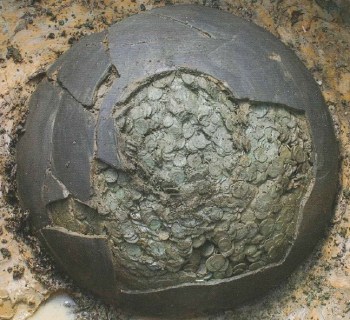
hoard

I can’t say what percentages of coins were excavated since 1970. However, I suspect they vary by type and country. For example, coins have been found in Italy since the Renaissance. On the other hand, lots of mostly low value late Roman bronze coins came out of the Balkans right after the fall of Communism. Looting equates more closely with poor governance and political and economic turmoil than free markets.  Look currently at places like Egypt, Syria and Greece.    

Metal detectors are the real issue for coins. You simply can’t find ancient coins in any number without them. There are two rational ways to deal with the issue: an outright ban or a mandatory recording system that allows the State to retain any coin for its collections based on payment of a fair market value to the finder. The problem arises where you allow individuals to buy metal detectors, but then naively expect them to either not use them at sensitive sites or turn in whatever they might find for just a token reward.

Of course, the coin trade prefers a recording system like the Treasure Act and Portable Antiquities Scheme (“PAS”) operating in England and Wales because most coins end up in the collector market after recordation. However, PAS has also garnered considerable support amongst local archaeologists because these reports have led archaeologists to sites they would not have otherwise have known existed.

Coin groups believe that such issues are best addressed at the source with such programs. Nonetheless, they also have codes of ethics.  For example, IAPN (The International Assoc. of Professional Numismatists) members agree “To guarantee that good title accompanies all items sold, and never knowingly deal in any numismatic items stolen from private or public collections or reasonably suspected to be the direct products of illicit excavations in contravention of national cultural heritage legislation.” Those who have been found in contravention of this requirement have been given the choice of either resigning voluntarily or being suspended.

CA: You’ve asked the US Supreme Court to hear your challenge of the State Department’s Cultural Property Advisory Committee (CPAC) decision to include ancient coins in import restrictions on antiquities from Cyprus and China. What’s the crux of your complaint?

The Ancient Coin Collector's Guild imported these Chinese and Cypriot coins into the United States to create a test case of the law barring their import.

The Ancient Coin Collector’s Guild imported these Chinese and Cypriot coins into the United States to test the law barring their import.

PT: I disagree with your premise. CPAC’s former Chairman has stated under oath that CPAC did not recommend import restrictions on Cypriot coins. We also have evidence China never specifically asked for import restrictions on coins. All we seek is judicial review of whether government decision-makers complied with the law before they changed prior precedent and placed import restrictions on coins.              

We also believe that current restrictions are grossly overbroad. The CPIA only authorizes restrictions on coins “first discovered in” and “subject to the export control” of a specific country, but U.S. Customs has instead placed far more extensive restrictions on coins based on their place of production. This has greatly limited the ability of American collectors to legally import historical coins openly available abroad.

 CA: As you’ve noted, two lower courts have both ruled against you and the odds are very slim that the high court will agree to hear your case. If the Supreme Court does not agree to review it, what next?    

PT: We will continue to press our case before Congress, CPAC and in the press.  Nor do we foreclose further litigation.

CA:  What’s your relationship with the museum community these days? In the past, you were often joined by museum officials in testifying against import restrictions before CPAC. These days, that is less common. What changed? What are your views of museums adopting the 1970 rule for acquisitions? Will coin collectors adopt similar standards?

PT: You should ask AAMD why it no longer presses government decision-makers to comply with the CPIA before imposing import restrictions. The 1970 rule is an arbitrary construct that has created a huge universe of “orphan artifacts,” — legitimate material that museums can no longer acquire. It has no impact on current looting, and indeed only distracts attention away from the poor stewardship of cultural resources in places like Greece and Italy.  Coins have routinely been traded for decades and centuries without ownership history being retained when they pass from one person to another, and only the smallest number of coins has records of sale or purchase.  I can think of no good reason for coin collectors to voluntarily adopt rule as flawed as the 1970 stipulation as a result.

We’re grateful to Peter for his responses and look forward to answering questions on his blog in the coming weeks. For more about the ACCG’s Petition for Certiorari, see hereFor more on coin collectors’ view oncultural patrimony issues, see here


Red Flags in Paris: Half of Sotheby’s Barbier-Mueller Pre-Colombian Sale Lacks Provenance

This week we have a guest post from M. Frechette, an astute college senior majoring in art history with an interest in international cultural property law and art markets. During her travels in Latin America, Frechette grew frustrated with the lack of native archeological material in national museums compared to the artifacts circulating on the North American and European markets. Lately, she’s been helping us dig into this week’s auction of a major private collection of Pre-Colombian antiquities in Paris. Here’s what she found:

Museums and private collectors across the globe are buzzing with excitement over the March 22nd auction at Sotheby’s Paris of the Barbier-Mueller Collection of Pre-Columbian Art.  But they should be concerned that almost half (119 out of 246) of the artifacts from present-day Latin America have no stated provenance before 1970.

Peru has announced it is seeking the return of 67 objects in the collection that it claims were illegally exported from the country, which has required government permission for the export of archaeological material since 1822. Judging from our analysis of the collection, it is likely the first of several claims.

UPDATE: The government of Guatemala has made a claim for 13 objects in the collection. “You cannot allow private collectors to unlawfully enrich themselves at the expense of the Americas’ pre-Hispanic cultural heritage,” the culture ministry said in a statement

UPDATE 3/21: Mexico has called on Sotheby’s to halt the auction, citing 51 objects in the collection as Mexico’s property. The government has also said that 79 of the 130 objects of Mexican origin being offered for sale are “handicrafts,” i.e. modern fakes. Sotheby’s insists it will go forward with the auction, saying it “thoroughly researched the provenance of this collection and we are confident in offering these works for auction.” The auction house acknowledged it has “had dialogue with several nations and given careful consideration to their concerns about this sale, and we continue to welcome discussion regarding any new information on specific issues.”

UPDATE 3/21: Costa Rica has also claimed objects in the auction, the New York Times reports

UPDATE 3/22: Nord Wennerstrom calls the results of Day 1 sales “a train wreck” for Sotheby’s: 87 of the 172 lots failed to sell amid claims from Latin American countries and indications that several lots are modern fakes. Others suggest the asking prices were overly optimistic. 

SWITZERLAND-COLLECTION-BARBIER-MUELLER

The Barbier-Mueller Collection was built over a century, but major additions to it were made after 1992. According to the official Sotheby’s publicity, the works were gathered primarily for aesthetic purposes, though Sotheby’s emphasizes, “many possess historic provenance.” In an interview earlier this month, Jean Paul Barbier-Mueller described being inspired to add to the collection of his father-in-law, Josef Mueller, while mounting an exhibition to commemorate the Columbus quincentenary in 1992. “I became really caught up in the project, and started visiting specialist dealers to complete the collection,” Barbier-Mueller recalled. “Provenance was always a concern.”

Looking at some samples from the collection, one can see why.

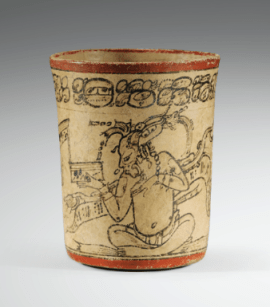
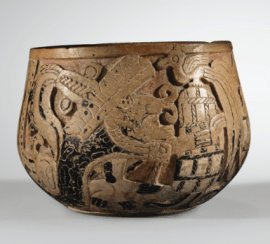
Maya polychrome vessels: Lts 41,121, 122, 214-219, 222 & 223. Estimate: between 18,000 and 40,000 Euros each 

641PF1340_6JSRW_1_GREY.jpg.thumb.385.385Of the 11 painted Maya vessels from Guatemala and Mexico, nine have no listed provenance before 1986.

The market for Maya polychrome vessels developed around 1970 as looting of ancient Maya burial sites became more sophisticated and widespread. The growth of trafficking networks in Mexico and Central America prompted Guatemala’s 1966 Decree No. 425 – Law on the Protection and Conservation of Monuments and Mexico’s 1972 Federal Law on Archaeological, Artistic and Historic Monuments and Zones, which clarified claims of national ownership on all archeological material.

261PF1340_6JSRP_2_GREY.jpg.thumb.385.385Six of the Mayan vessels passed through Merrin Gallery between 1986 and 1990. The Merrin Gallery was also the source of a bronze statue of Zeus that was returned to Italy in 2010. The stated provenance claimed Edward H. Merrin had purchased it from a Swiss collection in the 1960s; in fact, it had been stolen from the Museo Nazionale Romano in 1980The Merrin Gallery also appears frequently in the business records of Sicilian antiquities dealer Gianfranco Becchina, who has been charged with trafficking in looted Classical antiquities. In dealing with Pre-Colombian material, his first passion, Merrin “certainly handled masterpieces that should never have been removed from their original sites,” Ian Graham, a Mayan expert and director at the Harvard Peabody Museum, told the New York Times in 1989, the same year the Mayan vessels began passing through the gallery. Merrin’s response: ”Look, I have four children, I have a position in society, I am active in a number of charities – I’m simply not interested in anything illegal.” In 2005, Ed and Samuel Merrin were both charged with conducting a 10-year scheme to defraud their customers who collected Pre-Colombian art.

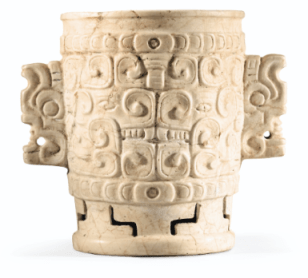
Ulúa Marble Vase: Lot 34. Estimate: 40,000 – 50,000 Euros

103PF1340_6JSRZ_1_White.jpg.thumb.385.385Scholarship has explicitly linked the market demand for Ulúa marble vases, such as Lot 34 for sale in the upcoming auction, to the growth of illegal looting networks and pillaging in Travasiá, Honduras. Anthropologists Christina Luke and John Henderson have investigated the direct and detrimental affects museum and private purchases have on this ancient Mayan center, and the connection is unmistakably apparent: “Looting at Travesía for marble vases increased dramatically during the period when more and more marble vases appeared in galleries and when they were stolen from well-known collections.”  (See Luke, Christina and John Henderson The Plunder of the Ulúa Valley, Honduras, and a Market Analysis for Its Antiquities)

Despite the 1997 Honduran Decree 220-97 that retroactively claimed “the state was the official owner of all cultural patrimony” (Luke and Henderson, 149) the market demand continues to fuel the destruction of a rich cultural site — and production of modern forgeries. Lot 34, with no listed provenance before 2004 and estimated to sell for between 40,000 and 50,000 Euros, may well be a contemporary example of how rising prices are promoting both the devastation and falsification of ancient Mayan cultural knowledge.

Red Lists Raise Red Flags

urlLatin America has not been in the spotlight for cultural heritage claims to the same degree as Italy or Greece in recent years, but the illicit trade of pre-Columbian objects is a serious and continuing problem for countries such as Mexico, Costa Rica, Guatemala, Honduras, Brazil and Peru. Along with UNESCO’s international effort to increase protection of cultural heritage, Latin American countries passed a flurry of national legislation in the 1970s to establish legal ownership of cultural property.

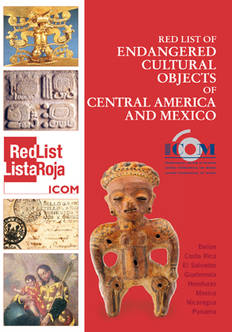
More recently, the International Council of Museums has published several Red Lists of Endangered Cultural Objects. Compiled by an international group of cultural heritage professionals to combat the illicit trade and rampant looting of national artifacts, “all the categories of objects in the Red List are protected by legislation and banned from export, and may under no circumstances be imported or put on sale.”  ICOM could not be more explicit: “The Red List is an appeal to museums, auction houses, art dealers and collectors not to acquire these objects.”

A glance though the Barbier-Mueller catalogue shows quite a bit of overlap with the Red Lists — from Nayarit and Olmec figures to Gran Nicoya stone grindstones, many of the categories of objects on sale in Paris on March 22nd are internationally recognized as the product of rampant looting.

As with all ancient burial objects, the polychrome vessels and Ulúa marble vases are “essential to the understanding of the Maya belief system, mythology, and ideology.” (ICOM Red List: Latin America, p.8)  Yet as these invaluable pieces are illegally looted they become untraceable to their original locations and all context is lost.  Without context, our understanding of one of the most advanced cultures of ancient Mesoamerica is irreparably crippled.

Frechette graduates in May and will soon be looking for gainful employment. Send any leads to us at ChasingAphrodite@gmail.com and we’ll pass them along.

UPDATE: See Donna Yates’ excellent analysis of the Barbier-Mueller collection here and here.

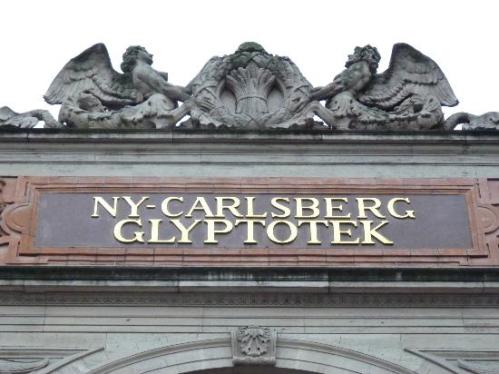
The Danish Connection: Holding on to Loot at the Ny Carlsberg Glyptotech of Copenhagen

urlUPDATE 7/5/16: After years of stonewalling, the Ny Carlsburg Glyptotek has agreed to return hundreds of looted antiquities to Italy. In a joint announcement released July 5, 2016, Italy and the Danish museum said they had reached an agreement for the return that included loans and broad cooperation on cultural matters. “Investigations have shown that the objects had been unearthed in illegal excavations in Italy and exported without licence, which is why from a point of reason and common sense there is a consensus that these particular objects should return to Italy,” the release said.

Update 7/7/16: My friends at POLITIKEN, the Danish newspaper, have provided a list of the 501 objects and fragments the Glyptotek has agreed to return to Italy, with inventory numbers from the museum:

· 110 etruskiske arkitektoniske fragmenter fra Cerveteri og Veii, inv.
nr. HIN 696-800 og HIN 802-806
· 150 genstande fra grav XI (Colle del Forno nekropolis i Sabina) med
en etruskisk vogn, inv. nr. HIN 527-550, HIN 552-668, HIN 670-
672 og HIN 675
· 17 arkitektoniske fragmenter, inv. nr. IN 3426-3442
· 19 etruskiske genstande fra Vulci og Cerveteri, inv. nr. HIN 676-
693 og HIN 695
· 59 individuelle antikke genstande, inv. nr. IN 3500 og IN 3502-
3559
· 14 etruskiske genstande fra Vulci og Cerveteri, inv. nr. HIN 807-
820
· 98 arkitektoniske fragmenter og antefixer fra Veii, inv. nr. HIN 822-
919
· 34 individuelle antikke genstande, inv.nr. IN 3415, IN 3417-3419,
IN 3423-3424, IN 3444-3445, IN 3447, 3498-3499, IN 3570-3576,
IN 3606-3607, IN 3622-3623, IN 3625, HIN 522-526, HIN 669, HIN
673-674, HIN 821 og HIN 920-921


It is easy to forget that American museums were not the only ones caught in Italy’s investigation of the illicit antiquities trade.

The Getty, the Met, the Boston MFA, the Cleveland Museum and Princeton received most of the attention for being linked to the network supplied by antiquities trafficker Giacamo Medici. But Medici objects were also traced to museums and collectors in Germany, Denmark, France, Switzerland, Australia, Japan.

Today, eighteen years since the raid on Medici’s warehouse, at least one European museum is still refusing to return clearly looted material: the Ny Carlsburg Glyptotek in Copenhagen.

Camilla Stockmann, an arts journalist at the Danish daily Politiken, has followed the story since 2006 and recently wrote me with an update: despite years of negotiations, the Copenhagen museum and Italy have still not reached an agreement.

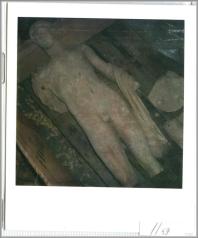
What makes the Glyptotek’s foot-dragging particularly striking is the quality of evidence supporting Italy’s claims. Medici’s criminal sentence identified several objects in the museum that are shown in Polaroids seized in Medici’s warehouse: a terracotta relief depicting a chariot race; an acroterion (roof ornament) depicting a winged sphinx; and terracotta reliefs that comprise a pair of mounted warriors.
943

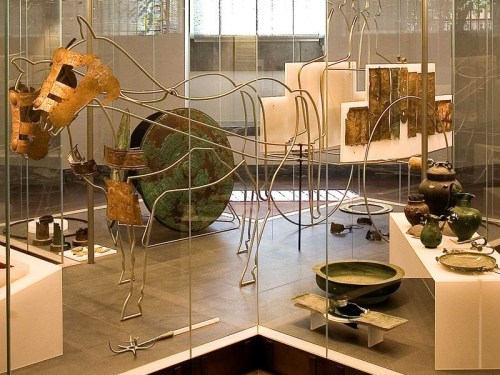
Then there is the tomb of an Etruscan prince from the Sabine Hills outside Rome, show above. It includes the Prince’s shield, weapons, banqueting equipment and bronze incense burners. Most striking are the remains of a horse-drawn carriage. “From Etruria and Latium, which stretched south west of the River Tiber, only a limited number of similar tombs are known,” the museum boasts in its display text.

The tomb in question, archaeologists have concluded, is in the Colle del Forno necropolis. It was looted shortly before being discovered by Italian archaeologists in 1970. “Fortunately the tomb raiders didn’t do a thorough job,” Italian archaeologist Daniela Rizzo testified in Medici’s trial. Additional material from the tomb was recovered and is now on display in the archaeological museum of Fara in Sabine, waiting to be reunited with the objects in Copenhagen.

Hecht’s memoir recounts purchasing the entire set from Medici for $67,000 and selling it to the Copenhagen museum for $1.2 million Swiss francs, or about $240,000.

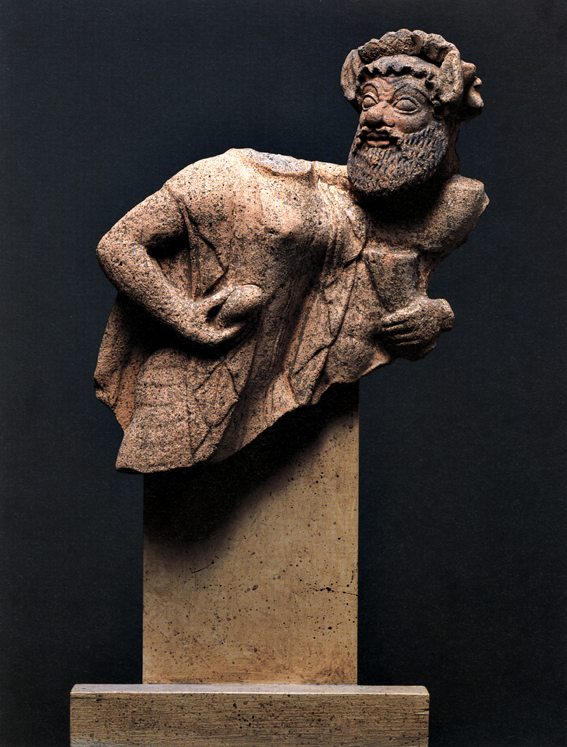
Finally, there are the Glyptotek’s Etruscan antefixes depicting Maenad and Silenus. They bear an uncanny resemblance to the one the Getty Museum acquired in 1996 and put on the cover of the its antiquities catalog before returning it to Italy. The Getty acquired its antefix from the Fleischmans, who purchased it from the Hunt Collection, which was largely composed of material from Medici.

Are the antefixes related? Pictures tell the story: on the left if the Getty’s, returned to Italy in 2007. On the right is one of the Copenhagen antefix, which remain at the Glyptotek.

Gettyglyptoteket01

And here are the Polaroids seized from Medici’s warehouse showing the antefixes soon after emerging from the ground:
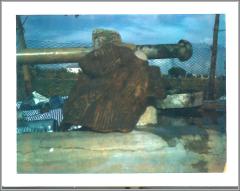
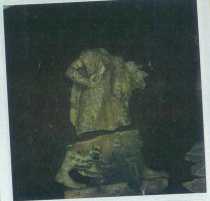
antefix2dirty antefix

Further evidence about the Glyptotek’s role in the illicit trade comes from Medici’s principal connection to the art market, American antiquities dealer Robert Hecht.

Mogens Gjødesen, the museum’s director from 1970 to 1978, was tight with Hecht, a frequent visitor to the museum. In in his handwritten memoir, Hecht describes sharing pickled herring and drinking akvavit with Gjødesen and his wife on several occasions.  “A former curator told me that he (Hecht) was called the ironmonger amongst the employees since he always showed up with a plastic bag with artefacts that he wanted to sell,” says Stockmann.
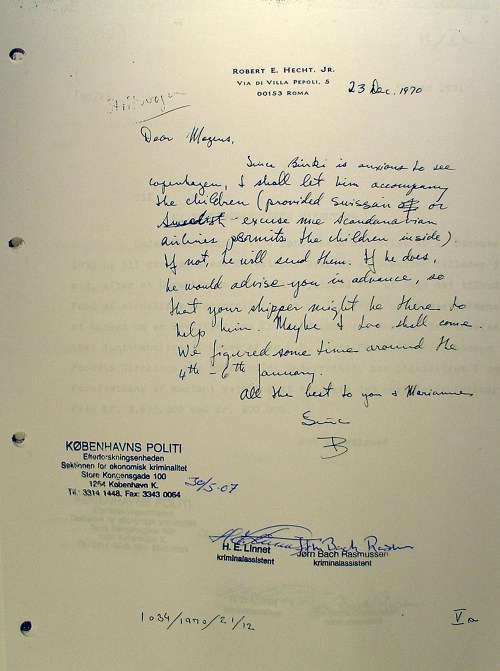
A 1970 letter from Hecht to Mogens Gjødesen discusses sending "the children" to Copenhagen.

A 1970 letter from Hecht to Mogens Gjødesen discusses sending “the children” to Copenhagen.

Indeed, Hecht’s handwritten memoir reveals that when he first obtained the famous Euphronios krater from Medici, he offered it first to Gjødesen, who unsuccessfully “tried to get a Danish shipman to buy it for the Glypt.”

The journal also reveals that Hecht appears to have sold the Glyptotek illicitly exported silver figures from Greece: “After my wife’s departure I went to Greece and was shown a magnificent group of geometric AE figurina* (now in coppenhagen). (*Helmeted nude rider, 2.) This group was appreciated by the Carlsberg Foundation & was acquired by the Glypotech within a few months. This group has both an artistic + a cultural interest. A helmeted mounted horseman, 2 horses back to back, the upper half of a youth, a potter at work, a miniature helmet, et. Al. The patina is smooth, pea green.”

The Danish Stonewall

When confronted with this evidence, the Glyptotek initially denied any acquisitions from Medici or his associates after 1970. As evidence emerged that contradicted that, their position shifted. Stockmann says:

“Until 2007 The Ny Carlsberg Glyptotek denied any wrongdoing but after substantial politic pressure the museum sent documents about the items bought from Medici and Hecht during the 1970s to Italy. In 2007 Italy asked for a great number of items returned. Since 2008, the Ny Carlsberg Glyptotek and the Italian Ministry of Culture have tried to reach an agreement.”

In 2009, the New York Times reported that those negotiations had bogged down. While most American museums had managed to reach agreements with Italy on contested material, Italy’s top negotiator said the Glyptotek “had taken a very different attitude.”

Recently talks have restarted, Stockmann told me. Both sides agree that all items related to the tomb of the Etruscan Prince should be returned to Italy in exchange for comparable loans. But the terracotta antefixes have “been the subject of a conflict.” In particular, Italy objects to language in a draft agreement on cultural cooperation that would prevent it from bringing further claims in the future.

Usually, stonewalling is a good sign that problems go far deeper. So I’ve looked into our archives to see what else I could find.

Gjødesen and the Getty Forgeries

As it happens, Gjødesen was a visiting scholar at the Getty Museum in 1978 and 1978, just as his directorship at the Glyptotek was coming to an end. While at the Getty, he had the opportunity to weigh in on two important acquisitions being considered by the museum.
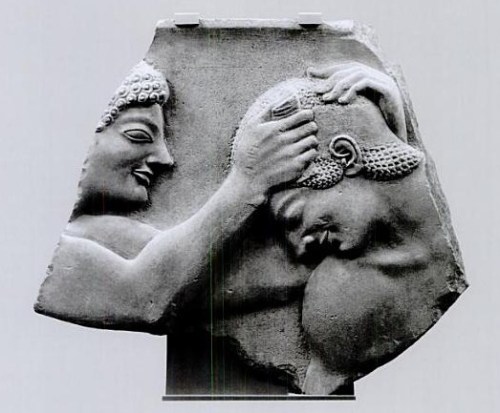
Screen Shot 2013-03-12 at 12.55.42 AM

The first was an archaic relief showing a Greek soldier binding the head of a fellow warrior. The Getty’s crooked antiquities curator Jiri Frel dubbed it The Death of a Hero. Several experts were dubious about the authenticity of the relief, noting the execution of details like the closed eye seemed off for the Archaic period. At $2.3 million dollars, it was not a decision to be made lightly.

Gjødesen’s opinion helped sway the board, Getty records show. In a letter to Frel dated December 14, 1978, he wrote:

From time to time it happens that a discovery is made which elaborates, extends or totally changes our conception of Greek art. This has happened once again. I am, of course, referring to the archaic Attic relief, dating from about 525 B.C. which you have determinedly tracked down during the past years and are now in a position to submit to the Board of Trustees of the J. Paul Getty Museum with a view to its acquisition.

You have asked my opinion. To put it bluntly, the relief is a sublime masterpiece of incredible subtlety, sentiment and expressiveness, a work of grace, intimacy and poetry, with a surprising touch of realism. It needs no letter of recommendation.

He added a key detail to clinch the objects’ authenticity:

So far the master remains anonymous, though not unknown to us, for in 1958 a relief, obviously by the same hand although of a different but for the time equally unexpected theme, was unearthed at Anavysos in Attica and brought to the Athens National Museum.

He concluded:

It is a miracle that this piece of sculpture was produced and is preserved. It is an even greater miracle that it is available. The opportunity should not be missed; it is unlikely to return. I cross my fingers for you and for the museum.

The Getty acquired the piece for $2.3 million in 1979. There are indications that Frel received a substantial kickback in the deal. Soon after, experts from around the world condemned the relief as a crude fake. The carving was incorrect, particularly the heads and hands, noted Brunhilde Ridgeway. The fragmentary image was impossible to reconstruct in a credible way, and no funerary relief of the Archaic period was known to have the same proportions.

In the 1980s, the Getty declared it a fake and returned it to the dealer.
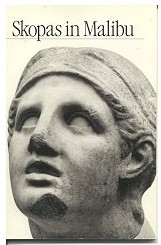
url-1It was not the only fake whose praises Gjødesen sang while at the Getty. Soon after the archaic relief was acquired, a head attributed to the legendary master Skopas was offered to the Getty. It had been “in a private French collection since the 1830s” and considered “one of the most important pieces of ancient art in the United States,” Frel claimed.

Gjødesen was among the scholars who lent support to Frel’s claims. The Skopas head was later established to be a modern forgery.

Was Gjødesen fooled? Or was he, like Frel, part of a scheme whose depths we have not fully plumbed? And when will the Copenhagen museum come clean?

Letter from Fargo: Punk, Archaeology and the DIY Ethic of Cultural Heritage

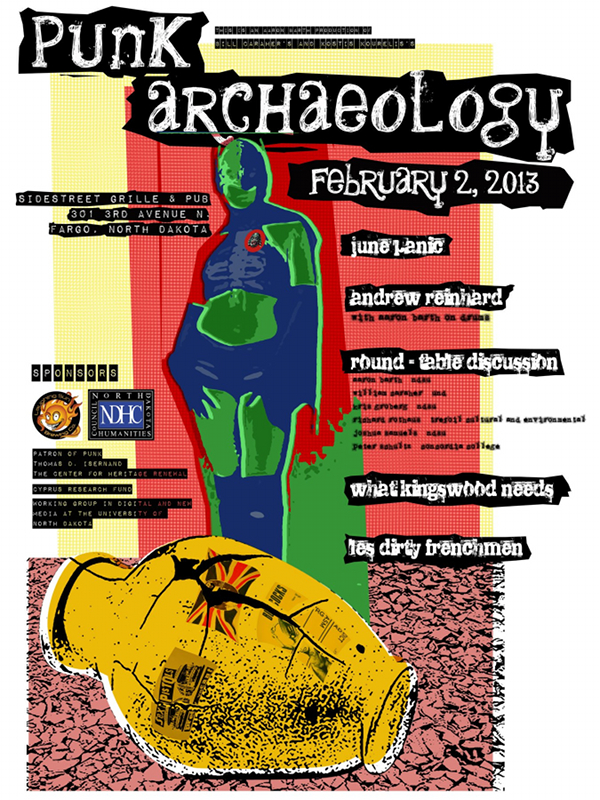
Punk-Archaeology-HandbillWe recently heard about a gathering in Fargo, North Dakota that mixed beer, live punk music, spoken word, archaeology, the general public, and a do-it-yourself attitude for cultural heritage. Punk Archaeology?! We wanted to know more. Here’s a report from our correspondent Andrew Reinhard, the Director of Publications at the American School of Classical Studies at Athens and a DIY punk scribe who makes music in his basement.

Nothing could be more punk rock than an archaeology unconference held at night in a bar in Fargo, North Dakota, in February. The brainchild of professor Bill Caraher of the University of North Dakota, graduate student Aaron Barth of North Dakota State University, and professor Kostis Kourelis of Franklin and Marshall College, the February 2nd event was organic as punk itself.

“The idea came up in conversation between myself and Kostis Kourelis, an archaeologist and architectural historian,” Caraher recalled. “We both observed that quite a few archaeologists had some interest in punk rock music. As we considered the causes and consequences of this coincidence, we got to think about how punk rock music – and the larger aesthetic and lifestyle associated with that musical form – influenced archaeology. We then began to document some of these musings in a blog Punk Archaeology and, from time to time, talked about turning the blog into something more.”

Aaron Barth stepped up to help, speaking with Caraher during fieldwork about Punk Archaeology, deciding to bring Punk Archaeology to reality by hosting a colloquium in Fargo. “We had a great group of scholars willing to contribute, an intriguing group of bands, and a fantastic venue for a meeting that interrogated the borders of the academy, popular culture, and loud, chaotic, and confused social critique,” Caraher said.

fargo1Punk Archaeology speakers gathered at the Hodo Lounge on the afternoon of Feb. 2nd to prepare for the evening and to discuss current projects. Caraher, Kourelis, and Richard Rothaus of Trefoil Cultural and Environmental will spend the weekend of Feb. 9-10 documenting the Man Camps of the Bakken Oil Fields with celebrated cultural photographer Kyle Cassidy. This visit continues a string of trips conducted to study life just outside of the boomtown of Williston, North Dakota. In April, Rothaus and I will also be making a 100-mile transect of the North Dakota Badlands wilderness to explore environmental and archaeological impact of oil exploration in the western half of the state.

The evening kicked off at the Sidestreet Grille and Pub promptly at 7:17 with a four-song set of my own punk songs about problems facing archaeology and cultural heritage. Barth assisted on drums.


On October 9th last year, Caraher emailed me to see if I’d create some music to play for the unconference. Three months and 17 songs later, the album was as finished as it was ever going to get, and I was ready to play it live. In the spirit of punk’s DIY attitude, I set some limits for myself: each song must 1) be about archaeology or cultural heritage; 2) be recorded at home in my basement by myself with instruments I already owned and without any help from anybody; 3) take three hours or less to write, record, and mix the lyrics and music for each tune; 4) have each part (guitars, drums, vocals) be recorded in three or fewer takes. These rules–musical austerity measures if you will–forced me to strip down to the basics while being as creative as possible in working with what I had. It also allowed me to consider major issues relating to Punk Archaeology ranging from repatriation of the Elgin Marbles, to austerity measures creating more art theft, to the destruction of cultural heritage by religious extremists, to the need for archaeologists to be better at sharing their data with each other and with the world.

ReinhardBarth

We played “Sand Diggers” about how war, oil exploration, and immigration enforcement often complicate proper excavation, “American Looters” criticizing popular treasure-hunting programming such as American Diggers, “Untenured” focusing on the perils of being an adjunct professor in the Humanities, and “Repatriate”, an aggressive call to museums to participate in the “Give-Back” movement. “Sand Diggers” resonated particularly deeply with the crowd, protesting the current drilling underway in the Baaken Oil Fields and the possible disturbance of archaeological sites on Killdeer Mountain and
elsewhere in North Dakota.

The spoken word part of the night followed, featuring “papers” by myself, Barth,Caraher, Kourelis, Rothaus, Kris Groberg (NDSU), Joshua Samuels (NDSU), and Peter Schultz (Concordia College). I spoke about discovering punk from a historical perspective, ultimately going native with the music and culture, exploring the punk family tree of bands and how that informed my world-view both personally and professionally. Groberg, an assistant professor of art history at North Dakota State University, recalled her earlier life as a “punk rock mom”, often sleeping bands like Fugazi in her basement when their tours brought them through Moorehead. Caraher instructed all speakers to keep their talks to “the length of a Minutemen song”, to hold the interest of the curious, drinking public, getting immediately to the point.


This collection of narratives was followed by a six-song set with a full-on punk band featuring Todd and Troy Reisenauer of Fargo’s Les Dirty Frenchmen on lead guitar and bass, Barth on drums, myself on vocals and rhythm guitar, and the University of North Dakota’s chair of the Music department, Michael Wittgraf on keyboard. We tore through two more originals, “Publish and Perish” which was transformed by the crowd into a ska rave-up, and “History” featuring a reading from Herodotus’ Histories. We then launched into a set of covers from the ‘60s with The Stooges’ “I Wanna be Your Dog”, heading in to The Humpers’ 1996 song “Losers Club”, a tribute to Ralph’s Corner Bar in Moorehead, Minnesota, a historic landmark in the Red River Valley punk scene that was
demolished in the late-‘00s. We finished off with “Born to Lose” by Johnny Thunders (1991, his final recording), and then destroyed the bar with the unabridged version of “My Way” by Sid Vicious to mark the anniversary of his death on Feb. 2, 1979.

Fargo punk legend June Panic followed us and played a mellow acoustic set. What’s archaeology without a nod to mythology and legend? As the final band of the night, Fargo’s What Kingswood Needs, set up, members of the audience took turns at the open mic to remember their times at Ralph’s Corner Bar. These oral histories were recorded, creating a time capsule of memory on one of the brightest and certainly most colorful eras in the Fargo-Moorehead region.

What Kingswood Needs finished the evening with two sets of original, modern punk songs, pulling from contemporary acts like Green Day, Blink 182, and Sum 41, closing the time-loop, bringing the Stooge’s proto-punk of 1969 all the way through to 2013. Thoughts on Punk Archaeology will be published post-haste by the University of North Dakota in the form of a ‘zine, the immortal DIY punk publication platform. Performances and talks were live-streamed during the event, and an edited version of these will be posted in the coming weeks. Caraher’s reflections on the event can be read on his New Archaeology of the Mediterranean World blog.

Sponsors included the North Dakota Humanities Council, the Cyprus Research Fund, Bismarck-based Laughing Sun Brewery, Tom Isern of the Center for Heritage Renewal at North Dakota State University as the Patron of Punk, as well as Rothaus who donated the gas in his truck, ferrying instruments to and from the venue, Fargo’s Sidestreet Grille and Pub.

 Join the Punk Archaeology conversation and be kept up to date on publications, audio,video, and future events on Facebook

You can follow Andrew Reinhard on Twitter at @adreinhard.


People Not Stones: Fighting Looting With Local Development

We generally focus here on the demand side of the illicit antiquities trade — the museums, auction houses, collectors and dealers who buy plundered antiquities, providing the economic fuel that keeps looters digging.    

 Our friends at the Sustainable Preservation Initiative (SPI) have developed a promising paradigm for attacking the problem at its source—the impoverished communities where archaeological sites are frequently located.

Here’s a guest post from SPI’s Rebekah Junkermeier on that model and a new crowdfunding campaign to expand it:

If you’re reading this blog, you probably know that looting and the illicit antiquities trade ravages archaeological sites, ones that contain many of the precious artifacts valued by collectors, dealers, and museums because they help explain the history of human beings on the planet. More specifically, it is often residents of an impoverished local community that loot the site or use it for other purposes (grazing animals, growing crops) in an attempt to provide themselves and their family with the essentials, thus accelerating the damage.

But how can someone tell an underprivileged person not to economically exploit a site, even if that exploitation is destroying the site, without providing a viable economic alternative?

logotypeSPI’s paradigm answers this question. It preserves endangered archaeological sites by empowering local residents through entrepreneurship. By investing in locally-created and -owned businesses whose financial success is tied to preservation of the site, SPI preserves cultural heritage and alleviates poverty in the surrounding communities.

Our first project at San Jose de Moro, one of the most important ancient cemeteries in all of Peru, has created over 40 jobs for local residents and generated over $16,000 in an impoverished community where the daily wage is only $9.50. Looting and destructive practices at the site have come to a halt and local residents now view the site as an economic asset.  After just one year of operations, the project is completely economically sustainable, no additional funding needed.

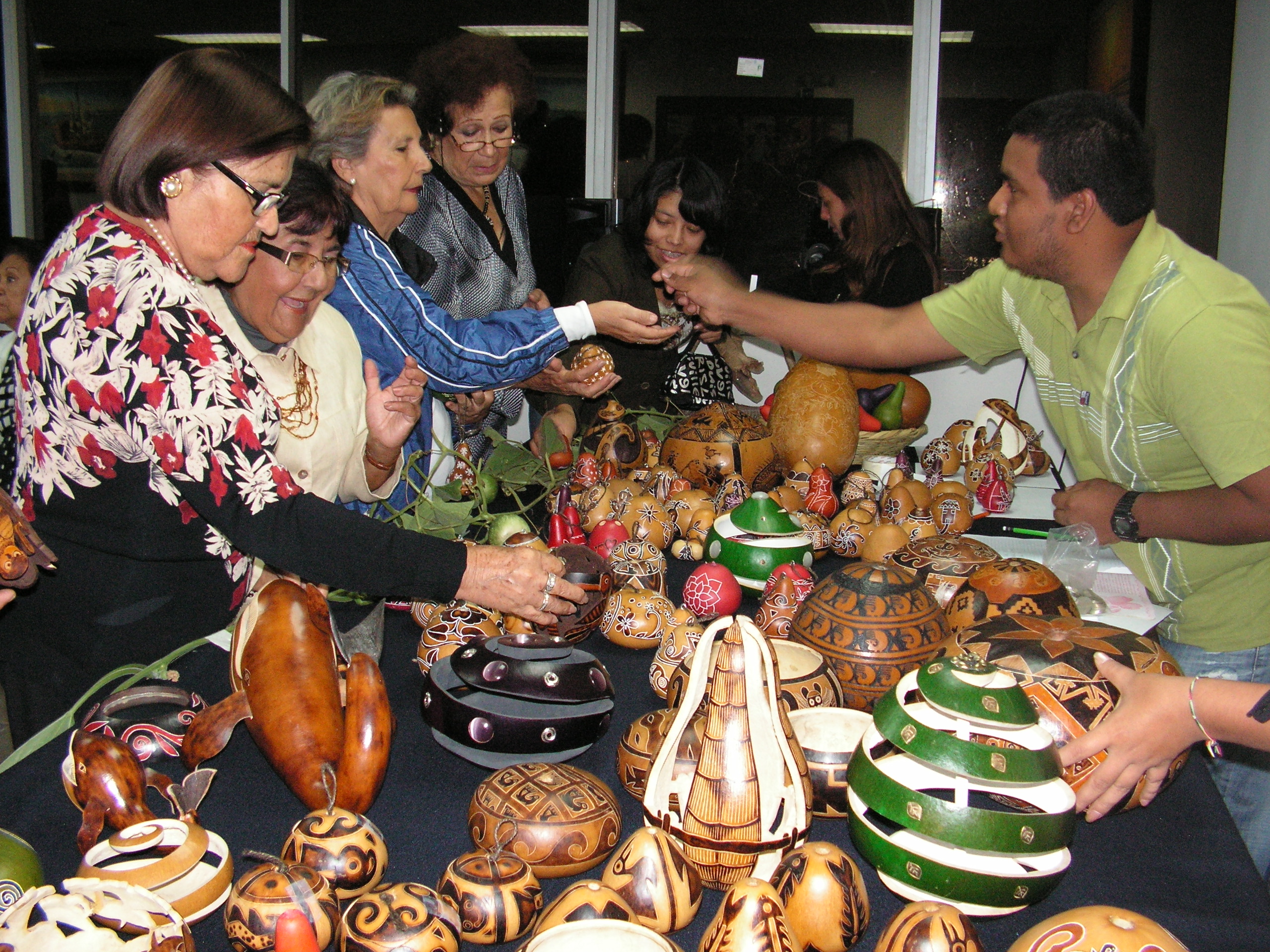
IvanCruzOur second project at Pampas Gramalote, Peru, is well on its way to the same type of success. The story of master gourd carver and designer Ivan Cruz there is a moving one. Before SPI, Ivan always struggled to make ends meet: “At first it was difficult, as I had to work at a number of jobs to support my family — as a house painter, as a brick mason, in my parents’ fields fumigating, weeding, and harvesting.” An SPI grant gave Ivan the entrepreneurial opportunity he needed to capitalize on his artistic abilities. He and local archaeologist Gabriel Prieto were able to build an artisan studio where he can create more artwork and train other local residents and a store where all of their works can be sold. He is now a proud and independent entrepreneur making a living by utilizing Pampas Gramalote and other local sites in a non-destructive manner. “I understand how my work can help preserve the art [of traditional gourd carving] and foster appreciation for such an important archaeological site as Pampas Gramalote.”

Tourists at Pampas Gramalote

Tourists at Pampas Gramalote

People Not Stones 2013

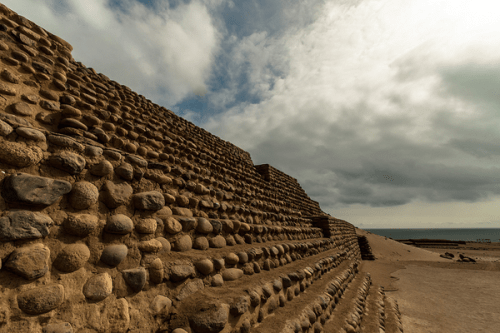
This week, SPI is launching its first crowdfunding campaign on indiegogo.com to raise the $49,000 needed for our two newest projects in Bandurria and Chotuna, Peru. Both sites are home to poor communities and rich cultural heritage. Bandurria contains pyramids in Peru older than those of ancient Egypt and Chotuna is a 235-acre monumental temple and pyramid complex, where several ancient royal tombs have been discovered (see National Geographic link here).

Bandurria Pyramids

Neither place can afford such basics as running water and electricity or has a sewer system. There are few jobs, little income and no opportunity to escape this cycle of poverty. Our project aims for nothing short of alleviating poverty in these communities and saving the archaeological sites, and we want to give as many people as possible the opportunity to come on board.

Help us save sites and transform lives! Click here to make a tax-deductible contribution at indiegogo today and spread the word by liking our campaign on Facebook, posting our crowdfunding campaign on your Facebook page, retweeting us on Twitter (#peoplenotstones2013), or pinning our project video on Pinterest!

Decoding Eakin: Behind ‘Extortion’ Claim, Fear the Floodgates Have Opened

imgresIt is no coincidence that The Great Giveback, Hugh Eakin’s lengthy argument against the repatriation of looted antiquities, landed in The New York Times on Sunday, just as the directors of America’s leading art museums gathered in Kansas City for their annual meeting.

A key item on the agenda in Kansas City that day was the museum community’s handling of looted antiquities, an issue that has roiled the art world for more than a decade.  The Assoc. of Art Museum Directors (AAMD) has repeatedly tried to put the issue to rest, adopting policy changes in 2001, in 2004 and again in 2006 as the controversy metastasized into a full bore international scandal. In 2008 the AAMD revisited the issue yet again, adopting acquisition guidelines that required a clear ownership history dating back to 1970, a position that put them in line with most archaeologists.

The 2008 policy was heralded as a turning point for the American museums and a victory for reformers like the Getty’s Michael Brand and Max Anderson, now in Dallas, who felt it was time for American museums to sever their ties to the black market. But those reforms are under attack. Museum directors are seeking to reverse the policy, which drives a wedge between them and wealthy patrons whose antiquities collections can no longer be donated in exchange for tax write-offs. These dissidents have made ample use of the policy’s major loophole, which allowed museums to violate the 1970 rule if they posted the acquisitions on the group’s Object Registry with a justification of why.

I-2008-5615-1

As Lee Rosenbaum recently noted, sixteen museums have posted nearly 600 objects there, many with no clear justification for flouting the 1970 rule. The Virginia Museum of Fine Art, for example, acquired an unprovenanced collection of 31 pieces of ancient gold jewelry, saying it violated the 1970 rule so the objects could be “studied, displayed and publicized.” Last August, the Cleveland Museum posted a Roman portrait bust of Drusus (right) that has no documented ownership history prior to 2004 and was sold to the museum by the Aboutaam brothers, antiquities dealers who have been convicted of charges related to trafficking in looted art. “Museums should still be buying antiquities, and we shouldn’t shirk that responsibility, and I think it’s almost an ethical responsibility,” Cleveland museum director David Franklin told the New York Times. (Readers of Chasing Aphrodite will recognize the quote as a nearly verbatim echo of what the Getty’s John Walsh said in 1987 to justify the acquisition of the looted statue of Aphrodite.)

In short, the Object Registry has become a tool for laundering suspect antiquities. Once objects are posted there, museum officials believe, the statute of limitations clock starts ticking, giving foreign governments just a few years to investigate, build a case and file a claim before their time expires and the objects emerge sparkling and clean. More broadly, the series of reforms taken by many American museums in recent years — which include taking claims seriously and sending looted antiquities back to the countries from which they were stolen — are under attack from within.

That brewing fight is the context for Eakin’s polemic, which notably takes aim not at source countries so much as museums like the Getty and Dallas that have embraced reforms and begun to proactively search their collections for problematic objects. With Philippe de Montebello retired and Jim Cuno forced to moderate his view by the Getty board, Eakin has emerged as the spokesman for the dissidents.

Recent events have only raised the stakes, for the controversy over looted antiquities shows no signs of going away. The depth of the problem with American collections of Classical antiquities is just beginning to emerge, with more revelations certain to come as researchers comb through the seized archives of the illicit trade’s most prominent middlemen. Meanwhile, over the past year the search for loot in American collections has gone global, with countries like Cambodia, India and Turkey bringing claims. Museum directors know better than anyone that these claims are the tip of a very large iceberg.  

To the ears of some in the art world, that sound is the creaking of the floodgates swinging open.  

Spurious Claims

Eakin’s piece, then, is best understood as part of a broader effort to convince the public that claims involving looted antiquities are baseless and those who cave in to them, cowards. The reforms have not only failed to stop looting (a “scourge” often given lip service by museums, but never more.) They have “spurred a raft of extravagant new claims against museums — backed by menacing legal threats.” Unless American museums grow a backbone and fight these foreign claims to the death in court, Eakin suggests, someday soon they will be empty of ancient art.

As he has done in the past, Eakin relies on a mosaic of selective facts and careful omissions to cobble together his argument. Many of its most serious flaws have already been rebutted. Lee Rosenbaum — who herself is often skeptical of repatriation claims — denounced it as a “distorted, often mistaken opinion piece” and concluded Eakin was “an extremist on the anti-giveback side.” Archaeologist Paul Barford was less kind, saying the piece “illustrates quite clearly the robber baron attitude of entitlement, hypocrisy, xenophobia and supremecism when it comes to appropriating for their own uses other peoples’ cultural property, that internationally is losing America friends.” Cultural property lawyer Rick St. Hilaire noted that Eakin’s argument “overlooks the general principle that stolen property cannot be owned lawfully or that contraband antiquities (smuggled antiquities) are somehow legitimate.” Speaking in Eakin’s favor, I could only find three voices: Peter Tompa, the lobbyist for collecting interests; blogger Judith Dobrzynski, who calls the piece “pitch-perfect” but acknowledged a conflict of interest in the subject; and LA Times art critic Christopher Knight, who celebrated the piece’s “nuance” in a tweet.

url

Let me focus on something I think Eakin gets almost right — his summary of recent events. (See below for his major omission.) Other archaeologically rich nations have been inspired by Italy’s success. In bringing their own claims, many have been less disciplined than Italy, which supported its demands with evidence — much of it photographic — gathered during a decade-long criminal investigation. But here Eakin misses an opportunity to articulate the key flaw of some recent repatriation requests — the conflation of historical gripes with the modern criminal behavior of looting, smuggling and fencing. For example, most of the objects Turkey is demanding from American museums were acquired since the 1960s and have no documented ownership history before that, suggesting they are likely the product of illicit excavations. Whether Turkey has evidence to support those claims remains to be seen — unlike Italy, the Turks are making their case to museums before sharing it with the public. But Turkey has also asked several European museums to return objects that were removed nearly a century ago, sometimes by archaeologists operating with government permission. And to increase their leverage, Turkey has denied digging permits to foreign archaeologists who played no role in the alleged wrongdoing. All of this — coupled with Turkey’s own history of plunder — has led to a skeptical reception of claims against American museums that may or may not be backed by clear evidence. And with good reason.

Likewise, Greece and Egypt have frequently included colonial-era claims with requests for the return of recently looted antiquities. Some of those historical claims may carry ethical weight, such as the reunification of the Parthenon marbles. But more often they blur the moral and legal clarity of claims involving modern looting. The same can be said for occasional statements that all things made in Country X should be returned to County X, which discredit the nations that make them.

So, there is legitimate reason for skepticism of repatriation claims. But these are not the arguments Eakin chose to make. Instead, he invents a picture of “terrified” museums being cowed by powerful foreign governments into giving back America’s innocently-acquired art. This description of the situation makes for an almost laughable reversal of reality.

American museums have long had the power when it comes to claims of restitution — the power to ignore claims, to withhold information and to create or defend false ownership histories. For decades, they have wielded this power freely, dismissing polite requests from foreign countries while continuing to buy looted art with impunity. For years, the Getty blew off Italian objections to their acquisitions of obviously looted art by simply refusing to respond to inquiries from senior government officials. The Met refused to allow scholars to look at its collection of looted Greek silver. Turkey has requested the return of the Sion Treasure from Harvard since the 1960s to no avail, while the university published a book about the treasure that detailed its illegal excavation and included a photo of the looter’s hole from which it was taken. Yet Eakin laments that today, 40 years later, Turkey has decided to begin withholding loans from Harvard until it responds. These are what he calls “blatantly extortionary demands.”

What motivates repatriation claims from source countries is not a desire for a few more pieces of ancient art. The basements of their museums overflow with the stuff. What they want is respect.

Let’s consider Eakin’s innocent acquisitions. If there has been a lesson from the last decade of controversy — and if there is one point made clearly in Chasing Aphrodite — it is that American museum officials were far from innocents. In case after case where internal museum records have come to light — via lawsuits or leaks to reporters — there is clear evidence that museums officials were aware they were buying recently looted antiquities. Met officials knew the Lydian Hoarde was looted and sought to hide it, as Turkey learned during its six year legal battle for their return. Dietrich von Bothmer kept a map of the precise tomb in Cerveteri from which the Euphronios krater had been looted, as we learned from Marion True’s sworn deposition. The Boston MFA’s longtime antiquities curator Cornelius Vermeule was close personal friends with Robert Hecht and acquired hundreds of looted objects from him, as the Italian investigation and Hecht’s own journal revealed.  

Giacomo Medici during a visit to the Getty Museum

Giacomo Medici during a visit to the Getty Museum

The Getty case, our most revealing window into a museum’s antiquities acquisition process, is startlingly clear: “We know it’s stolen,” Harold Williams said in a confidential 1987 meeting about the acquisition of suspect antiquities. “Are we willing to buy stolen property for some higher aim?” Marion True discussed the contents of looted tombs in correspondence with Giacamo Medici, and declared the golden funerary wreath “too dangerous” before greed got the better of her. Her predecessor Arthur Houghton visited Medici’s Swiss warehouse and sought his help tracing the Getty’s griffins to tombs in Southern Italy. Houghton’s predecessor Jiri Frel ran a provenance forgery workshop out of the antiquities department and acquired thousands of looted objects through a tax fraud scheme whose scope is just now becoming apparent.

In other words, the evidence amassed to date makes abundantly clear that many of our highly educated antiquities curators and museum directors were not total dupes when it came to their role in the illicit antiquities trade.

They knew.

This is Eakin’s most glaring omission and the reason why repatriation is — at times — a reasonable response to foreign claims. They are the pound of flesh that must be paid for our collective cultural sins.

What standard?

How much evidence is needed to establish that an object is the product of the illicit antiquities trade and should be returned to the country from which it was stolen? For all the debate about acquisition policies, there has been nearly no debate or policy papers on this question, which is far more pressing concern facing museums today.

Eakin reminds us repeatedly that museums have returned contested antiquities under no legal order and often with no knowledge of their precise findspots. Such statements remind me of a phone conversation I had in 2006 with the Met’s de Montebello. He told me that the Met was prepared to give up its beloved Euphronios krater if Italy could present “irrefutable proof” of the precise spot from which it had been looted. Soon after, the Met’s general counsel informed him that there was no such legal standard — not even in cases of capital murder. Montebello left it to a spokesman to call back and sheepishly clarify that under the law, the vase could be seized by US law enforcement based upon probable cause. That is the legal standard for civil forfeitures. Apparently Eakin did not get the memo.

Orpheus mosaic in situThe cases that Eakin suggests are spurious are still being negotiated, and we don’t yet have access to the full array of evidence. But what has come to light suggests they are far from fickle. In the case of Cambodia’s claim on the Khmer statue in the Norton Simon, the precise find-spot is well-known and not disputed — the statue’s feet remain in placed today at the temple complex from which it was looted. In the two cases where claims from Turkey have been resolved — Dallas and Penn — there was compelling evidence. Penn acquired the Trojan gold  in 1966 from Hecht, whose ties to Turkish looters are well documented, and scientific tests later found it was consistent with samples found in Turkey. In the case of the Orpheus mosaic, investigators found Polaroids of the mosaic in situ when it arrested the alleged looters.

Eakin’s call to legal arms betrays both his ignorance of the law and of museums’ dilemma. There is a very good reason why museums have voluntarily given back nearly $1 billion in looted antiquities with no legal fight — it was in their self-interest. As cultural property attorney Rick St. Hilaire notes, taking these cases to court “is fraught with danger.”

LACMA's Michael Govan

Museums hoping to fight in court had better make sure they have no damaging internal records detailing their acquisition of looted antiquities, for those are likely to come out in discovery, as Sotheby’s recent learned. They had better also be sure that no other objects in their collections have dubious origins, because their legal fight will inspire a thorough examination of their entire collection. This was the lesson learned by the Getty, which, as Eakin notes, chose to fight rather than accept the voluntary return of six clearly looted antiquities. Several years and millions of dollars in legal fees later, they ended up returning more than 40.

Eakin laments the cost to museums of dealing with repatriation claims. The cost of litigation is far far higher. This is not to mention the public relations consequences, which concern museums far more than a few pieces of ancient art. The true and lasting damage to American institutions over this past decade has not been legal fees or lost antiquities. It has been the growing public perception that they are engaged in an illegal activity that, at its heart, is a deep betrayal of their public mission. If they follow Eakin’s advice, they will double down on that betrayal.

Greek deal

The enlightened solution that Eakin seeks is the one being taken by the institutions he targets — rebuilding trust with the public and foreign governments by taking claims seriously, engaging in proactive research of their collections and sober evaluation of the evidence and when appropriate, returning a token of the stolen property in their collections in exchange for a collaborative relationship with a potential adversary.

As Eakin well knows, this approach is not “making great art ever less available.” It is providing museum visitors with remarkable rotating exhibits of the world’s great treasures while moving both source countries and museums toward a future where questions of ownership recede and the focus becomes cooperation and education. 

The Getty’s Looted Amber: A Window into the Museum’s Deepening Dilemma

Screen Shot 2013-01-06 at 11.24.34 PM

In Saturday’s Los Angeles Times, I have a story about Getty Museum’s efforts to find the true origins of its massive antiquities collection.

Here’s how the story starts:

In the wake of a scandal over its acquisition of looted antiquities, the J. Paul Getty Museum is trying to verify the ownership histories of 45,000 antiquities and publish the results in the museum’s online collections database.

The study, part of the museum’s efforts to be more transparent about the origins of ancient art in its collection, began last summer, said Getty spokesman Ron Hartwig.

“In this effort, and in all our work, when we identify objects that warrant further discussion and research, we conduct the necessary research to determine whether an item should be returned,” Hartwig said in a statement to The Times.

Screen Shot 2013-01-06 at 11.35.26 PM

The review is likely to reveal that problems in the Getty’s collection go far deeper than the nearly 50 looted objects returned since 2007according to Getty records and interviews with antiquity dealers and former museum officials.

Hundreds of objects still in the collection were acquired with false ownership histories aimed at disguising their origins in the illicit antiquities trade, records and interviews show.

The depth of its problem was underscored in November, when the Getty published a catalog of 56 carved ambers, objects that the ancient Greeks and Etruscans used in amulets for the magical properties they were believed to possess.

At first look, “Ancient Carved Ambers in the J. Paul Getty Museum” represents the museum at its finest — decades of scholarship published online in an illustrated catalog that engages the public in a rarely studied artifact of the ancient world.

But records — including internal Getty files — show that the ambers were almost certainly looted from tombs in northern Italy.

medici mugThe relics passed through the smuggling network of Giacomo Medici, who has been convicted in Italy of trafficking in illegally excavated artifacts. Once in the United States, they were donated to the Getty as part of a tax fraud scheme that nearly brought the institution to its knees in the 1980s.

The catalog is silent on this history, which a Getty spokesman says the museum was not aware of at the time, but it does acknowledge the consequences. Because nothing is known of the context in which the ambers were found, little can be definitively concluded about their meaning to their ancient owners.

“Were they purchases, part of a dowry, heirlooms, or other kinds of gifts?” writes Faya Causey, author of the catalog. “Unfortunately, we can only speculate as to whether the ambers were actually possessions of the people with whom they were buried, how the objects were acquired, and in which cultic or other activity they played a part.”

The ambers capture the dilemma that the Getty faces today. Having largely abandoned the purchase of ancient art, it is using its unparalleled resources to restore meaning to objects whose history it had a hand in destroying.

You can read the full LA Times story here.

The Getty’s Study Collection

This is not the first time questions have been raised about the Getty’s study collection, the tens of thousands of artifacts in the museum’s collection deemed not worthy of display but held in storage for scholarly study.

In the 1990s, hundreds of pottery sherds and votive fragments in the collection were linked to a looted archaeological site in Francavilla Maritima. Under Marion True’s leadership, the Getty conducted an exhaustive scholarly study of the material, then returned it to Italy. 

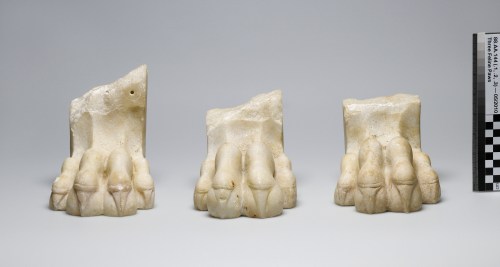
Last year, the Getty quietly returned 150 marble fragments in the collection (88.AA.140 – 88.AA.144) to Italy after evidence emerged that they joined objects found in the same looted tombs of Ascoli Satriano that produced  the Getty’s Griffins and statue of Apollo, which were returned to Italy in 2007. The objects and fragments were acquired in the 1980s from London dealer Robin Symes.

81.aa.144_1

Getty spokesman Ron Hartwig described the voluntary returns as the result of cooperative research with Italian archaeologists:

In his letter to Director General Luigi Malnati last January, Jim Cuno said, “The Getty acquired these objects as a gift in 1988, in the hope that they would be preserved and studied and eventually reconnected with other fragments of the same objects.  Happily, careful scholarship has led to that result.  Working with colleagues in Italy, Getty curators have determined that the fragments in our possession are very likely to match with vessels from Ascoli Satriano.  It is our hope that the fragments can be examined to ascertain their pertinence, and rejoined to these vessels.” Dr. Malnati invited [Getty antiquities curator] Claire Lyons to join a committee formed as a research collaboration to examine the pieces.

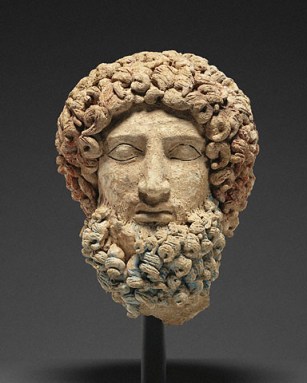
01293001But the Getty’s problems are not confined to the study collection, as was demonstrated last week when the Getty announced it would return a terracotta head of Hades to Sicily. It will be reunited with the statue’s body, which was found at the archaeological site of Morgantina — the same source of the Getty’s looted statue of Aphrodite, which was returned in 2010.

These returns are a reminder of the Getty’s crooked collecting practices, but they also offer some reason for hope. Each return has contributed to important new insights about archaeological sites that were despoiled by looters. The process of joint investigation and return has helped re-create some of the lost context — something Lord Colin Renfrew once described as “Post-disjunctive forensic re-contextualisation.”

Expect to see more if it in the year ahead. As noted in Saturday’s story, a large part of the Getty’s study collection was acquired in bulk donations in the 1970s and 1980s via the looting and tax fraud scheme we describe in Chapter 2 of Chasing Aprhodite. Records show that much of it passed through the smuggling networks of Medici, Hecht, Symes and Becchina, suggesting it will likely end up back in Italy sooner or later.  

The ambers are the latest tip to surface of a very large iceberg. As David Gill noted in November, “the scale of the problem for the Getty is massive.”

Chasing Aphrodite 2012: The Year in Review

Cover

Happy New Year from Chasing Aphrodite.

It’s been a year and a half since our book was published, and during that time the hunt for looted antiquities at the world’s museums has gone global. Over the past 12 months we’ve revealed new information about objects looted from Turkey, Cambodia, India, Latin America, Italy and beyond. Visitors from 150 different countries came to read our weekly posts. (Those interested in a daily feed of relevant links and commentary should like us on Facebook or follow us on Twitter.) Our focus here is on scoops, and over the past year we broke several significant stories about the illicit trade, some of which led to the return of looted antiquities to the countries from which they were stolen.

Here are some highlights:

Dr. Arnold Peter Weiss

Dr. Arnold Peter Weiss

The year started with a bang in January with the arrest Arnold Peter Weiss, a prominent Rhode Island surgeon and collector of ancient coins who was arrested at the Waldorf-Astoria Hotel in New York City for felony possession of allegedly ancient coins that had been recently looted from Sicily. Our scoop a few days later revealed that Weiss had told a confidential informant that he knew he was dealing in looted coins:  “There’s no paperwork, I know this is a fresh coin, this was dug up a few years ago,” he said, according to the criminal complaint. We later traced Weiss’ donations to RISD and Harvard University Art Museums; revealed his business partner’s connection to the Getty; exposed the role of federal investigators in the case; and covered his guilty plea to selling what turned out to be clever fakes.

Princeton antiquities curator Michael PadgettAlmagia Returns: In January we also wrote about American museums returning a new wave of looted antiquities to Italy after the objects were tied to the criminal investigation of Italian antiquities dealer Edoardo Almagia. The Met returned more than 40 vase fragments from the private collection of its former antiquities curator Dietrich von Bothmer. The Princeton Museum returned 160 objects and fragments, and stonewalled questions from the press about those returns. (The museum’s curator Michael Padgett, above, has been named as a target of the investigation.) In February we began tracking objects museums had acquired from Almagia and found several at the Dallas Museum of Art. We also traced Almagia objects to the Boston MFA, the San Antonio Museum of Art, the Indiana University Art Museum and the Getty Museum. David Gill identified one additional Almagia object at the Tampa Museum. The Dallas Museum announced in December that five of the objects we had questioned would been returned to Italy.
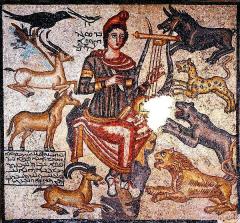
Orpheus Mosaic

Orpheus Mosaic

Turkey’s claims: In March, we broke the news that Turkey was seeking the return of dozens of allegedly looted antiquities from American museums. We also listed the specific objects being sought at those museums, including: 10 objects at the J. Paul Getty Museum; 18 objects from the Schimmel Collection at the Metropolitan Museum of Art; 21 objects at the Cleveland Musuem of Art; and the Sion Treasure at Harvard’s Dumbarton Oaks. Since then, the Dallas Museum of Art has already agreed to return a looted mosaic to Turkey, and Bowling Green State University has signalled its intention to do the same. Negotiations with the other institutions are on-going, and we expect to have an update soon.

Koh Ker wrestlerCambodia vs. Sotheby’s — The Battle for Koh Ker. In April, we began following the legal battle between the US government and Sotheby’s over a 10th century Khmer statue allegedly looted from a temple complex deep in the Cambodian jungle. Government prosecutors, suing on behalf of Cambodia, alleged that Sotheby’s knew the statue was looted and and withheld the information from potential buyers, as well as government investigators. The auction house has denied those claims. Damning internal emails, however, revealed Sotheby’s knowledge about the statue’s suspect origins and the likely controversy its sale would cause. Also named in the case is a companion statue now at the Norton Simon Museum in Pasadena, whose feet remain in situ in Cambodia. The man at the center of the case is Douglas Latchford, a British collector/dealer based in Bangkok whose name has been linked with sever pieces of suspect Khmer antiquities. In recent months we’ve traced Latchford’s objects to the Denver Museum of Art, the Kimbell Museum and the Met. The outcome of the case could prove an important precedent for legal claims against looted antiquities in the United States.

James-CunoJim Cuno’s shakeup at the Getty: In May, the board of the J. Paul Getty Trust hired James Cuno to lead the organization. It was an odd choice — The Getty was still recovering from a devastating international scandal over its acquisition of looted antiquities, and had enacted a new acquisition policy that respected foreign ownership laws. Cuno had long been a vocal critic of those laws and advocate for the type of unfettered collecting that had gotten the Getty into trouble. One of Cuno’s first moves was the elimination of 34 positions at the Getty Museum, including two respected veterans and 12 professional gallery teachers who were replaced by volunteer docents. We broke the news, published Cuno’s memo to staff and covered the fallout. We also wrote about his decision to hire Timothy Potts, another advocate of unfettered collecting, and raised questions about Pott’s acquisition of a 5th century BC Greek cup at his previous post, the Kimbell Art Museum. In response to our questions, the Kimbell announced they would post the vase on the AAMD’s registry of ancient objects with unclear ownership histories. They never did.
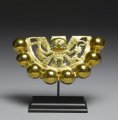
PS1_TL.2009.20The Bourne Collection: Also in May, we featured a guest post by Roger Atwood on the Walter’s newly acquired collection of unprovenanced Pre-Colombian Art. Atwood described the “long and checkered history” of the Borne collection, which is sprinkled with fakes and at least one piece suspected of having been looted from Sipan, Peru.

subhash kapoorSubhash Kapoor Case: In July we began writing about the investigation of Subhash Kapoor, the New York based antiquities dealer specializing in Indian antiquities and temple idols. After federal agents raided his New York warehouse, we  identified more than 240 objects acquired from him in museums around the world. In December, federal investigators announced they had seized some $150 million in antiquities from him and consider Kapoor “one of the most prolific commodities smuggler in the world.” The case is on-going.

This Polaroid seized from the warehouse of dealer Giacomo Medici shows the Getty Museum's Statue of Apollo shortly after it was looted from a tomb in Southern Italy.

This Polaroid seized from the warehouse of dealer Giacomo Medici shows the Getty Museum’s Statue of Apollo shortly after it was looted from a tomb in Southern Italy.

WikiLoot: Finally, this year we announced our plans to crowd-source the study of the black market in looted antiquities. We’re still in the development phase of the project — raising money, building partnerships and considering the structure of the site. But WikiLoot, as we’re calling the project for now, has already attracted substantial interest and media attention from the Guardian, the Economist, CNN, the Australian Broadcasting Corp. and others. This spring we’ll be developing a prototype of the site and reaching out to more potential partners. Stay tuned for updates.

Thanks for reading. Our best wishes for 2013, and we hope you will join the hunt!