Tag Archives: looted antiquities

Dallas Museum of Art Returns Orpheus Mosaic, Five Other Looted Treasures in Announcing New Art Loans Initiative

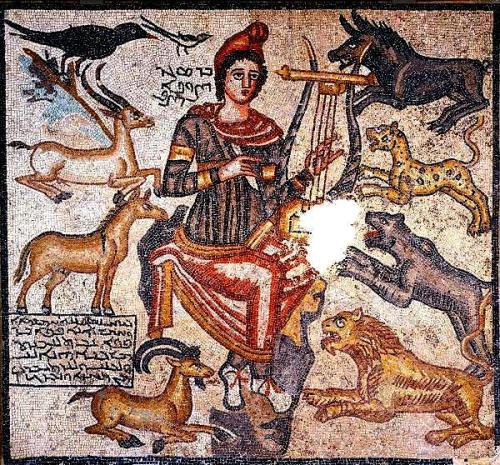
Orpheus Mosaic

The Dallas Museum of Art has agreed to return six looted antiquities from its collection and announced a broad new initiative to exchange expertise and artwork with cultural institutions around the world.

“The problems of illegal excavation and the illicit import of cultural property require the consideration of new models of cooperation among institutions,” the museum said in a release announcing the initiative, dubbed the Dallas Museum of Art Exchange Program, or DMX.

The effort was announced Monday while signing an agreement with Turkey, the museum’s first partner, for the return of the Orpheus Mosaic, a Roman mosaic floor looted near Edessa (today’s Sanliurfa) and acquired at a Christies auction by the DMA in 1999.
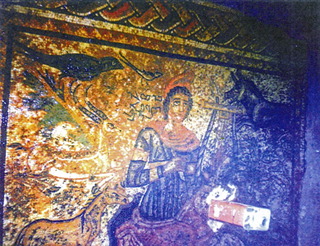
Microsoft Word - Orpheus mosaic in situ.docxIn explaining the return, the museum cited compelling new evidence presented by Turkish investigators about the mosaic’s illicit origins: “Two newly recovered in situ photos of the mosaic showing it being removed by the smugglers. The photographs also show the full work with its decorative borders intact, prior to it being removed from the ground. The photographs were printed by a local photo shop in Sanliurfa and are currently evidence in a criminal investigation being carried out by the Sanliurfa Head Prosecutor in order to identify everyone involved in the crime.” The image shows the mosaic with a border that was likely removed by looters, the museum notes, adding, ” The canister visible in the lower right contains a Turkish brand of glue, which looters–not archaeologists–would have used to make repairs.”

Notably, the Dallas museum initiated the return of the mosaic instead of waiting for it to be identified by Turkish authorities, who have been on a campaign to repatriate looted antiquities. Soon after Maxwell Anderson started as director in January, he asked the museum’s antiquities curators to identify objects with troubling ownership histories. The mosaic was found to be nearly identical to several published on a website of Turkey of looted objects. Anderson told the Dallas Morning News:

the last thing he wanted was “to be the recipient of a claim by Turkey and be unprepared, seeing all of that evidence. So, I wrote to the embassy, saying if you have any information about this mosaic, please let us know. I didn’t have any specific information, but it seemed circumstantially that it was very likely that it was removed from that site.” Turkish officials came forward with the photograph of the mosaic, “which is all you need to know,” Anderson said.

In addition to the Orpheus mosaic, the Dallas museum agreed to return five antiquities to Italy in response to law enforcement requests. All five  Two of those objects were first questioned by us in a Jan. 11 email to the museum inquiring about links between the DMA and the illicit trade, including antiquities dealer Edoardo Almagia. After our inquiry, the DMA contacted Italy and has now agreed to return them.

UPDATE: In February, we requested provenance information for 15 of the DMA’s recent acquisitions, including the five pieces returned this week, that we selected at random. They helpfully provided the list we posted here. We asked yesterday on Twitter whether other objects on that list might also be returned — several come from dealers who have also been implicated in the illicit trade. A museum spokeswoman now tells us: “Italian and Greek authorities have reviewed  our collections records, including the works you refer to in your recent post, and have advanced no other claims.” Of course, some of the material on the list, such as the Cycladic figurine, likely came from other countries.

The objects going back to Italy — and the DMA’s explanation for their return — offer a helpful who’s who of the illicit antiquities trade.
dma_507360

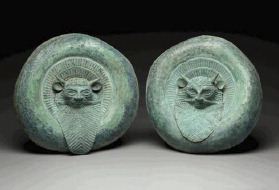
Two Etruscan shields with the head of Acheloos (Etruscan 6th Century BC)

Volute Krater (Pulian, 4th Century BC). 

As we noted in February, both were purchased from  antiquities dealer Edoardo Almagià in 1998.  The museum describes Almagià as “a former New York antiquities dealer…currently named in a criminal case for conspiracy to commit the illegal export and smuggling of cultural property pending before the Public Prosecutor of Rome. Almagià has been under investigation since at least 2006, when U.S. Customs officials raided his New York apartment, confiscating photographs, documents, and archaeological material. He was also the subject of a New York Times story in 2010 that revealed he and Michael Padgett, former antiquities curator at the Princeton University Art Museum, were the focus of an investigation of the illegal export and laundering of Italian archaeological objects. The Italian government named Almagià in the criminal case for having ‘sold, donated, or lent’ nearly two dozen works looted from Italian sites to the Princeton Museum. Roughly twenty other objects are listed in the case as having been obtained illegally by Almagià and sold to other American institutions in the 1980s and 1990s, including this pair of shields.” UPDATE: The DMA incorrectly referred to Padgett as the former antiquities curator at Princeton. The Princeton Museum confirms he remains on staff there, and the DMA has corrected is post.
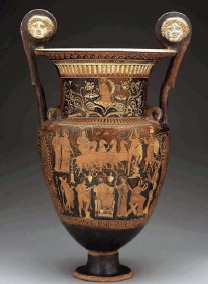
dma_507363As evidence that the statue and krater were looted, the museum cited “photographs provided that were seized by U.S. Immigration and Customs Enforcement officials” and “archival evidence seized by U.S. Immigration and Customs Enforcement officials, including records of sales and correspondence currently serving as evidence in the criminal investigation and court case.”

Dallas now joins the Met and Princeton in returning objects linked to the dealer. (We’ve written about those returns here and here.) Will the other museums we’ve identified with Almagia material — including the Getty, the Boston MFA, San Antonio Museum of Art, Indiana University — now be motivated to do the same?
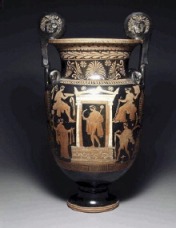
dma_507366A Red Figure krater (Apulia, 4th Century BC) acquired by DMA at Sotheby’s in 1996.

A Calxy Krater (Campagnia, 4th Century BC) acquired from the vases form Ward and Co. around 2005, said to be from a “Swiss private collection.” 

Both vases have been linked to Gianfranco Becchina, who the museum describes as “a Sicilian antiquities dealer who has been convicted in Italy of dealing in stolen antiquities. Becchina started dealing in antiquities from his premises in Basel, Switzerland, in the 1970s and is said to have sold to several major museums, sometimes through Sotheby’s and Christie’s auction houses in London. In May 2002, the Carabinieri, in collaboration with the Swiss police, raided his storage facilities in Basel, recovering thousands of objects in various stages of restorations, photographs of artifacts, and other documents.”
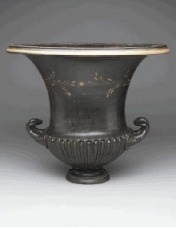
dma_507370“The J. Paul Getty Museum and the Toledo Museum of Art have both returned material to Italy that was acquired from Becchina and subsequently shown to have been illegally exported.”

“In April 2012 U.S. Immigration and Customs Enforcement seized two works from Christie’s New York auction house that were associated with the investigation of Becchina. According to the Carabinieri, Gianfranco Becchina has been identified as one of the most prolific known traffickers of Italian cultural heritage, and all property that has been shown to have been illicitly trafficked by Becchina is subject to confiscation.”

You can find a list of our previous posts mentioning Becchina here.
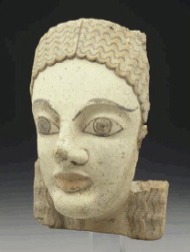
dma_507364Etruscan head of an Antefix. Said to be from Henri Jacques of Geneva. Purchased from Robin Symes in about 1999.

A photograph linked this antefix to Giacomo Medici, who the museum describes as “a former antiquities dealer based in Rome, Italy, and Geneva, Switzerland, who was found guilty of receiving stolen goods, illegal export of goods, and conspiracy to traffic by the Italian government and sentenced to ten years in prison and a €10 million fine. In 1995 the Carabinieri, in concert with Swiss police, raided Medici’s storage space in Geneva, which contained thousands of objects, photographs (including many Polaroids), and documents relating to his business practices and connections. The Cleveland Museum of Art, J. Paul Getty Museum, and Metropolitan Museum of Art have all returned objects that were acquired via Giacomo Medici. Along with Gianfranco Becchina, he has been identified by the Carabinieri as one of the most prolific known traffickers of Italian cultural heritage.”

Robin Symes, the dealer form whom the DMA purchased the objects, has also been linked to the illicit trade, the museum notes. “Symes is also accused of playing a pivotal role in the illegal trade of looted antiquities. Several museums, including the Metropolitan Museum of Art and the Minneapolis Institute of Arts, have already returned several objects acquired through Symes. He is known to have commercial relations with dealer Giacomo Medici, who was the ultimate source of the artifacts that would subsequently be sold through dealers or auction houses. Prior to the Medici conviction, Robin Symes had been involved in a civil court case, and in January 2005 he was sentenced to two years in prison for contempt of court for not fully disclosing his assets.”

You can find our other posts mentioning Symes here.

We’ll have more on the significance of the returns and the DMA’s new loans initiative in a future post.
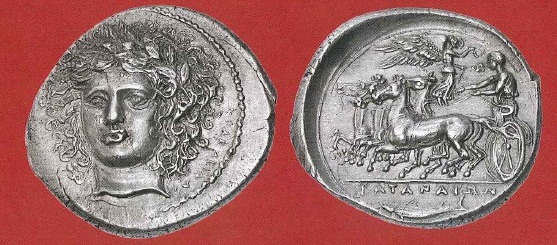
CAVEAT EMPTOR: Arnold Peter Weiss on the Dangers of the Ancient Coin Trade

UPDATE 8/5/14: The federal government has returned to Greece five ancient coins that were seized from Dr. Weiss after his arrest in Jan 2012. They are among 23 coins Weiss was forced to forfeit during the investigations detailed below, according to ICE.  

Caveat Emptor, the court-mandated essay written by Rhode Island coin dealer Arnold Peter Weiss, is a long-overdue call for collectors of ancient coins to begin following the law.

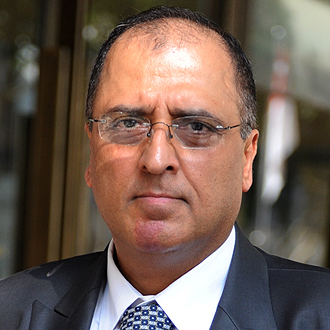
Dr. Arnold Peter Weiss

Weiss is the prominent Rhode Island hand surgeon and ancient coin dealer who was arrested on January 3rd at the Waldorf-Astoria Hotel in New York City for felony possession of an ancient coin recently looted from Sicily. He has served as a board member of the American Numismatic Society, the founder of a Swiss coin dealership and a prominent donor to American universities. According to the criminal complaint, he was caught on tape telling a police informant that he knew the coins had been recently looted in Sicily: “There’s no paperwork, I know this is a fresh coin, this was dug up a few years ago.” In July, Weiss pleaded guilty to three counts of attempted criminal possession of ancient coins. It turned out the “looted” coins were clever forgeries.

As part of Weiss’ plea bargain, he agreed to write an essay that “will raise needed awareness about unprovenanced coins and will promote responsible collecting among numismatists.” That article has now been published in the American Numismatic Society Magazine. (See the complete article below.)

The situation recalls a scolded student being forced to write a half-hearted apology on the chalkboard. But Weiss’ essay is worth reading for what it reveals about the trade in ancient coins.

Weiss opens with a candid admission: “I was very active in the ancient coin marketplace and paid little attention to foreign cultural property laws, as if they really did not matter within the U.S. Well, they do.” Weiss is not alone — coin collectors have often displayed a surprising ignorance of the laws that govern their hobby, or open disdain for them. Weiss’ arrest has become an object lesson for the field, and Weiss uses his essay to underscore the point:

“Until recently, the prevailing view among coin dealers and collectors in the US has been that such foreign laws do not affect the purchase of objects in the US….Whether one agrees or not with the various laws of Italy, Turkey or China, for example, this must take a secondary role in this debate. The US honors the laws of cultural patrimony of foreign nations where those laws are in place and enforced by the source country.”

He is referring, of course, to the McClain Doctrine and the National Stolen Property Act, which makes it a crime to purchase or possess looted antiquities taken from a country with patrimony laws that are reasonably enforced. (See here and here for more on the law.)

Weiss goes on to expose the coin market’s dirty secret: the hoards of ancient coins that regularly appear on the market today are almost certainly the product of looting.

“Dealers and collectors with any reasonable experience can tell that such a simultaneous offering just does not happen naturally, except after a recent hoard of coins has been found and dispersed into the marketplace….The purchase of coins that derive from hoards is likely to be illegal and detrimental to scholarship, and these might be reasons enough for the buyer to be aware.”

This admission — both obvious and long-denied by collectors — is reminiscent of another remarkable whistle-blower moment: Getty Museum antiquities curator Marion True’s June 2000 speech before the Assoc. of Art Museum Directors, in which she told museum officials that it was time to accept the fact that most, if not all, undocumented antiquities were the product of looting.

But Weiss notes another reason for careful collecting: The prevalence of sophisticated forgeries on the market, like the ones he was trying to sell in New York City. Weiss notes such forgeries share something in common with looted coins: the lack of a clear collecting history.

They come with fantastic stories…From personal experience I can say that these forgeries are stunning and are being introduced into the coin market with fake provenance information…Forgery is often the domain of highly-organized criminal enterprises, most often based in the source countries themselves, but now occurring worldwide due to the spread of high-tech machinery.

Weiss concludes his essay with a call for “a different kind of collecting requiring a proactive rather than passive approach to provenance” and outlines six steps every collector of ancient coins should take:

1. Research the history. No excuse not to — the ANS has a complete set of auction catalogs dating back to the 18th Century.

2. Ask questions. Weiss notes coyly that “sometimes dealers or curators know more about the coins than might be published.”

3. Beware the Old Swiss Collection and other bogus provenance. As Weiss notes, “the words ‘collection of’ for a coin that has never been previously published or documented ought to be a sign that further research is required.”

4. Know the Law. Weiss notes the “complex” and “contradictory rules” on what is legal to acquire, but offers 1970 as an accepted cut-off date for when an object should have left its country of origin.

5. Trust your Gut. If a coin feels “wrong,” don’t buy it.

6. Avoid recent hoards. Look out for coins with gleaming smooth surfaces, come in multiples and offered by the dozen.

This is a decent checklist for all antiquities collectors to obey. But what is perhaps most remarkable is that in 2012 this needs to be explained to coin collectors. One is left to wonder whether the problem with the market today is really ignorance of the laws or merely a stubborn unwillingness to obey them.

Will Weiss’ essay — published by the official organ of the US coin collecting community — mark a turning point? It should. Ute Wartenberg Kagan, the executive director of the American Numismatic Society, took the opportunity to announce the ANS’s new collecting policy, which is more strict that the steps outlined by Weiss.

In a strongly worded editorial, she too calls for a new era of collecting — “a path of responsibility, careful research, and best practices to enhance numismatics and the responsible collecting and caring for of ancient coinage and history.”

“Collecting ancient coins will be different,” she assures her members, “but will not die out.”

Ultimately, the success of Weiss’ statement and the ANS’s new policy at changing the culture of American coin collectors will be measured by the time. If criminal cases continue to reveal collectors buying unprovenanced coins like those Weiss warned against, we’ll know that ignorance was never the problem with the market in ancient coins.

UPDATES:

Archaeologist Paul Barford has written about Weiss’ essay here, noting several things Weiss has omitted: details on his own case; the role of dealers like himself; the importance of precise find spots, not just hoards; the role of ethics that go above and beyond the letter of the law.

Coin collector lobbyist Peter Tompa has (finally) written about the Weiss case. He says he “doesn’t have much to quibble with” about Weiss’ advice, but notes that the statement was made under duress and questions whether the “archaeological lobby” might have edited it.

Ute Wartenberg has responded to Tompa on his blog, saying, “ANS staff and I edited the piece after it was submitted, but the people acknowledged in my editorial preface such as John Russell, who is a professor of Near Eastern Archaeology, kindly provided illustrations at my request. Their names can be found with the relevant photos. None of those acknowledged read Weiss’ article or provided editorial comment.” So much for that theory.

Ever the provocateur, Arthur Houghton (who describes himself as a friend of Peter Weiss) picks up Tompa’s theory in the same thread and runs with it: “Who else may have intervened in the article’s wording and who may have cleared it for publication…And did those or any other person in authority then coerce, by subtle suggestion or by direct demand, the Society to publish? Could we have a little transparency please?” Houghton goes on to tell Col. Bogdanos to “man up” and “come out of the shadows.” “…Let us know exactly what your role was in creating, framing and clearing Peter Weiss’ article? But could we have a little confession from you at an early moment?”

Tompa has the last word, saying he has confirmed with Wartenberg that “the articl [sic] had to be approved by Col. Bogdanos as part of the plea deal, but any changes to the article based on comments from the NY District Attorney’s office or any sources the DA consulted, took place BEFORE the ANS accepted the article for publication and it was edited by ANS staff.”

Our final thought: No one would dispute that Weiss’ essay was “coerced” — it was a condition of the plea deal after he was caught breaking the rules he claims to promote. We are far more interested in Tompa’s and Houghton’s thoughts on the worthiness of those rules and the new ANS policy. Helpfully, Tompa has offered this link. For those wondering about Houghton’s views (and actions) on the law, we offer this.

A few additional questions we’d welcome thoughts on: Are ancient coin collectors often ignorant of the law, as Wartenberg suggests? Or have they flouted it knowingly, perhaps because they think it’s unfair? Have the ANS and other leaders in this area done enough to educate their members about the law and enforce a code of ethics in the field? And if Weiss hadn’t written as a condition of a plea deal but instead was whispering to a trusted friend, what would he have said?

UPDATED: Kapoor’s Footprints: 240 Objects from Alleged Antiquities Trafficker Traced to Museums Around the Globe

[UPDATED 8/27 with details from SF Asian.]

We’ve begun hearing back from museums that did business with Subhash Kapoor, the New York antiquities dealer under arrest in India for trafficking in looted antiquities.

For those just catching up with the Kapoor story: The dealer, an American citizen of Indian extraction, has operated Art of the Past gallery on Madison Avenue since 1974. He was arrested in Germany last year and was recently extradicted to India, where he is alleged to have been the mastermind behind a network of temple looters operating in Tamil Nadu.

Authorities there have also accused Kapoor of trafficking in looted antiquities from other parts of India, Afghanistan, Southeast Asia and the Islamic world. Federal authorities in the United States have also issued an arrest warrant for Kapoor and seized more than $30 million worth of allegedly stolen antiquities from Kapoor’s Manhattan storage facilities in recent months.

Kapoor has done business with leading museums around the world. Indian authorities have said that Kapoor worked with his brother Ramesh Kapoor, who runs Kapoor Galleries in New York. Kapoor Galleries was not raided by federal authorities, and to our knowledge Remesh has not been charged with a crime.

Here are the 236 Kapoor objects we and others have tracked down so far:

LACMA 

The Los Angeles County Museum of Art acquired 62 objects from Kapoor. Twenty-eight were purchased from Kapoor or his Manhattan gallery Art of the Past between 1989 and 2007. Another 33 were donated by Kapoor between 1978 and 2000. We’ve posted the complete list here.

Twenty-nine of the objects are ancient. All but 8 of them belong to a single hoard of ancient figurines from Madhya Pradesh, in central India.

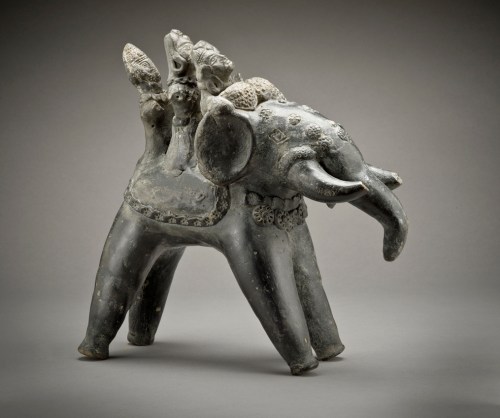
Two other antiquities are terracotta pieces from the 3rd and 2nd Century BC from Mathura, in Uttar Pradesh. A third is a copper sculture of Mayadevi from Uttar Pradesh, circa 100 AD.

Elephant with Riders, 3rd-2nd century B.C.

Another 18 objects at LACMA were acquired from Kapoor’s brother Ramesh, who Indian authorities say worked with his brother Subhash to import looted antiquities illegally removed from India.

LACMA acknowledges it has no documented ownership history for any of the ancient objects. “We’re re-examining all these items in the light of the recent news,” said museum spokeswoman Miranda Carroll.

BOSTON MFA

The Boston MFA has just one object fr0m Kapoor – a page from a 17th century illustrated manuscript, The Jealous Older Woman and the More Impetuous Younger Woman. It was  purchased in 1995 from Art of the Past. Kapoor bought it at Sotheby’s, New York, in 1994, and was privately owned prior to being sold at auction, museum records show. The MFA also purchased two 17th century works from Kapoor Gallery.

ART INSTITUTE OF CHICAGO

The Art Institute has two objects purchase from Kapoor.  “We are in the process of confirming the provenance information and will take appropriate steps when we have completed this review,” said museum spokeswoman Erin Hogan. We’ve requested information about the objects — the museum’s online collection database does not allow for searching by provenance.

ASIAN ART MUSEUM of SAN FRANCISCO

Museum spokesman Tim Hallman said, “We have not been contacted by any officials investigating Mr. Kapoor’s dealings. However, when news broke of the investigation, the museum’s director instructed our chief curator to review the collection records to determine if we obtained items from Mr. Kapoor. We are still reviewing the files (our holdings include more than 18,000 artworks).” We’ll post the list of objects when we get it.

UPDATE: Hallman got back to us with details. The Asian Art Museum acquired four objects from Kapoor, including a 14th century statue of the Hindu deity Shiva in the fierce form of Bhairava (above), said to be from Karnataka, the Indian state west of Tamil Nadu where Kapoor is being held for trial. The Asian purchased the statue from Kapoor in 2000. “We have have carefully reviewed our records for each object and have not found any information to suggest that that any of these four art objects were acquired or imported illegally,” Hallman said in an email. The complete list of Kapoor objects at the SF Asian can be found here.

TOLEDO MUSEUM

The Toledo Museum continues to ignore our requests for information about objects they acquired from Kapoor and several other dealers tied to the illicit trade. The New York Times reported that Toledo acquired 44 terracotta antiquities from Kapoor in 2007. The museum’s website appears to offer  information about just one of those objects. It is hard to fathom how a museum whose considerable assets are exempt from taxes because they operate “in the public interest” can refuse to answer the public’s questions about objects in its collection. Only Princeton University Art Museum has shown a similar disdain for the public’s right to know.

THE METROPOLITAN MUSEUM OF ART

As we reported last week, the Metropolitan Museum of Art acquired 81 objects from Kapoor, four of which are antiquities that have no documented ownership history. For reasons that remain unclear, the museum also knowingly acquired five forgeries from Kapoor in 1991 for the museum’s study collection. Many of the Met’s other Kapoor objects are drawings from the 17th, 18th or 19th century highlighted in the museum’s 2009 exhibit, Living Line: Selected Indian Drawings From the Subhash Kapoor Gift.

NATIONAL GALLERY OF ART, AUSTRALIA

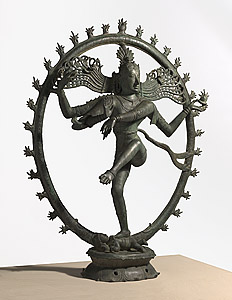
The NGA has acknowledged buying 21 objects from Kapoor, including a bronze Dancing Shiva said to be tied to the Kapoor investigation. That news has set off a wave of press reports in Australia about the case. The museum claims to have followed a “thorough due diligence process” and contacted Indian authorities this week to offer its cooperation in the investigation.

UPDATE: The museum released a statement saying, “The Gallery has commenced plans to undertake a comprehensive re-examination by a panel of internal and external art experts of the supplied documentation as well as the provenance of work acquired from Mr Kapoor, as many international Galleries are also doing. The Gallery is liaising closely with the Indian High Commission in Canberra to ensure that the internationally accepted protocols for dealing with such issues are followed.” The NGA has not yet released details about the provenance of the Shiva or other Kapoor objects.

SMITHSONIAN MUSEUMS

The Freer and Sackler Galleries told the New York Times that the only object they had acquired from Kapoor was a 20th century Indian necklace.

UPDATE: David Gill notes The Sackler has issued a statement saying it is investigating several objects purchase from Kapoor Galleries, controlled by Subhash Kapoor’s brother. The objects include a marble bracket figure, India, 13th c. (purchased in 1995); a seated figure of Jambala, Tibet, bronze, 13th c. (purchased in 1996); a Gautama Buddha, Tibet, gilt copper, 14th c. (purchased 1997); and a pair of lamps of fortune, India, bronze, 17th c. (purchased in 2000). The statement notes that The Freer|Sackler “were among the first U.S. museums to adopt the UNESCO convention of 1970, which forbids the acquisition or display of works illegally removed from their nation of origin after 1970.”

Art Gallery of New South Wales

The Art Gallery of New South Wales purchased six objects from Kapoor, Australian media reported. Former Getty Museum director Michael Brand, who took the helm of the Australian museum in June, said, “No-one has made any suggestions that the works in our collection or stolen or that there are any issues about those works. Should someone come to us and say that there is reason to believe then we would obviously collaborate in any way we can.” Among the objects at the museum are this one, highlighted by David Gill.

WANTED IDOLS

The website of website of the Tamil Nadu police has additional information about the Kapoor investigation, along with photos of missing idols. Where are these idols now? The NGA’s Shiva appears superficially similar to one of the Dancing Shiva’s shown there.

Kapoor’s Alleged Accomplices: Indian authorities are looking for two of Kapoor’s alleged accomplices, The Times of India reports. [A QUOTE FROM THE ARTICLE HAS BEEN REMOVED AT THE REQUEST OF ATTORNEYS REPRESENTING NEIL PERRY-SMITH.] Paul Barford does some digging into the alleged accomplices are finds some intriguing clues. [UPDATE: BARFORD’S POST HAS BEEN REMOVED.]

Have you tracked down other Kapoor antiquities? If so, send us the details and we’ll credit you with the find: chasingaphrodite@gmail.com

Kapoor Case: Investigation into Stolen Indian Idols Will Test Museum Transparency

Subhash Kapoor

The investigation of antiquities dealer Subhash Kapoor, which made international headlines this week when federal agents raided his Manhattan warehouse, promises to shine a bright light on the illicit trade in antiquities smuggled out of India and other South Asian countries — and the dealer’s ties to prominent museums around the world.

New York authorities issued an arrest warrant for Kapoor, the longtime owner of Madison Avenue gallery Art of the Past, the same day that agents with Immigration and Custom’s Enforcement seized what they said were $20 million worth of stolen Indian artifacts from his Manhattan storage facilities. The seized objects include three Chola period statues that investigators say match objects in Interpol’s database of stolen works of art. Some objects were imported into the U.S. labelled “Marble Garden Table Sets.” An additional $10 million in antiquities were quietly seized from Kapoor in January of this year.

The seized objects are likely the tip of the iceberg of the dealer’s inventory. Since 1974, Kapoor has traded in ancient art from India, Afghanistan, Southeast Asia and the Islamic world, as well as more recent art from India. A sample of his recent inventory can been seen in this 2011 catalog for Art of the Past.

Kapoor’s legal troubles extend far beyond New York. He was detained in Germany in October 2011 and this month extradited to Chennai, India, where he is facing criminal charges of being the mastermind of an idol smuggling ring that plundered ancient temples in Tamil Nadu. Kapoor has reportedly admitted to Indian police that he earned more than $11 million through the transport and sale of plundered Indian antiquities with his daughter and brother through a US corporation called Nimbus International.

Kapoor’s New York attorney Christopher Kane did not return a call to his cell phone on Sunday, but told the New York Post that Kapoor ““thinks of himself as a legitimate businessman, and I have no reason to think he’s not.” We’ll post any response we receive here.

As Kapoor’s legal case plays out in India, the spotlight now turns to the dozens of museums and collectors who did business with the dealer. Kapoor boasts in his bio that he has sold antiquities to a long list of leading museums, including The Metropolitan Museum of Art, New York City; Arthur M. Sackler Gallery, Washington D.C.; Los Angeles County Museum of Art, Los Angeles; Museum of Fine Arts, Boston; Asian Art Museum of San Francisco, San Francisco; The Art Institute, Chicago; Virginia Museum of Fine Arts, Richmond; Musée des Arts Asiatiques-Guimet, Paris; Museum fűr Indische Kunst, Berlin; The National Gallery of Australia, Canberra; Royal Ontario Museum, Toronto; and the Asian Civilisations Museum, Singapore.

Investigators have tied a Dancing Shiva at Australia’s National Gallery to Kapoor, the New York Post reported.

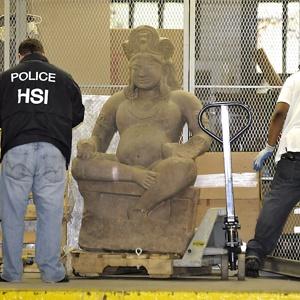
In a press release, American investigators asked Kapoor’s clients to check their collections and be in touch. “Some of the artifacts seized during this investigation — which are stolen — have been displayed in major international museums worldwide,” ICE’s Homeland Security Investigations team said in a press release. “Other pieces that match those listed as stolen are still openly on display in some museums. HSI will aggressively pursue the illicit pieces not yet recovered.”

The press, however, is not waiting for museums to come clean. The New York Times queried several museums last week about Kapoor objects in their collections. And on Saturday, The New York Post reported that a statue of Shiva as the Lord of Dance at the National Gallery of Australia has been tied to the investigation.

Not all museums that did business with Kapoor will be in trouble, of course. The Freer-Sackler Gallery, for example, told the New York Times that the only object they had acquired from Kapoor was a 20th century Indian necklace. The two objects in the Boston Museum of Fine Arts’s online catalog linked to Kapoor Galleries, operated by Kapoor’s brother Ramesh, are 17th century Indian paintings.

The Met’s response to the Kapoor investigation has been rather cavalier. Despite the admonition from the federal authorities, the museum will not review its Kapoor antiquities, Holzer told the Times, noting that the collection had long been posted on the Met’s website. One might think that recent history would have taught Met officials time and again that open possession of allegedly stolen property is no protection from claims both legal and moral.

The Met tried to deflect the questions from the press, telling the NY Times that most of the 81 pieces they had acquired from Kapoor were drawings from the 17th, 18th or 19th century highlighted in the 2009 Met exhibit, Living Line: Selected Indian Drawings From the Subhash Kapoor Gift. “They do not appear to be the type of items that they are worried about,” said museum spokesman Harold Holzer.

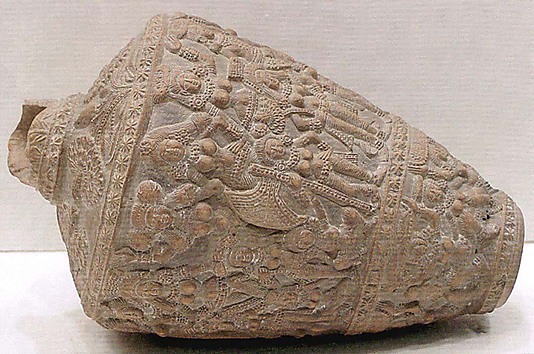
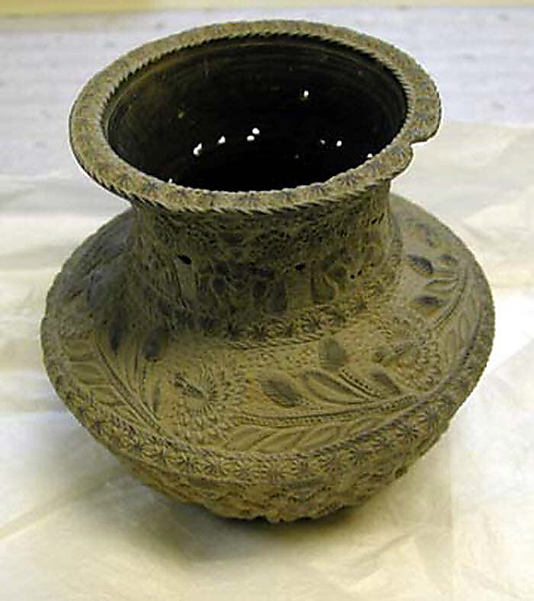
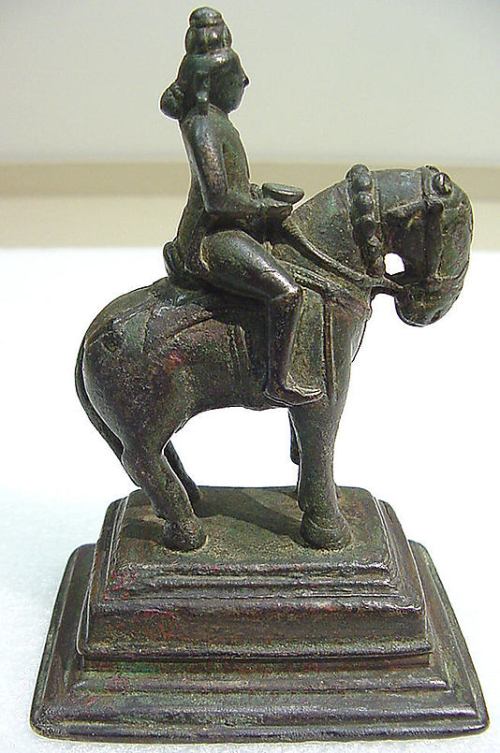
But a search of the Met’s online catalog reveals several antiquities from Kapoor that authorities likely will be interested in — none have documented ownership histories dating to 1972, when India began controlling exports of ancient art.

1st Century BC ceramic Bengal pot (2003 Gift of Subhash Kapoor)

1st Century BC Bengal Vessel (2001 Gift of Subhash Kapoor)

The God Revanta Returning from a Hunt (2003 Gift of Subhash Kapoor)

Yakshi Holding a Crowned Child (2002 Gift of Subhash Kapoor)

Curiously, the Met also has five stone sculptures from Kapoor in its study collection, here and here, for example. They resemble ancient pieces but are labeled by the museum as “20th Century.” All were acquired in 1991. Did the museum acquire these objects from Kapoor, only to discover they were modern forgeries? We’ve asked Holzer for more information.

UPDATE: Harold Holzer tells us, “The group of 20th-century forgeries was accepted as a gift along with the other Kapoor gifts for our study collection, and always identified as such.”

To be fair to the Met, their online collection is far more transparent than that of several other American museums tied to Kapoor. The Toledo Museum of Art told the NY Times that it had received a gift of 44 terracotta antiquities from Kapoor in 2007. The only object that appears in a search of the museum’s online collection is a terracotta vessel purchased in 2008. The museum published the object in 2009 in a book of the museum’s masterworks, but offers no ownership history other than saying it was created in Chandraketugarh, an archaeological site north-east of Kolkata. Where was it before Toledo? What are the ownership histories for the other 43 objects acquired from Kapoor?

We’ve asked the Toledo Museum for that information, but apparently such requests are a low priority there. More than a month ago, we requested information about objects in their collection tied to two other dealers who investigators have connected to the illicit trade — Edoardo Almagia and Gianfranco Becchina. We have still not received a response.

Several years ago, the Getty Museum took a similar stance when faced with questions about objects in their collection. Stonewalling only convinced the public of the museum’s bad faith, and fueled the zeal of investigations by foreign governments and the media. Museums would be smart to heed those lessons from the Getty case, lest they relive the consequences.

Like the Almagia investigation, the Kapoor case will be a test for how transparent American museums can be in the face of unpleasant questions about ancient art in their collections. Will they take a proactive approach to investigating their collections, as they have done with objects with unclear provenance from World War II era? Or will they stonewall and encourage others to do the investigation for them?

Hat-Tips: Several people have been covering the Kapoor case for months, and you should read their detailed coverage. The Indian press, especially the Times of India, has been covering the case for months. Damien Huffer, whose excellent blog It Surfaced Down Under tracks the illicit antiquities trade in the Southern Hemisphere, was one of the first to pick up the story, a distinction that earned him repeated legal threats. Paul Barford’s blog has also diligently tracked reports on the case, adding his salty commentary along the way. Most recently, The New York Post broke the news of the Manhattan raids last week and has followed-up with some additional scoops.

UPDATE: Attorney Rick St. Hiliare has some very interesting thoughts on what the Kapoor case reveals about antiquities smuggling networks: “Examining the import and export methods surrounding the Kapoor case not only can aid police in the United States and India in their current investigations targeting the alleged idol thief, but it can help policymakers, criminologists, and scholars think about better ways to detect, uncover, interdict, and prosecute future crimes of heritage trafficking.” Hilaire also offers excellent analysis of the bills of lading allegedly used by Kapoor’s enterprises, revealing how these objects were able to enter the U.S. under false premises. He goes on to say the case might give a boost to our WikiLoot project, which is designed to suss out these very matters. Worth reading his entire post.

Looters of the Gods: The Getty’s Golden Wreath is Featured in Documentary on Museums and the Illicit Antiquities Trade

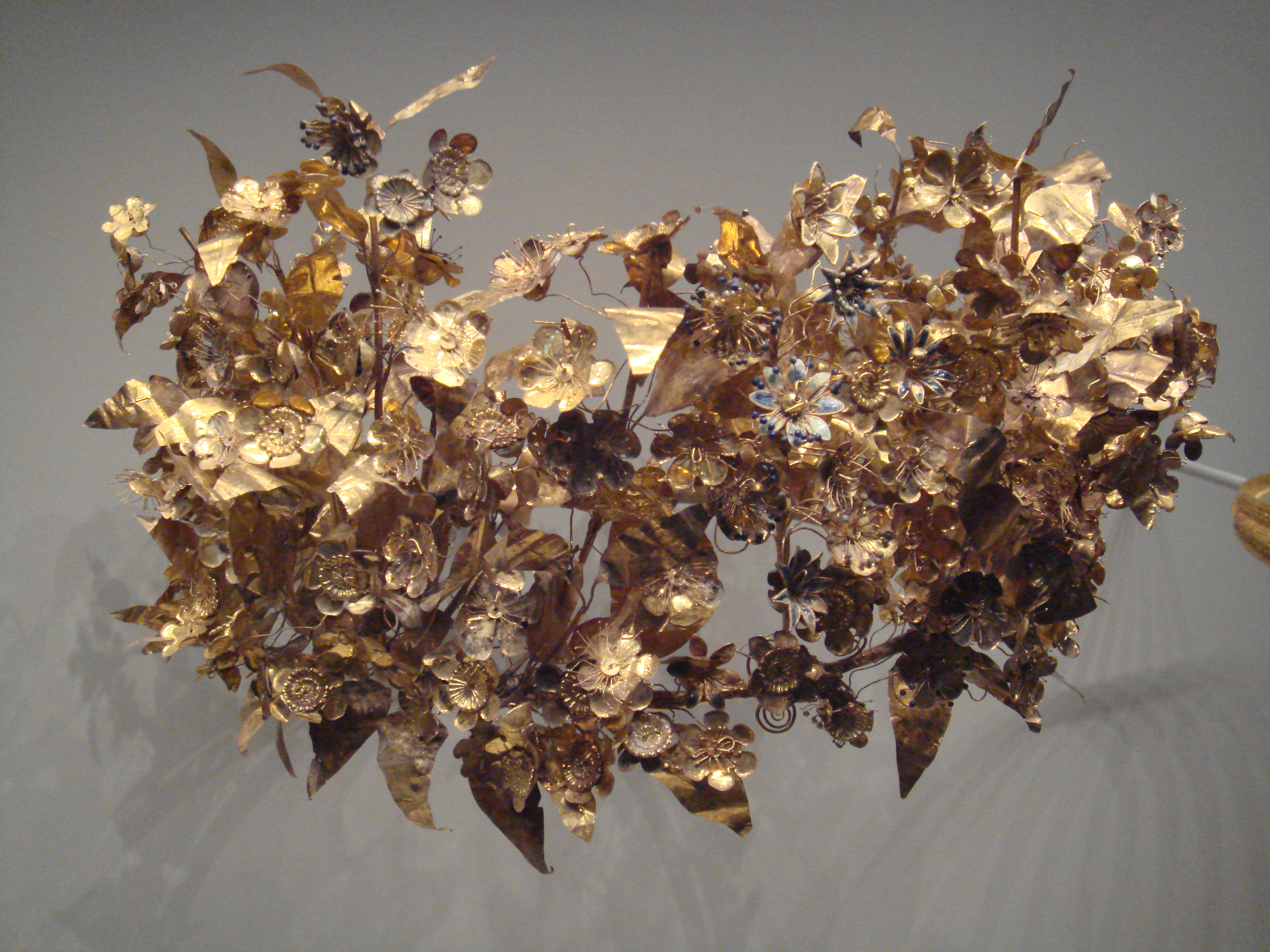
The Funerary Wreath

As we were prowling the alleys of Rome on Monday discussing our plans for WikiLoot, a prize-winning documentary film was airing on Italian national television about the role of American museums in the illicit antiquities trade.

“Looters of the Gods” is a 2010 DocArt production by Italian director Adolfo Conti that focuses on the Getty Museum and its acquisition of a gold funerary wreath in 1993. As we revealed in our 2005 articles in the LA Times, Marion True was first offered the golden wreath in a Swiss bank vault by two men claiming to represent Swiss collectors.  She concluded the men were impostors and had done “tremendous damage to a great object.” “I hope you will find a possible buyer for it,” True wrote to an intermediary in the deal, “but I am afraid that in our case it is something that is too dangerous for us to be involved with.”

Four months later, True and her bosses at the Getty changed their minds and agreed to acquire the wreath for $1.15 million, sending their payment to a bank account in the name of the impostors, who investigators later determined to be Greek smugglers. The funerary wreath had been recently looted from the royal Macedonian tombs of Northern Greece, possible from a relative of Alexander the Great.

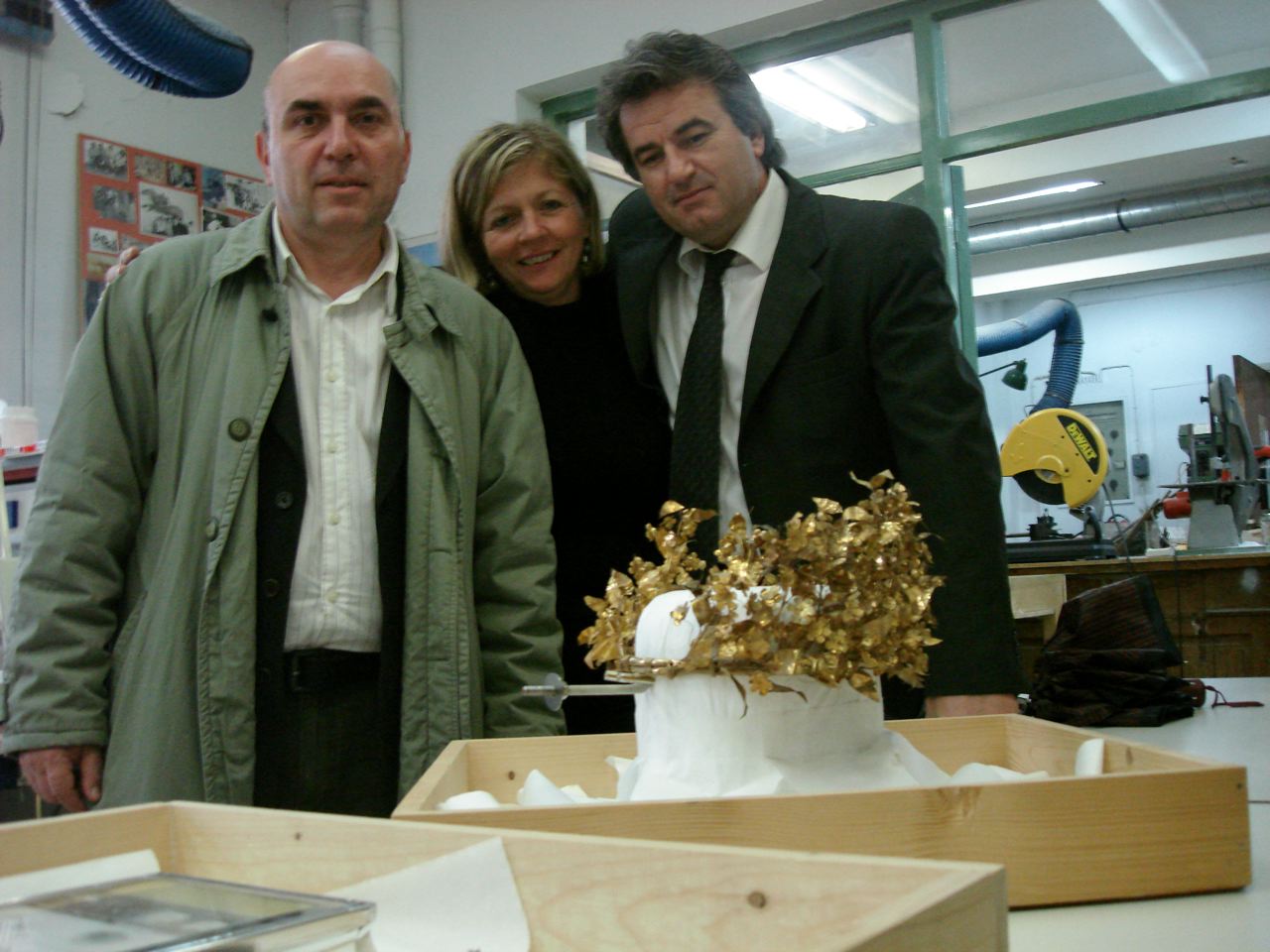
Nikolas Zirganos with members of the Greek art sqaud, celebrating the return of the golden funerary wreath.

The documentary film follows the investigation of our friend Nikolas Zirganos, the Greek investigative reporter who we teamed up with to crack the case of the funerary wreath. His intrepid reporting pieced together the criminal investigation by Greek and German authorities that ultimately led to True’s criminal indictment by Greece. The time limit on the charges expired before she could go to trial, but in December 2006, the Getty agreed to return the wreath to Greece. The film also features Italian prosecutor Paolo Ferri and his investigation of the Getty and other American museums in the illicit antiquities trade.

Here’s a preview of “Looters of the Gods”:

Artifacts and Fictions in Baltimore: Roger Atwood on the Walters’ Pre-Colombian Collection

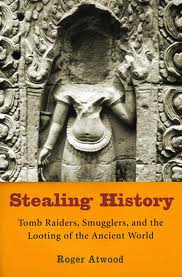
Today we’re publishing a guest post from Roger Atwood, author of “Stealing History: Tomb Raiders, Smugglers and the Looting of the Ancient World.”   We reached out to Roger for his thoughts when we heard about an exhibition of suspect pre-Colombian material at the Walters Art Museum in Baltimore. Atwood has written extensively about looting in Latin America, and took a recent trip to the Walters to see the collection. Here is what he found.

The Walters Art Museum in Baltimore has mounted a show of ancient artifacts from Latin America that belong, or once belonged, to the collector John Bourne.  According to the show’s catalogue, Bourne has already given some of the pieces to the museum while others have been promised, a long, gradual donation that maximizes the donor’s tax deduction. Aside from a few likely fakes, whose presence the Walters candidly admits, the objects all date from before the arrival of Europeans in 1492.

Collector John Bourne, circa 1947

The collection has a long and checkered history. Bourne originally intended to give it, or at least part of it, to the Museum of New Mexico’s Palace of the Governors unit in Santa Fe, which, in fact, displayed it for several years after 1997. The collection brought the Palace of the Governors some problems, to put it mildly. Four objects in the collection were seized by the FBI in 1998 and held for nearly two years, pending probes into allegations that the pieces were looted and smuggled out of Peru. The investigation ultimately fizzled, leading to no charges and the return of the pieces. But the Museum of New Mexico got some nasty publicity from that case, and one can only assume the Walters and its lawyers were fully cognizant of the risks of a repeat of it before accepting this dubious gift. I tell the story of the Bourne case in detail in my 2004 book Stealing History: Tomb Raiders, Smugglers, and the Looting of the Ancient World, based on interviews and documents acquired through the Freedom of Information Act.

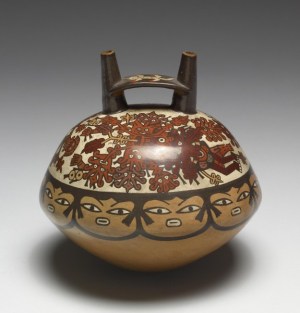
A couple of weeks ago I took a train to the handsome city of Baltimore and saw the Bourne collection in its new home. It’s a revealing show with some lovely artifacts, including some I don’t remember seeing in Santa Fe. The painted Nasca stirrup bottles (right), masterpieces of design and economy dating from about 500 CE, alone were worth the trip.

Yet I came away thinking that, perhaps without realizing it, the organizers have given an object lesson in the dangers of collecting antiquities that have no record of archaeological excavation. What I wrote in Stealing History – that “not a single piece on display” in the Bourne collection “gives a specific provenance, archaeological history or other sign it emerged from any place but a looter’s pit” – remains true but needs some amending.

First, there are the fakes. To its credit, the Walters is completely up front about the fact that some pieces in the Bourne collection are probably not what they claim to be. “[T]he atypical imagery of these objects calls into question their authenticity,” says the wall label next to a pair of Maya eccentric flints. It adds, helpfully, that tests are inconclusive “because modern replicas are made using the same kinds of tools and techniques as well as the same sources of flint” as the real ones. So, in this case, we’re learning more about technique for making fakes than about Maya flints.
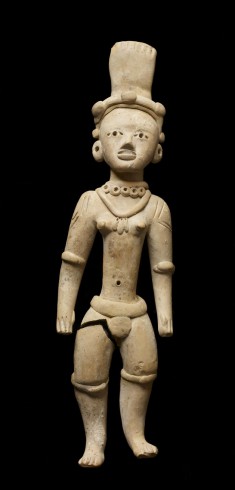
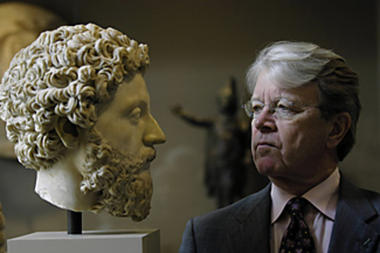
Another sculpture looks like a bad pastiche of old and new, or, as the wall panel says, a “modern assembly of a variety of ancient parts.” Meant to look Moche, the piece shows a wooden, crouching warrior of ungainly proportions, with a clamshell perched on its head like a fez and a backflap on its lower back that seems to have been made for a much smaller object. “Together, the C-14 [radiocarbon dating] and iconographic data suggest that the piece – in its current state – postdates Moche culture by at least 700 years,” says the show’s catalogue. The operative phrase there is “at least,” for the piece has a funny, cinematic kind of look, like a prop from “The Curse of the Andes”.

What do fakes have to do with the problem of looting? Fakes and unprovenanced, authentic antiquities often turn up together in collections because neither was found through the transparent process of archaeological excavation. They flock together.  Collectors might think their connoisseurship protects them from fakes, but they get hoodwinked all the time. This is not a sign of denseness or gullibility, necessarily; it just comes with the territory if you’re in the business of acquiring undocumented antiquities. If the Getty, with all its experts and budget, could buy a dubious piece like the Kouros, then what hope is there for a single collector such as John Bourne, no matter what the credentials of the people advising him?

The Walters is more coy on the implications of all this. Has the collector gained a tax benefit for the donation of what are quite possibly, if the Walters’ analysis is correct, worthless fakes?  Why is it even showing them? The show constantly refers to authentication and laboratory analysis on the pieces; indeed, it’s one of the main themes of the exhibit.  One piece, a Zapotec pottery figure actually has a copy of its thermoluminescence analysis report right on the wall, indicating the piece dates from 450 to 800 CE. Wall texts and the catalogue go on about CT scans and minute studies of chemical compositions.

I spoke on the phone with the director of the Walters, Gary Vikan, who said that the museum decided to go ahead and show what its conservators believed to be fakes because “there is a value in being candid and open about our own research.” He added, “our business is to gather and share knowledge, not to vindicate” a collector’s decisions. Two conservators worked full-time for two-and-a-half years analyzing the pieces, he said.

To the viewer, all this research could signal that the Walters has doubts about the larger integrity of the collection. But it also suggests the museum is trying to compensate for the lack of any archaeological information about the pieces by running them through gauntlets of laboratory tests. It’s as if the museum is trying to scratch its way to some information – any information – about pieces that are so patently lacking any hard archaeological data.

And that leads me to the second problem associated with undocumented artifacts that this exhibit so richly demonstrates: the lack of information. For all the museum’s months of laboratory work, we know strikingly little about where these pieces came from, in what context they were found, and what function or meaning they had. This is because they were, presumably, all purchased from the cast of looters, dealers and assorted hoodlums that make up the supply end of the Latin American antiquities market. Whatever information those sellers claim to have on the origin of the artifacts they sell is usually conjecture or lies.

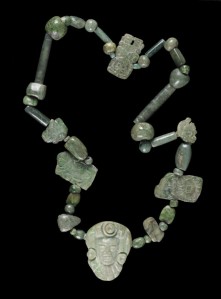
An earthenware crocodile effigy claimed to be from Costa  Rica is said to date from 500 to 1350 CE, an absurdly wide spread that stratigraphic data or radiocarbon materials found in proper excavation could narrow down to decades. A Mayan jadeite pendant (left) dates from “250 to 450 CE” and could come from Guatemala, Belize, Mexico or Honduras, says the catalogue. In other words, from two centuries and any one of hundreds of sites over four countries.   It’s a nice piece, but how helpful is that? True, it is difficult for a private collector to buy archaeologically excavated material, since it rarely comes on the market. But a museum of the Walters’ caliber could certainly arrange loans of properly excavated pieces if wants to show pre-Columbian antiquities.

The show takes pains to stress that Bourne purchased many artifacts on trips to Latin American hinterlands starting in the 1940s, before most current rules on removing and selling cultural property were in effect. The catalogue describes Hiram Bingham-style adventures, Bourne cutting through forest to reach the lost city of Bonampak and finding artifacts in situ.  These accounts are entertaining and I don’t doubt their authenticity, but other facts make you wonder if he had other sources. Bourne himself told the FBI in 1998 that he bought merchandise from the late Ben Johnson, a notorious Los Angeles dealer in high-end pillage whose dealings were exposed in the Sipán trial of 1989.

What little information we’re given on the origin of the Bourne pieces amounts to a roll call of the most pitilessly looted parts of Latin America: the north coast of Peru, the Petén lowlands of Guatemala, rural Veracruz.  Commercial looters erased incalculable amounts of archaeological data and a valuable economic resource to gather prizes for middlemen and collectors. It’s a story of exploitation and greed that is still rarely acknowledged  by big collecting museums.

A clear example of that destructive cycle – collectors buy loot, looters destroy sites to get more loot to sell, over and over – was the pillage at Sipán in northern Peru in 1987. Before the Getty’s Aphrodite, before the Marion True trial, the case of Sipán showed everyone the power of the antiquities trade to consume heritage.  That case led to the 1990 emergency ban on the import of a long list of types of Peruvian antiquities, arguably the most important step by the federal government to tackle the illicit trade up to that time, and, later, a bilateral agreement between Peru and the United States imposing broad import restrictions that remains in effect today. (By way of disclosure, I should say that I spoke in favor of a five-year renewal of that agreement before the State Department’s Cultural Property Advisory Committee in 2007.)

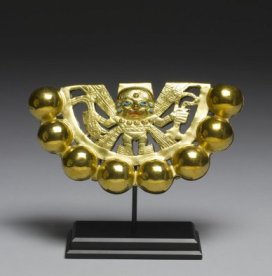
The Bourne collection (now the Walters collection) includes a piece widely attributed to Sipán, a golden belt rattle (left) [Note: An earlier version of this post had an incorrect image. The mistake was ours, not Atwood’s.]  It wasn’t on display when I visited Baltimore but it appears in the catalogue, which calls the piece “Moche style, North Coast, Peru.” The Sipán tomb was looted by the Bernal brothers in February 1987. Its fabulous artifacts spread quickly through the elite antiquities racket before police fenced off the site and allowed archaeologists to excavate it. They found two more, undisturbed tombs that have enriched our understanding of pre-Columbian society.

The word “style” after Moche is a wink-wink that the Walters is not sure of the piece’s authenticity, as Vikan pointed out to me.  I spoke with one of the museum’s conservators, Jessica Arista, who said the surface of the belt rattle showed marks from metal tools that did not exist in ancient Peru. “There are a lot of modern polishing marks,” she said. Also, said Arista, the metal itself looked too fresh to be ancient and a corrosive pigment seems to have been applied to it, possibly with the intention of making it look older.  A sample from the piece was detached and sent to the Museum of Fine Arts in Boston for analysis, she said. The piece was found to be 72 percent gold, 13 percent silver and 10 percent copper, figures similar to those found in authentic pieces, she said. (The catalogue gave slightly different numbers: 86.6 percent gold, five percent silver and 8.4 percent copper.) But the interior of the metal lacked the leaching and compositional variation that you would expect from a truly ancient piece, she said. Also, the microscopically thin gilding that you would see on the surface seems to be missing.

Still, the information is not conclusive, said Arista. The museum would need detailed comparisons with authentic Sipán pieces to give a more definitive answer on the piece’s authenticity. The Walters has not made contact with the Sipán museum in Lambayeque, Peru to arrange such a comparison, she said.

I mentioned to her that many Sipán pieces, including the backflap seized by the FBI in Philadelphia in 1997, had been soaked and scrubbed with Brillo pads while in the hands of looters and smugglers. This, I suggested, could account for the modern tool marks and the metal’s shiny appearance (which I’d also noticed in Santa Fe.) Perhaps, she said, but the metal’s inner composition, not just the surface, raises red flags about the piece’s authenticity.

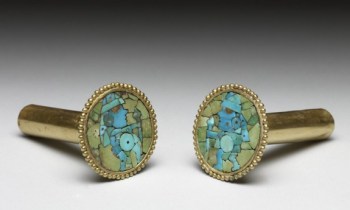
The belt rattle was one of four from the Bourne collection seized by the FBI in 1998. (Another, a golden monkey head looted from a nearby site called La Mina around 1988, was restituted to Peru last year, with the cooperation of the Palace of the Governors. A pair of Moche earflares, seen at right, also seized by the FBI remain on display at the Walters. ) While the artifacts were held by the FBI, the Peruvian archaeologist who excavated Sipán, Walter Alva, went to Santa Fe and examined the belt ornament. If he had any doubts about its authenticity, he never raised them with me or the FBI.  Alva doubted the authenticity of other Peruvian pieces in the Bourne group, but not that one.  In Stealing History, I quote Christopher Donnan of UCLA, an expert on Moche iconography, as saying he also believed it an ancient Sipán artifact. I’ve never heard an authority on Moche archaeology say anything different.

So if the Sipán belt rattle turns out to be a fake – well, there are some very good forgers out there, and kudos to the Walters’ conservation team for exposing it.

But if it’s not, then the Walters will have some explaining to do. Its presence at the Walters would make a mockery of the museum’s policy (stated by Vikan here at minute 18) of not acquiring pieces that do not have a clear chain of ownership from before the UNESCO agreement of 1970.  Vikan says in the catalogue that the museum will “promptly and openly respond to any claims for repatriation … from possible source countries.”  Indeed, in a sign of transparency, the Walters has posted the collection – including the now-suspect Sipán belt rattle – on the American Association of Museum Directors’ Object Registry of antiquities acquired since 2008 that lack clear provenance dating back to 1970.

But why wait until source countries make repatriation claims? You wonder what other controversies over title might lurk behind the Bourne collection. This would be a good opportunity for a major American museum to recognize proactively a source country’s title to dubious objects, rather than make Peru or Guatemala jump through hoops — or wait for the storm as the Met did with the Euphronios krater, today recognized as property of the government of Italy.  Museums badly need to get the provenance problem past them and institute policies they can live by, permanently and consistently.  At its heart, the question is about more than ownership.  It’s about accountability, a subject on which the Walters exhibit demonstrates how far museums have come. It also shows how far they have to go.

ROGER ATWOOD investigated the illicit antiquities trade in 2002-03 with a fellowship from the Alicia Patterson Foundation. His website is http://rogeratwood.com/

The Harvard List: Turkey wants Dumbarton Oaks to Return the Sion Treasure

Among the dozens of objects that the government of Turkey is asking American museums to return are 40 Byzantine relics at Harvard University’s Dumbarton Oaks Museum.

(We’ve previously reported on Turkey’s requests in the LA Times and detailed the objects being sought from the Met, the Getty, and the Cleveland.)

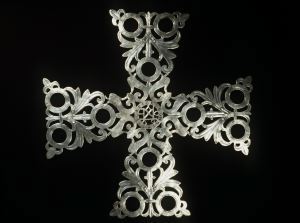
The silver and gold liturgical objects known as the Sion Treasure consist of plates, candlesticks, crosses and plaques. Some 40 pieces of the treasure are at Dumbarton Oaks, while another 10 or so are at the Antalya Museum in Turkey, with a few more said to be in private collections.

There does not appear to be much doubt that the treasure was looted and smuggled out of Turkey in 1963 — decades after the nation’s patrimony law made such acts illegal. Dumbarton Oaks’ own publication of the Sion Treasure suggests as much repeatedly.

In 1986, Dumbarton Oaks organized a symposium about the treasure at the Walters Art Museum in Baltimore, which resulted in a 1992 book, “Ecclesiastical silver plate in 6th Century Byzantium,” edited by the museum’s Byzantium curator Susan A. Boyd. That publication includes this photograph of the looter’s hole where the treasure is believed to have been found.

The treasure’s precise findspot is later detailed at length: “Late in the summer of 1963, the Sion Treasure was found in the field called Buyuk Asar (big ruin) north of the hamlet Haciveliler (2km west of Kumluca, a modern town in southeastern Lycia,)” wrote German Byzantinist Hansgerd Hellenkemper. A marking on a nearby wall identified it as the ancient Lycian polis of Korydalla. The treasure was found some 30 meters from the ruins of an early Byzantine church, Hellenkemper added, suggesting it may have been buried by church leaders in the 7th Century to hide it from invading Arabs. She goes on to note that illegal excavations have made it difficult to know more about such treasures. “In the Eastern Mediterranean, a large number of Early Byzantine church treasures have been found, but an exact of nearly exact findspot is known for very few of them.”

Dumbarton Oaks’ acquisition history says the treasure was purchased in 1963 in Switzerland from the antiquities dealer George Zakos by Mrs. Robert Woods Bliss, a private collector who donated it to the museum the same year. Zakos has been repeatedly tied to the illicit antiquities trade — among other things as a major supplier to Robert Hecht and the source of the Metropolitan Museum’s looted Lydian Hoard, which was returned to Turkey in 1993 after a bitter six-year legal battle.

Turkey has been seeking to reunite the Dumbarton Oaks material with the rest of the Sion Treasure for decades. Nizeh Firatli of the Istanbul Archaeological Museum first noted the missing treasure at a 1964 meeting in Athens, and soon after Turkey first requested that Dumbarton Oaks return the treasure. Several subsequent requests have been sent over the ensuing years, and Turkey’s request was recently revived.

Dumbarton Oaks director Jan Ziolkowski

Dumbarton Oaks did not respond to repeated requests for comments on Turkey’s request — a curious position for an institution that serves as a research library. We eventually contacted Harvard University’s press office, which released the following statement on behalf of director Jan M. Ziolkowski: “Dumbarton Oaks has made the Sion Treasure available for exhibition, research and study for nearly a half-century. We are confident that we have proper title to these antiquities and, while representatives from Turkey have inquired about them on occasion over the years, they haven’t responded to requests for any documentation that might raise questions about the provenance of this important part of the collection.”

We asked both Ziolkowski and Harvard for additional information about why they believe the museum has proper legal title to the treasure. Given the suspect source of the treasure and Dumbarton Oaks’ own publication of details of its looting in 1963, what further “documentation” is Harvard waiting for? So far, our follow-up questions have been met with silence.

The Getty’s Bronze? Italian Court Upholds Order to Seize a Getty Masterpiece

UPDATE: Law professor Derek Fincham has commented on Italy’s case: “Using a domestic court to seek the seizure of an illegally exported object from another country has not been attempted before. But Italy has been at the forefront of repatriation strategies. This novel approach could lead to a new legal tool for nations of origin to pursue, if it can convince the Attorney General and a U.S. District Court to enforce this seizure order. The Getty appealed the earlier ruling, and they did so for a reason, this case could set a precedent which would open up museums to seizure suits in the nation of origin.” We’d be interested to hear more legal analysis of this issue.

UPDATE: David Gill notes a comment by the Italian prosecutor saying that the ruling leaves the Getty “little room for maneuver.”

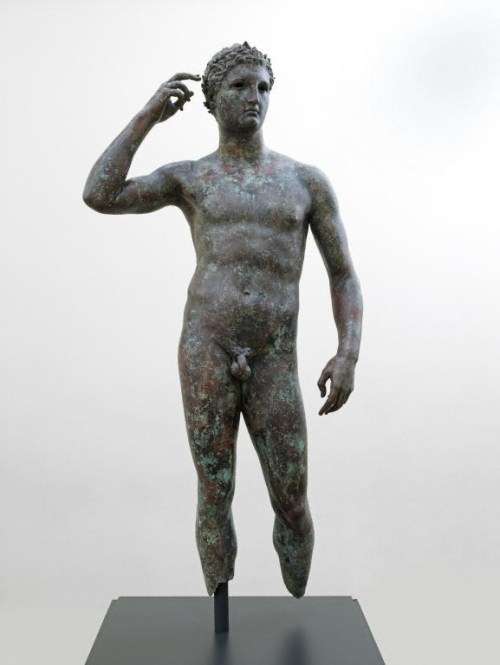
The Getty had a significant setback in the legal case over one of its most important antiquities — the bronze statue of a victorious athlete known as the Getty Bronze.

Here’s Jason’s story in the LA Times. We’ve posted the judge’s complete ruling below.

An Italian court has upheld an order for the seizure of a masterpiece of the J. Paul Getty Museum’s antiquities collection, finding that the bronze statue of a victorious athlete was illegally exported from Italy before the museum purchased it for $4 million in 1976.

The ruling Thursday by a regional magistrate in Pesaro will likely prolong the legal battle over the statue, a signature piece of the Getty’s embattled antiquities collection whose return Italian authorities have sought for years.

“This was the news we were waiting for,” said Gian Mario Spacca, president of the Marche region where the statue was hauled ashore in 1964, in an interview with Italian reporters. “Now we will resume contacts made with the Getty Museum to build a positive working relationship.”

Spacca visited the Getty last year hoping to negotiate an agreement to share the statue. But the Getty has made clear it will fight in court to keep the piece and is expected to appeal the ruling to Italy’s highest court.

“We’ve not yet seen the ruling and won’t comment until we do so,” said Getty spokesman Ron Hartwig.

The long battle over the bronze athlete — one of the few complete Greek bronzes to have survived and believed by some to have been made by Alexander the Great’s personal sculptor Lysippus — is a lingering reminder of the controversy that has surrounded the Getty’s collection of ancient art.

Since 2005, the Getty has voluntarily returned 49 antiquities in its collection, acknowledging they were the product of illegal excavations and had been smuggled out of their country of origin. Hundreds of other objects were returned by other American dealers, collectors and museums. In the wake of those returns, several American museums struck cooperative deals with Italy and Greece that allow for long-term loans of ancient art.

But such agreements have not shielded American museums from further claims that ancient art in their display cases are the product of a black market responsible for the destruction of archaeological sites around the world. In March, Turkish officials revealed they were seeking the return of dozens of allegedly looted antiquities from the Getty, the Metropolitan Museum of Art in New York, the Cleveland Museum of Art and Harvard’s Dumbarton Oaks.

Most such repatriation claims have been settled without legal action. The dispute over the Getty’s bronze ended up in Italian court thanks to its complicated legal status — an accidental discovery in international waters off Italy’s Adriatic coast.

The statue was most likely lost at sea after being plundered by Roman soldiers in Greece around the time of Christ. (The government of Greece has never asked that the statue be returned there.)

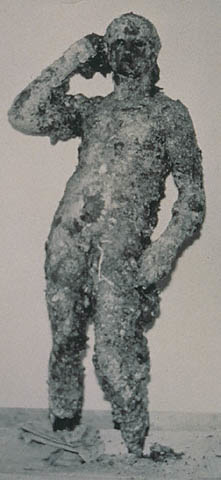
The Getty Bronze, before restoration

In 1964, Italian fishermen found the statue snagged in their nets. They hauled it ashore in the small port town of Fano, buried it in a cabbage field and then hid it in a priest’s bathtub rather than declare it to customs officials, as required under Italian law.

Three brothers and the priest were convicted of trafficking in stolen goods, but an appeals court threw out their convictions in 1970, citing insufficient evidence. At the time, the statue was still missing, and its value was unknown.

In the early 1970s, the statue resurfaced in London, where millionaire oilman J. Paul Getty first became enamored of it.

Getty himself never authorized the purchase of the statue because he had concerns about its legal status, records show. In 1974, Italian officials tried to seize the statue in Germany, where it was being restored, but authorities there would not honor the request.

It was only after Getty’s death in 1976 that his namesake museum purchased the statue, ignoring the legal conditions its founder had placed on the acquisition, according to documents related to the case. The statue was one of the museum’s first acquisitions and was dubbed the “Getty Bronze.”

The bronze was one of dozens of ancient objects demanded by Italy during a lengthy fight with the Getty in recent years over its antiquities collection, much of which was acquired from middlemen who trafficked in objects looted from Italian tombs and ruins.

Talks broke down when the Getty refused to include the bronze on a list of objects it was willing to return. The impasse was broken only when a new criminal case about the bronze was filed in Italian court in 2007, taking it off the negotiating table.

That case has wound through the Italian legal system ever since. In February 2010, a judge ordered the statue’s return, citing the Getty’s “grave negligence” when acquiring a statue. The Getty appealed that ruling to Italy’s highest court, which sent the case back to the judge in Pesaro, not far from the port where the statue was first hauled ashore. The Getty has argued that the seizure order is invalid because no underlying crime has been proved.

If the high court ultimately upholds the seizure order, Italy will still have to convince U.S. authorities to enforce the order and seize the statue from the Getty Villa, where it is on display today in its own humidity-controlled room.

Read the full story of the Getty Bronze here.

Here’s the complete text of the May 3rd ruling:

The Getty List: 10 Objects at the J. Paul Getty Museum that Turkey Says Were Looted

Among the dozens of allegedly looted antiquities that the government of Turkey is asking American museums to return are ten objects at the J. Paul Getty Museum.

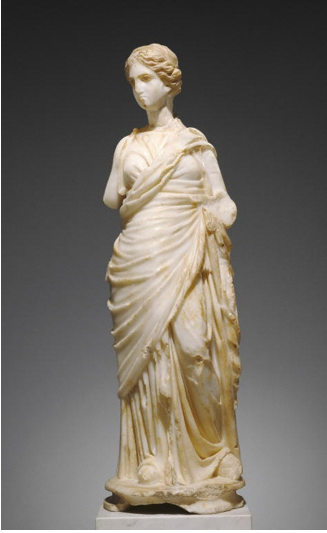
Statue of a Muse, 200 AD. From Cremna, Turkey. Purchased in 1994 for $550,000 from Varya and Hans Cohn, Los Angeles. The Cohn’s acquired the object from Elie Borowsky (Basel) in ’68. (JPGM 94.AA.22)

The Getty declined to provide a list of the objects in question, as did the Met, the Cleveland Museum and Harvard’s Dumbarton Oaks. We obtained a list from Turkish authorities and asked the Getty to provide the collecting history for those objects.

Unlike those other museums, the Getty is obligated by its 2006 acquisition policy to provide the public with provenance information about objects in the collection. Thanks to that policy, we now know something about how the contested objects came to the Getty.

The most prominent are four marble Muses now on display in the Getty Villa’s Basilica Room. All four appear to come from Cremna, Turkey and were first acquired by antiquities dealer Elie Borowski sometime before 1968, the Getty records show.

Borowski, who died in 2003, had ties to the illicit antiquities trade. His name appears in Robert Hecht’s memoir as a client of convicted antiquities dealer Giacomo Medici; it also appears on a handwritten organization chart of the illicit trade seized by Italian authorities in 2001. Former Getty antiquities curator Marion True told Italian authorities that Borowski had also been a client of Gianfranco Becchina, the Sicilian antiquities dealer (also named on the org chart) who is on trial in Italy.

Statue of a Muse, 200 AD. From Asia Minor. Purchased for $10,137 from Elie Borowsky in ’71; Borowsky already owned in 1968 (JPGM 71.AA.461)

Statue of a Muse, 200 AD, from Cremna, Turkey. Purchased for $9,185 in 1968 from Sotheby’s London, November 26, 1968. lot no. 173. (JPGM 68.AA.21)

Statue of a Muse, 200 AD, from Cremna, Turkey. Purchased in 1968 for $13,122 at Sotheby’s London, November 26, 1968. lot no. 173. (JPGM 68.AA.22)


Several other Getty objects sought by Turkey came through another dealer connected to the illicit trade: Nicolas Koutoulakis, now deceased owner of the Paris gallery Segredakis. Koutoulaksi also appears in the org chart and last September, the Getty returned to Greece fragments of a grave stone it had acquired from Koutoulakis after scholars concluded they adjoined an object now in a Greek museum.

Portrait of a Man. (73.AB.8) Purchased in 1973 for  $125,326  from Nicolas Koutoulakis

Bronze bust. (71.AB.458) Purchased in 1971 for $90,000 from Nicolas Koutoulakis.

Bronze foot from “Bubon, Turkey, Asia” (72.AB.103) acquired from Nicolas Koutoulakis. (See the Cleveland bronze from Bubon here.)

Bronze bed (82.AC.94) purchased for $150,000 from Nicolas Koutoulakis; Koutoulakis purchased from Gilette’s estate; Joseph Gilette of Lausanne, ca 1936.

The final two Getty objects come from a private dealer and an auction house:

Roman Eagle (72.AB.151) purchased in 1972 for $200,000 from French & Company.

Bronze bust of Lucius Veres  (73.AB.100) purchased in 1973 for $37,701 from Spink & Son, London.

When asked for comment about Turkey’s request, Getty spokesman Ron Hartwig said, “We are in dialogue with officials from the Turkish Ministry of Culture regarding some objects in our collection. We expect those discussions to continue and while they do, we will not be getting into specifics.”

A Blast from the Past: “Norton Simon Bought Smuggled Idol”

 Imagine you’re a thief about to pull a heist at the local temple.

You can’t wait to get your hands on all those statues, altarpieces, gold. In the middle of the night, you sneak up to the entrance and…

(in a different voice, the Temple Guardian speaks.) ‘YE-AHH! BEGONE THIEF! HA HA. THE TEMPLE IS SAFE ONCE MORE.’

So begins the children’s audio guide for the Norton Simon Museum’s statue of a 10th century sandstone temple warrior from Koh Ker, the one-time capital of the Angkor Kingdom in Cambodia.

Originally, the statue was a temple guardian, “placed outside a house of worship to protect it from evil spirits,” the guide explains. “This is only part of the sculpture…When it was new, it had hands and feet of course.”

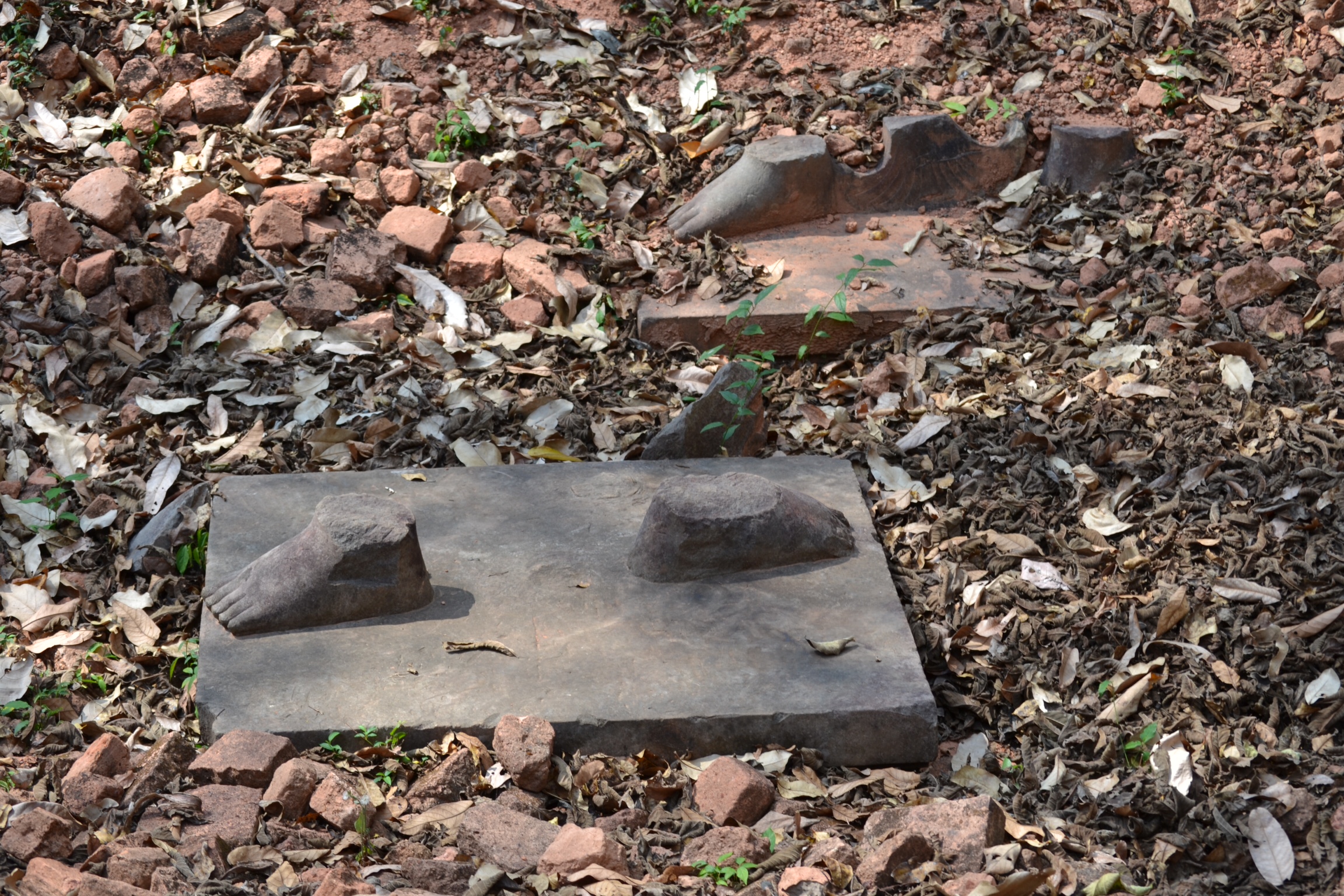
The evil spirits apparently won, because the guardian is now in Pasadena, and the Cambodian temple it once guarded has been thoroughly looted. But those missing feet were found in 2007, along with a second pair that experts say belong to a matching statue now at Sotheby’s. Last week, the federal government filed a lawsuit seeking to seize the statue from the auction house on behalf of the Cambodian government.

There is little question that both statues were stolen — their abandoned feet bear witness to the crime. The only question is when: sometime over the past 1,000 years, as Sotheby’s suggests. Or — as Cambodia, the US government and archaeologists suggest — more recently, in the turbulent 1960s or 1970’s when civil unrest in Cambodia fueled unprecedented looting. If the later, both statues could be considered stolen property under U.S. law.

The feet of two ancient sandstone statues were left behind by looters at a temple in Koh Ker, Cambodia. One statue is now at Sotheby's, the other at the Norton Simon Museum in Pasadena.

Norton Simon himself was not coy about the illicit origins of his impressive collection of Asian art, which today is a highlight of his Pasadena museum. In a 1973 article headlined, “Norton Simon Bought Smuggled Idol,” the New York Times asked Simon about a bronze Hindu deity of Siva he had just purchased for $1 million. India claimed it had been ripped from a temple and smuggled out of the country. His answer:

“Hell, yes, it was smuggled,” said Mr. Simon in a telephone interview. “I spent between $15- and $16-million over the last two years on Asian Art and most of it was smuggled. I don’t know whether it was stolen.”

The same would appear to apply to the Khmer temple guardian that he bought three years later from a New York dealer William H. Wolff.

A Norton Simon spokeswoman said in a statement that “since [1976], the museum has proudly displayed this important example of Cambodian art, and has had the privilege of showing it to the Director of the National Museum of Cambodia (who we understand is now the Director General of Heritage, Ministry of Culture and Fine Arts).  In more than three decades of ownership, the Foundation’s ownership of the sculpture has never been questioned.”

Until now, that is. Cambodian officials told Voice of America this week that they will seek the return of the Norton Simon statue and countless other missing pieces if their claim for the statue at Sotheby’s is successful. See:

Much of the evidence cited against the statue at Sotheby’s would seem to apply to its brother in the Norton Simon Museum. Indeed, Sotheby’s apparently linked the two objects to a common site in their own proposal to sell the statue:

An almost identical figure, now resting in the collections of the [deleted] Museum…allows one to conjure up a wonderful vision of the two statues together perhaps lining an entrance way leading to the dark temple interior and the sanctuaries of the gods.

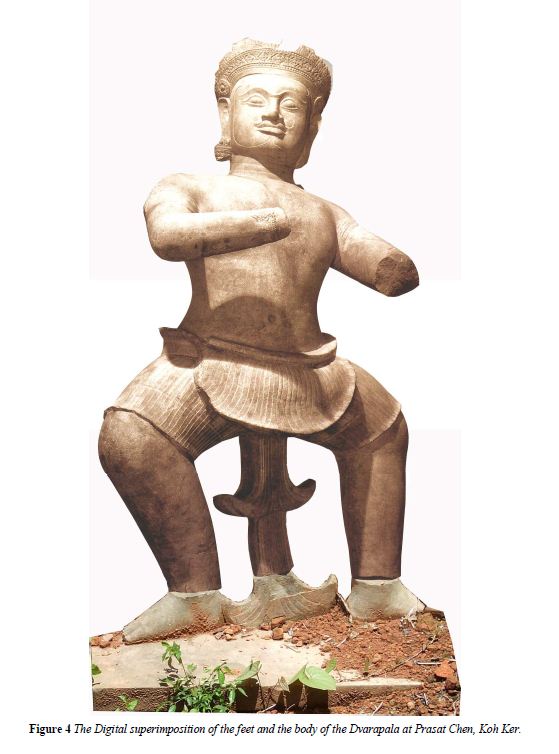
Reunited: The abandoned feet at Koh Ker digitally superimposed on the Temple Warrior at the Norton Simon, from a report to UNESCO by researcher Simon Warrack.

A wonderful vision, indeed — and a surprisingly accurate description of their original context at Koh Ker before they were stolen.

Why hasn’t Cambodia previously claimed the statue? Internal Sotheby’s emails cited in the federal suit suggest an answer. A scholar initially warned Sotheby’s not to offer the statue for sale publicly because it was “definitely stolen” from Koh Ker. But she changed her stance after consulting with Cambodian officials:

…There are no plans at all for Cambodia or the National Museum of Cambodia in Phnom Penh to attempt to ask for anything at the [deleted] Museum or the [deleted] etc. They would also have to ask for Khmer material in the [deleted], and they want to continue to get French support.

It appears that Cambodia was reluctant to risk access to foreign aide over a fight for its stolen cultural heritage. But this calculus may be changing.

This raises an interesting question: Should the Norton Simon and other museums with such objects wait to see if they are sued in federal court? Or should they move to return stolen objects on their own initiative?

Norton Simon himself had an interesting take on that issue in that same New York Times article:

If it did some good, I would return it. If there were reason and probability that smuggling could be stopped, I would do it. It would do a lot to establish a constructive relationship between nations….Looting is a terribly destructive process. In cutting works out of temples, thieves mutilate them. Also, US Customs should not allow works into this country unless they have a total clearance from the countries of origin. If we could get such a clear cut certification to stop smuggling, I would send it back. If not, I’ll probably keep the piece.