Category Archives: News

Feds: Subhash Kapoor “one of the most prolific commodities smugglers in the world.”

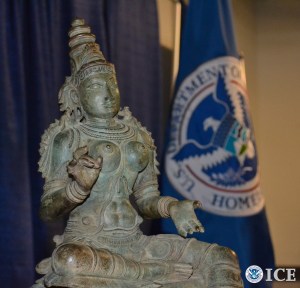
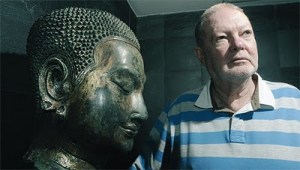
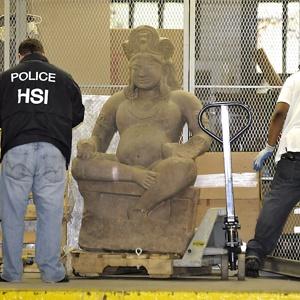
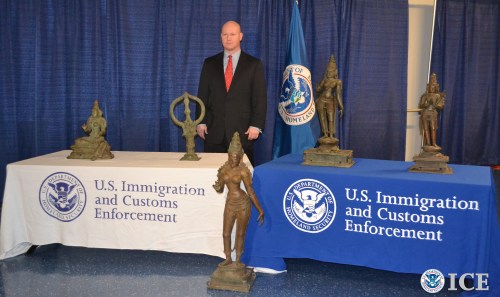
SAC Hayes seized itemsICE

Federal authorities announced this week that they have seized an estimated $100 million worth of ancient art linked to Subhash Kapoor, the New York art dealer currently facing trial in India — and an arrest warrant in the United States — for his alleged role in an international antiquities smuggling network.

For some perspective on that number, the FBI’s art squad has seized a total of $150 million in art since its inception in 2004, according to its website.

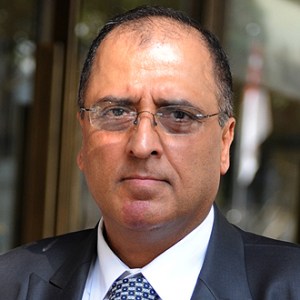
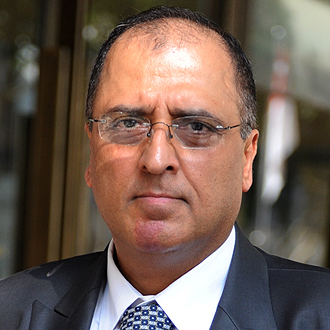
subhash kapoor“In our view, Mr Kapoor is one of the most prolific commodities smugglers in the world,” said Immigration and Customs Enforcement Special Agent in Charge James T. Hayes (shown above with the seized objects.) “It’s one of our most significant antiquities and artifacts investigations that we’ve conducted in the history of this agency.”

Our past coverage of the Kapoor case and museums that have material from him can be found here.

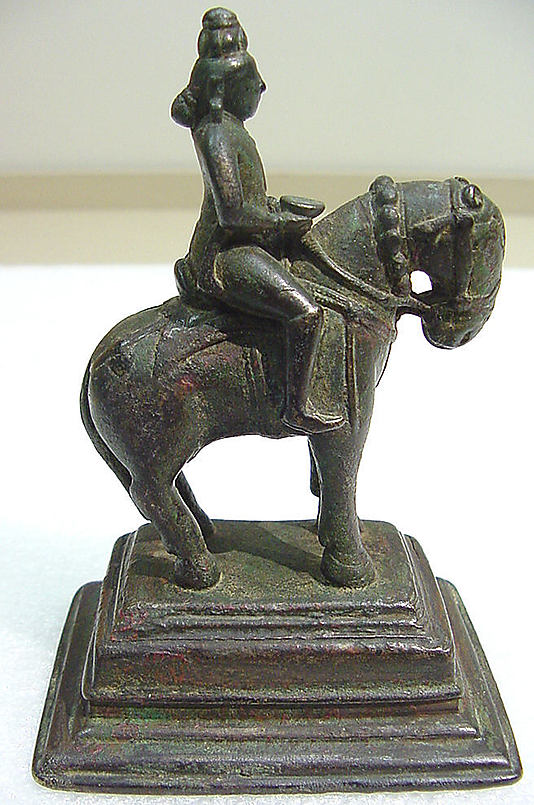
The seizures revealed Wednesday were valued at $5 million and secured with cooperation from Customs and Border Protection, the Manhattan DA’s office, Interpol and Indian authorities. They include a 14th Century bronze Parvati figure from the Chola dynasty that was surrendered to ICE by an unnamed dealer in Europe. “Even though the statue had been placed on the Interpol Stolen Works of Art Database, the Parvati had passed through the hands of six different dealers and been given multiple layers of false provenance over the past six years,”  Hayes said. In addition, four bronze figures were seized in recent months that are believed to have been stolen from temples in Tamil Nadu.

Parvati ICEHayes stressed that the Kapoor investigation, dubbed Operation Hidden Idol, was on-going as agents continue to dig into Kapoor’s four decades as a Manhattan dealer whose gallery Art of the Past sold objects to museums around the world. Those include some of the more than 200 objects sold by Kapoor that we’ve identified in previous posts.

Hayes urged collectors and museums that had purchased objects from Kapoor to come forward and notify investigators.

“We ask that those collectors contact us,” Hayes said. “Our investigation is on-going and we’re looking to confirm the legitimacy of those objects. We have already received several calls from law firms representing people who had acquired pieces through Kapoor and were concerned about whether they were in possession of stolen goods.”

I took the opportunity to ask Hayes about ICE’s work combating the antiquities trade. To their credit, ICE has significantly ramped up their investigations of the illicit trade in recent years: more than 6,600 artifacts have been returned to 24 countries since 2007. But critics note that those forfeitures and flashy repatriation ceremonies with foreign officials have often not been followed by criminal charges against key players in the trade.

ICE“The focus is always to return stolen property to its rightful owners,” Hayes acknowledged, saying making criminal cases was desirable, but challenging. “You have to have a legal basis to prove those items, and you have to prove certain things and that proves very difficult. We’re dealing with laws around the world, in foreign courts and different jurisdictions.”

To be sure, ICE investigators have played an important role in several recent criminal investigations that led to guilty pleas, including Arnold Peter Weiss and Morris Khouli. “From where I sit, we’re very focused on putting those smuggling networks out of business,” Hayes said. “At the end of the day, our primary responsibility is to get stolen property back to its rightful owners.”


Dallas Museum of Art Returns Orpheus Mosaic, Five Other Looted Treasures in Announcing New Art Loans Initiative

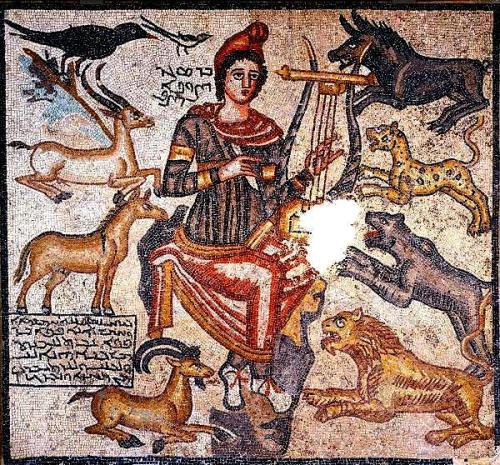
Orpheus Mosaic

The Dallas Museum of Art has agreed to return six looted antiquities from its collection and announced a broad new initiative to exchange expertise and artwork with cultural institutions around the world.

“The problems of illegal excavation and the illicit import of cultural property require the consideration of new models of cooperation among institutions,” the museum said in a release announcing the initiative, dubbed the Dallas Museum of Art Exchange Program, or DMX.

The effort was announced Monday while signing an agreement with Turkey, the museum’s first partner, for the return of the Orpheus Mosaic, a Roman mosaic floor looted near Edessa (today’s Sanliurfa) and acquired at a Christies auction by the DMA in 1999.

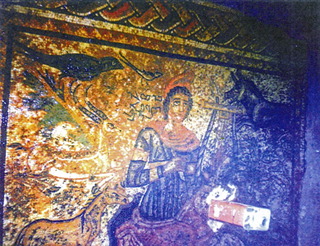
Microsoft Word - Orpheus mosaic in situ.docxIn explaining the return, the museum cited compelling new evidence presented by Turkish investigators about the mosaic’s illicit origins: “Two newly recovered in situ photos of the mosaic showing it being removed by the smugglers. The photographs also show the full work with its decorative borders intact, prior to it being removed from the ground. The photographs were printed by a local photo shop in Sanliurfa and are currently evidence in a criminal investigation being carried out by the Sanliurfa Head Prosecutor in order to identify everyone involved in the crime.” The image shows the mosaic with a border that was likely removed by looters, the museum notes, adding, ” The canister visible in the lower right contains a Turkish brand of glue, which looters–not archaeologists–would have used to make repairs.”

Notably, the Dallas museum initiated the return of the mosaic instead of waiting for it to be identified by Turkish authorities, who have been on a campaign to repatriate looted antiquities. Soon after Maxwell Anderson started as director in January, he asked the museum’s antiquities curators to identify objects with troubling ownership histories. The mosaic was found to be nearly identical to several published on a website of Turkey of looted objects. Anderson told the Dallas Morning News:

the last thing he wanted was “to be the recipient of a claim by Turkey and be unprepared, seeing all of that evidence. So, I wrote to the embassy, saying if you have any information about this mosaic, please let us know. I didn’t have any specific information, but it seemed circumstantially that it was very likely that it was removed from that site.” Turkish officials came forward with the photograph of the mosaic, “which is all you need to know,” Anderson said.

In addition to the Orpheus mosaic, the Dallas museum agreed to return five antiquities to Italy in response to law enforcement requests. All five  Two of those objects were first questioned by us in a Jan. 11 email to the museum inquiring about links between the DMA and the illicit trade, including antiquities dealer Edoardo Almagia. After our inquiry, the DMA contacted Italy and has now agreed to return them.

UPDATE: In February, we requested provenance information for 15 of the DMA’s recent acquisitions, including the five pieces returned this week, that we selected at random. They helpfully provided the list we posted here. We asked yesterday on Twitter whether other objects on that list might also be returned — several come from dealers who have also been implicated in the illicit trade. A museum spokeswoman now tells us: “Italian and Greek authorities have reviewed  our collections records, including the works you refer to in your recent post, and have advanced no other claims.” Of course, some of the material on the list, such as the Cycladic figurine, likely came from other countries.

The objects going back to Italy — and the DMA’s explanation for their return — offer a helpful who’s who of the illicit antiquities trade.

dma_507360

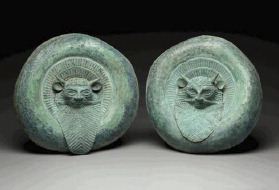
Two Etruscan shields with the head of Acheloos (Etruscan 6th Century BC)

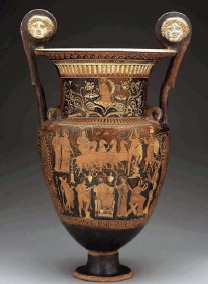
Volute Krater (Pulian, 4th Century BC). 

As we noted in February, both were purchased from  antiquities dealer Edoardo Almagià in 1998.  The museum describes Almagià as “a former New York antiquities dealer…currently named in a criminal case for conspiracy to commit the illegal export and smuggling of cultural property pending before the Public Prosecutor of Rome. Almagià has been under investigation since at least 2006, when U.S. Customs officials raided his New York apartment, confiscating photographs, documents, and archaeological material. He was also the subject of a New York Times story in 2010 that revealed he and Michael Padgett, former antiquities curator at the Princeton University Art Museum, were the focus of an investigation of the illegal export and laundering of Italian archaeological objects. The Italian government named Almagià in the criminal case for having ‘sold, donated, or lent’ nearly two dozen works looted from Italian sites to the Princeton Museum. Roughly twenty other objects are listed in the case as having been obtained illegally by Almagià and sold to other American institutions in the 1980s and 1990s, including this pair of shields.” UPDATE: The DMA incorrectly referred to Padgett as the former antiquities curator at Princeton. The Princeton Museum confirms he remains on staff there, and the DMA has corrected is post.

dma_507363As evidence that the statue and krater were looted, the museum cited “photographs provided that were seized by U.S. Immigration and Customs Enforcement officials” and “archival evidence seized by U.S. Immigration and Customs Enforcement officials, including records of sales and correspondence currently serving as evidence in the criminal investigation and court case.”

Dallas now joins the Met and Princeton in returning objects linked to the dealer. (We’ve written about those returns here and here.) Will the other museums we’ve identified with Almagia material — including the Getty, the Boston MFA, San Antonio Museum of Art, Indiana University — now be motivated to do the same?

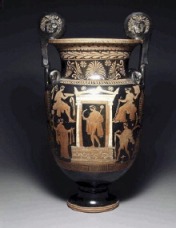
dma_507366A Red Figure krater (Apulia, 4th Century BC) acquired by DMA at Sotheby’s in 1996.

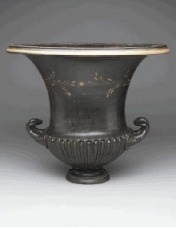
A Calxy Krater (Campagnia, 4th Century BC) acquired from the vases form Ward and Co. around 2005, said to be from a “Swiss private collection.” 

Both vases have been linked to Gianfranco Becchina, who the museum describes as “a Sicilian antiquities dealer who has been convicted in Italy of dealing in stolen antiquities. Becchina started dealing in antiquities from his premises in Basel, Switzerland, in the 1970s and is said to have sold to several major museums, sometimes through Sotheby’s and Christie’s auction houses in London. In May 2002, the Carabinieri, in collaboration with the Swiss police, raided his storage facilities in Basel, recovering thousands of objects in various stages of restorations, photographs of artifacts, and other documents.”

dma_507370“The J. Paul Getty Museum and the Toledo Museum of Art have both returned material to Italy that was acquired from Becchina and subsequently shown to have been illegally exported.”

“In April 2012 U.S. Immigration and Customs Enforcement seized two works from Christie’s New York auction house that were associated with the investigation of Becchina. According to the Carabinieri, Gianfranco Becchina has been identified as one of the most prolific known traffickers of Italian cultural heritage, and all property that has been shown to have been illicitly trafficked by Becchina is subject to confiscation.”

You can find a list of our previous posts mentioning Becchina here.

dma_507364Etruscan head of an Antefix. Said to be from Henri Jacques of Geneva. Purchased from Robin Symes in about 1999.

A photograph linked this antefix to Giacomo Medici, who the museum describes as “a former antiquities dealer based in Rome, Italy, and Geneva, Switzerland, who was found guilty of receiving stolen goods, illegal export of goods, and conspiracy to traffic by the Italian government and sentenced to ten years in prison and a €10 million fine. In 1995 the Carabinieri, in concert with Swiss police, raided Medici’s storage space in Geneva, which contained thousands of objects, photographs (including many Polaroids), and documents relating to his business practices and connections. The Cleveland Museum of Art, J. Paul Getty Museum, and Metropolitan Museum of Art have all returned objects that were acquired via Giacomo Medici. Along with Gianfranco Becchina, he has been identified by the Carabinieri as one of the most prolific known traffickers of Italian cultural heritage.”

Robin Symes, the dealer form whom the DMA purchased the objects, has also been linked to the illicit trade, the museum notes. “Symes is also accused of playing a pivotal role in the illegal trade of looted antiquities. Several museums, including the Metropolitan Museum of Art and the Minneapolis Institute of Arts, have already returned several objects acquired through Symes. He is known to have commercial relations with dealer Giacomo Medici, who was the ultimate source of the artifacts that would subsequently be sold through dealers or auction houses. Prior to the Medici conviction, Robin Symes had been involved in a civil court case, and in January 2005 he was sentenced to two years in prison for contempt of court for not fully disclosing his assets.”

You can find our other posts mentioning Symes here.

We’ll have more on the significance of the returns and the DMA’s new loans initiative in a future post.

The Guardian and the Goddess: Looted Statues Reveal Workings of Illicit Trade

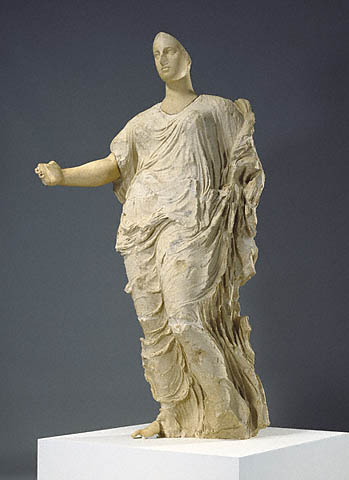
The Getty’s Aphrodite

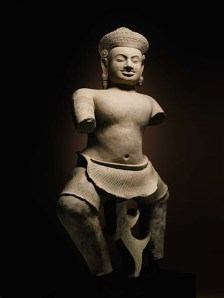
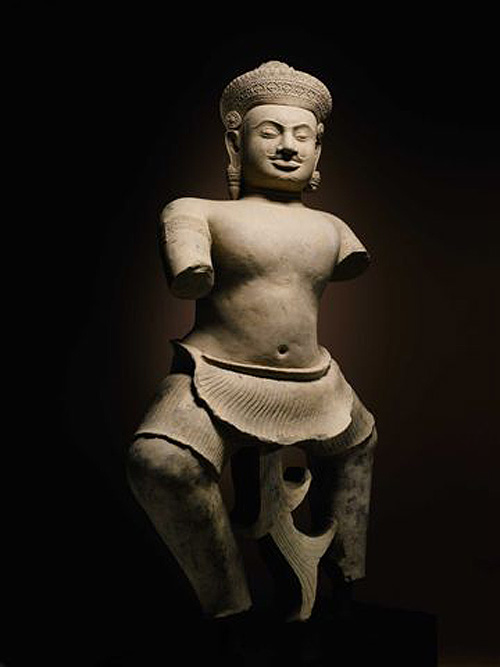
The Contested Temple Guardian

What does a 10th century Khmer temple warrior have in common with a Greek cult goddess from the 5th Century B.C.?

Quite a bit, it turns out. Both were objects of veneration whose remarkable craftsmanship represented the apex of their respective cultures’ artistic achievement. Both massive limestone statues were looted and purposely broken  to make them easier to smuggle — telltale scars that decades later would bear witness to a violent and illicit origin. And both reveal a strikingly similar story about the ugly inner workings of the trade in ancient art.

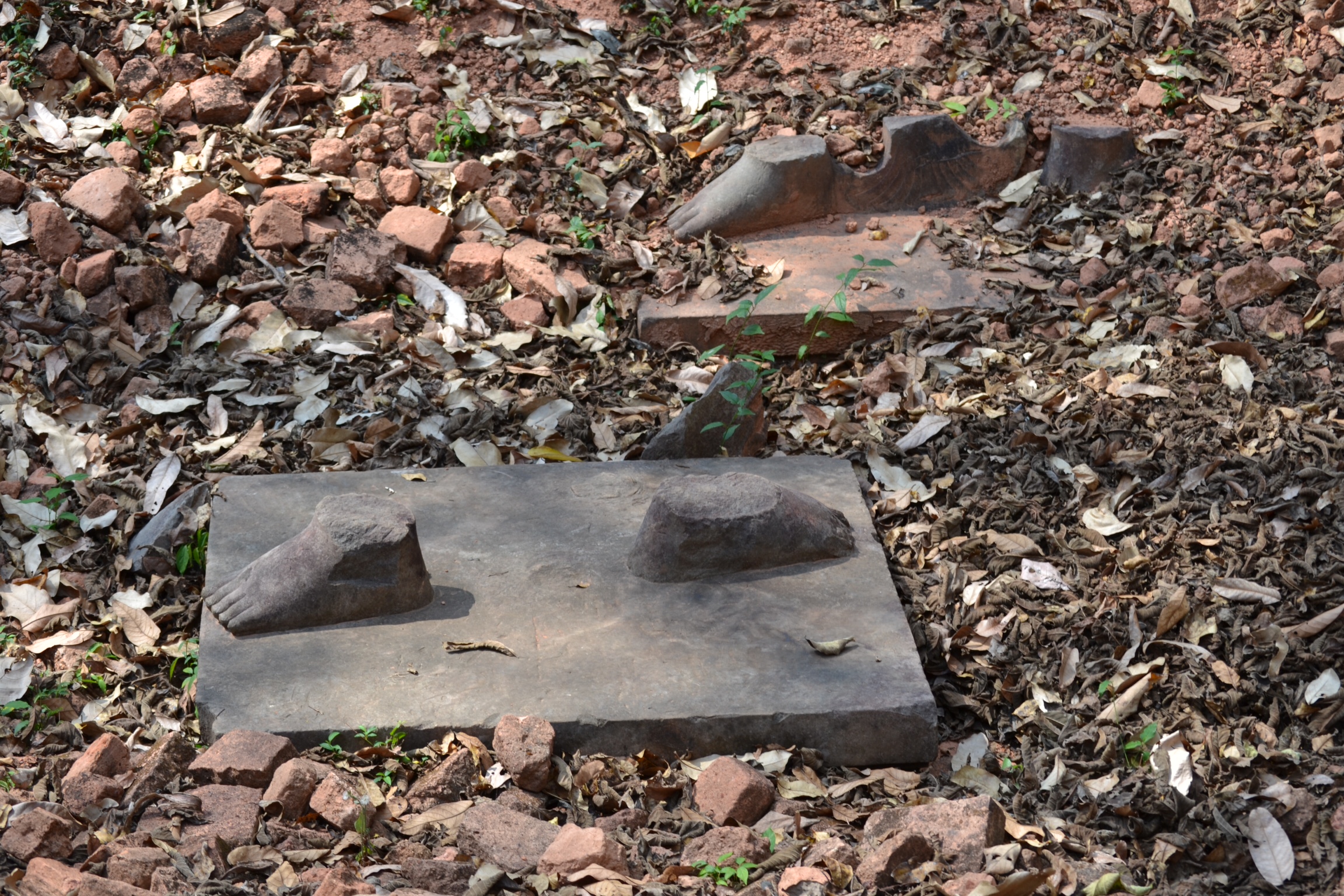
We told the story of the Getty’s goddess in Chasing Aphrodite. The story of the Khmer temple guardian is being told today in legal filings by Sotheby’s and the US Attorney’s office, which is suing for the return of the statue on behalf of Cambodia in a federal court in Manhattan. (We’ve written previously about the case here here and here.) Both parties agree the statue was removed at some point from an ancient temple complex at Koh Ker, where the statue’s feet remain to this day. The key question — unanswered in the government’s earlier filings — is when.

The Norton Simon’s Bhima

This month the U.S. Attorney’s office amended its original complaint with damaging new details that apparently came to light through pre-trial discovery of Sotheby’s internal correspondence. The filing, which we’ve embedded below, is worth reading in full. Among other things, it reveals how little the art world has changed since the 1980s, when the Getty bought its cult goddess amid clear signs the statute had been recently looted and then sought to cover up those illicit origins.

Here are some highlights:

Date of looting: The federal government is now stating that the Sotheby’s statue, representing Duryodhana, and its companion at the Norton Simon Museum, representing Bhima, were looted from a temple complex in Koh Ker “in or around 1972.” This addresses Sotheby’s earlier contention that the statue might have been removed sometime prior to the 1920s.

Intentional Damage by Looters: Like the Getty’s Aphrodite, the Koh Ker statues were intentionally dismembered to make them easier to smuggle:

“In the case of monumental statues like the [Sotheby’s warrior] the heads would sometimes be forcibly removed and transported first, with the torso following later, due to the difficulty of physically transporting the large torsos.”

In September 2010, this detail was noted by an expert hired by Sotheby’s to prepare a condition report on the statue.

“[The Scientist’s] theory is that the sculpture was either forcibly broken for ease of transport from the find site and then put back together later, or that the head and the torso did not belong together.”

The feet of the two ancient sandstone statues were left behind by looters at a temple in Koh Ker, Cambodia.

The Scientist proposed a testing plan to determine which was the case. Instead of accepting that plan, Sotheby’s fired the expert, the complaint alleges. Readers of Chasing Aphrodite will recall that similar questions were raised about the head of the Aphrodite and the fresh breaks on the statue’s body (p. 93 – 94.) Luis Monreal, the head of the Getty Conservation Institute, proposed tests on soil and pollen found in the folds of the statue Aphrodite to determine its origin. The Getty Museum instead opted for ignorance.

Market Path: The amended complaint specifies that after they were stolen from Koh Ker by “an organized looting network,” the statues at Sotheby’s and the Norton Simon were smuggled to Bangkok and delivered to a Thai dealer, who sold them to a “well known collector.” The New York Times has identified that dealer as Douglas A. J. Latchford. (Latchford co-authored a book on Khmer art with Emma Bunker, the expert cited in previous filings as saying in emails to Sotheby’s that the statue had been ‘definitely stolen.’) Latchford allegedly conspired with the London auction house Spink to obtain false export permits for the statues and they were transported it to London in 1971 or 1972, the amended complaint states. The Duryodhana was sold to a Belgian businessman in 1975, and his widow consigned it for sale by Sotheby’s in 2010.

Sotheby’s Deceit: The complaint alleges Sotheby’s knowingly misled potential buyers, Cambodian officials and U.S. investigators about the statue’s ownership history, claiming it had been seen in the UK in the late 1960s — well before the 1970 UNESCO convention. In fact, the government alleges, Sotheby’s knew the statue had been with Latchford in SE Asia until the early 1970s. To support their claim, the complaint cites emails between Sotheby’s and Latchford, who is described as “the original seller of the sculpture back in 1975.” One of those internal emails reveals Sotheby’s concerns about how the statue’s provenance will affect its sale:

“The most important question is the provenance. Can [the Collector] tell us if he acquired this sculpture before 1970? That’s the standard [an art advisor to a prospective buyer] is applying. It’s what his client wants.”

“Sotheby’s inaccurate representations dating the [statue’s] appearance in the United Kingdom to the late 1960’s, rather than after 1972, therefore eliminated a significant obstacle to the selling the [statue,]” the complaint states.

Indeed, Latchford’s name was omitted from the object’s stated ownership history.

In a statement to the New York Times, Sotheby’s denied the government’s claims, saying the U.S. attorney’s office was trying “to tar Sotheby’s with a hodgepodge of other allegations designed to create the misimpression that Sotheby’s acted deceptively in selling the statue…That is simply not true.”

Canada’s Royal Ontario Museum Has Ties To Alleged Antiquities Trafficker Subhash Kapoor

UPDATED: In recent years Canada’s Royal Ontario Museum has acquired eight objects from Art of the Past, the Manhattan antiquities gallery specializing in South Asian art that is now the focus of an international investigation into its owner’s alleged ties to the illicit antiquities trade.

The now shuttered gallery is owned Subhash Kapoor, the American antiquities dealer of Indian extraction who has sold ancient art to museums and private collectors around the world since 1974. As we’ve reported previously, Kapoor was arrested in Germany last year and extradited to India, where he facing charges of trafficking in looted Asian antiquities and being the mastermind of a network of temple looters operating in Tamil Nadu. In July, American authorities issued an arrest warrant for Kapoor and seized $20 million worth of ancient art from his Manhattan warehouse. Indian investigators have also asked authorities in Australia, Singapore and the United Kingdom for help with their expanding investigation.

We’ve previously traced more that 200 Kapoor objects to museums around the globe. We can now add the Royal Ontario Museum to that list. Six of the Kapoor objects at the ROM are modern works on paper, a specialty of Kapoor’s that are not the subject of the current investigation. Two other objects, however, may be of interest to investigators.

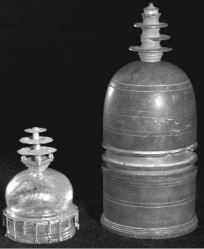
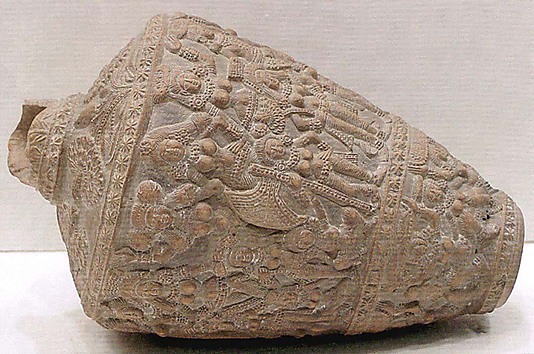
The first is a Ghandaran stone reliquary from the 1st to 2nd century A.D.. in the shape of a stuppa that was featured in the museum’s 2004-2005 newsletter. “Purchased through the generous support of the Louise Hawley Stone Charitable Trust, the ROM acquired a beautiful Buddhist Reliquary dated to the 2nd century CE,” the newsletter said. “The outer container is made of steatite, a grayish stone common to the region of Gandhara, in presentday western Pakistan. The inner container is carved from rock crystal and is decorated with stunning gold granular ornamentation, a testament to the level of skill in ancient gold craftsmanship. The ROM’s reliquary would have contained the relics (ash, bone, precious metals) of an important Buddhist monk and would have been placed in the centre of a large burial mound, called a ‘stupa.'”

UPDATE: In response to our questions, a museum spokeswoman said, “The Gandharan Reliquary was in the personal collection of a well-known US-based collector since 1969. A signed letter by the owner is on file at the museum and ownership was confirmed through direct contact with the collector.” We’ve requested the identity of the collector and any underlying documents to support that provenance and will post them when we have them.

The Taliban-controlled region of western Pakistan where the Gandharan culture thrived centuries ago has been the subject of extensive looting in recent years.

The second Kapoor object of interest is an 18th century bronze figure of Krishna Venugopala. While not ancient, it is listed as coming from Orissa or Bengal, India. It is not clear when the piece left India or whether it received the required export permit. Kapoor is alleged to have used false export permits to disguise stolen cultural objects as garden furniture or modern handicrafts.

UPDATE: The ROM museum apparently purchased this object in 2006 with no record of legal export. A museum spokeswoman tells us: “The statue of Krishna from Bengal or Orissa was in a UK-based collection since 1970. There is no documentation on file at the museum and we continue to investigate its provenance further.” We’ve requested details on the UK-based collection and will post it here when we get it.

Beyond the objects purchased from Kapoor, the museum has an extensive collection of recently acquired objects from South Asia that are of interest, some of which were acquired recently. (In an email, a museum official notes the South Asia collection has been built since the founding of the museum, with most of the historical collection coming into the museum in the 1920s to 1950s.)

For example, this 10th century figure of a yogini from the Chola dynasty of Southern India was acquired in 1956  in 2004. It is described by the museum as “part of a dispersed set of goddessed [sic] that occupied a temple in the Tamil region of southern India,” an area known for the rampant looting of temple idols. When did the group of objects leave the temple? Does it have a legal export permit from India? The museum is silent on these questions.

UPDATE: A museum official notes the object was acquired in 1956. “It is part of a set of similar sculptures dispersed across museums in India (Government Museum Chennai), Europe (British Museum, Guimet), and North America (Asian Art Museum San Francisco, Freer Sackler Galleries, and others). This set has been extensively documented and its collecting history published in a new book: Scattered Goddesses: Travels with the Yoginis by Padma Kaimal, 2012.”

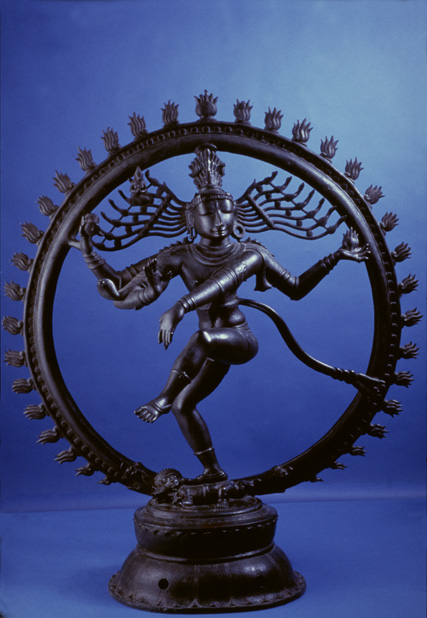
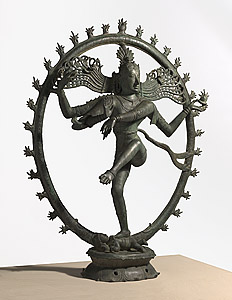
Then there’s the ROM’s bronze dancing Shiva from Chola dynasty of the 12th century A.D., also from the Tamil region. The Shiva bears  some resemblance to those that Indian authorities said were allegedly removed from Tamil temples by looters in recent years. (One has allegedly been linked to Australia’s National Gallery of Art.) The ROM’s description of the object notes, “Such bronze sculptures were predominantly produced from the Chola period onward, a dynasty of kings that ruled over much of southern India from the ninth to the twelfth centuries AD. They were housed in temples and regularly brought out and decorated for processions.” Again, when did this particular object leave India, and did it have a valid export permit? UPDATE: A museum official says the Nataraja was acquired in 1938.

In a statement about the Kapoor objects, museum spokeswoman Shelagh O’Donnell said, “Following museum policy, each acquisition was carefully investigated in terms of quality, authenticity and provenance. The antiquities in this group have been documented as having acceptable provenance from published auctions or from known private collections. The modern works comply with all current Indian export regulations. The ROM is in the process of re-examining the documentation for this group of objects.”

On October 3rd, we asked the ROM to provide the underlying documentation supporting the ‘acceptable provenance’ for several of the above objects. We have not received a response. We’ll let you know when we learn more.

Here is the full list of Kapoor objects released by the museum:

CAVEAT EMPTOR: Arnold Peter Weiss on the Dangers of the Ancient Coin Trade

UPDATE 8/5/14: The federal government has returned to Greece five ancient coins that were seized from Dr. Weiss after his arrest in Jan 2012. They are among 23 coins Weiss was forced to forfeit during the investigations detailed below, according to ICE.  

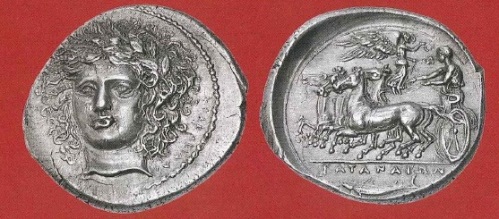
Caveat Emptor, the court-mandated essay written by Rhode Island coin dealer Arnold Peter Weiss, is a long-overdue call for collectors of ancient coins to begin following the law.

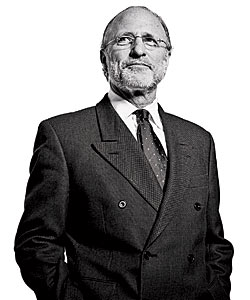
Dr. Arnold Peter Weiss

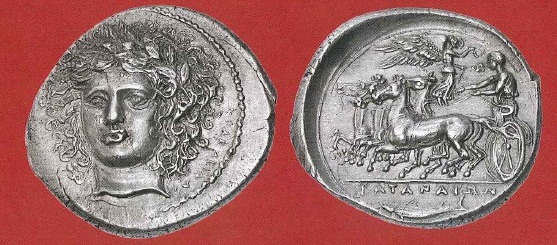
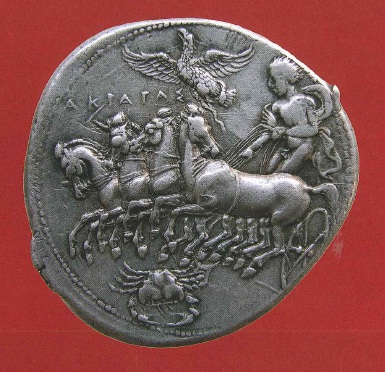
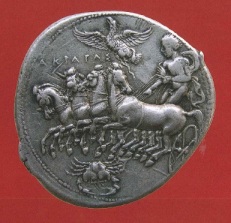
Weiss is the prominent Rhode Island hand surgeon and ancient coin dealer who was arrested on January 3rd at the Waldorf-Astoria Hotel in New York City for felony possession of an ancient coin recently looted from Sicily. He has served as a board member of the American Numismatic Society, the founder of a Swiss coin dealership and a prominent donor to American universities. According to the criminal complaint, he was caught on tape telling a police informant that he knew the coins had been recently looted in Sicily: “There’s no paperwork, I know this is a fresh coin, this was dug up a few years ago.” In July, Weiss pleaded guilty to three counts of attempted criminal possession of ancient coins. It turned out the “looted” coins were clever forgeries.
As part of Weiss’ plea bargain, he agreed to write an essay that “will raise needed awareness about unprovenanced coins and will promote responsible collecting among numismatists.” That article has now been published in the American Numismatic Society Magazine. (See the complete article below.)

The situation recalls a scolded student being forced to write a half-hearted apology on the chalkboard. But Weiss’ essay is worth reading for what it reveals about the trade in ancient coins.

Weiss opens with a candid admission: “I was very active in the ancient coin marketplace and paid little attention to foreign cultural property laws, as if they really did not matter within the U.S. Well, they do.” Weiss is not alone — coin collectors have often displayed a surprising ignorance of the laws that govern their hobby, or open disdain for them. Weiss’ arrest has become an object lesson for the field, and Weiss uses his essay to underscore the point:

“Until recently, the prevailing view among coin dealers and collectors in the US has been that such foreign laws do not affect the purchase of objects in the US….Whether one agrees or not with the various laws of Italy, Turkey or China, for example, this must take a secondary role in this debate. The US honors the laws of cultural patrimony of foreign nations where those laws are in place and enforced by the source country.”
He is referring, of course, to the McClain Doctrine and the National Stolen Property Act, which makes it a crime to purchase or possess looted antiquities taken from a country with patrimony laws that are reasonably enforced. (See here and here for more on the law.)

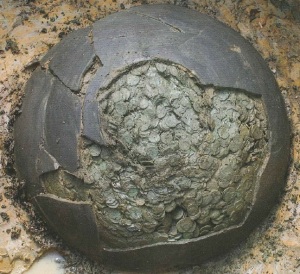
Weiss goes on to expose the coin market’s dirty secret: the hoards of ancient coins that regularly appear on the market today are almost certainly the product of looting.

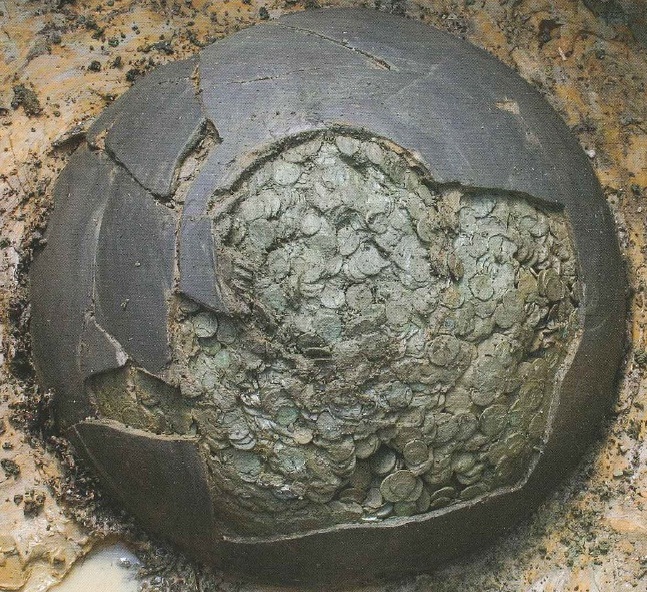
“Dealers and collectors with any reasonable experience can tell that such a simultaneous offering just does not happen naturally, except after a recent hoard of coins has been found and dispersed into the marketplace….The purchase of coins that derive from hoards is likely to be illegal and detrimental to scholarship, and these might be reasons enough for the buyer to be aware.”
This admission — both obvious and long-denied by collectors — is reminiscent of another remarkable whistle-blower moment: Getty Museum antiquities curator Marion True’s June 2000 speech before the Assoc. of Art Museum Directors, in which she told museum officials that it was time to accept the fact that most, if not all, undocumented antiquities were the product of looting.

But Weiss notes another reason for careful collecting: The prevalence of sophisticated forgeries on the market, like the ones he was trying to sell in New York City. Weiss notes such forgeries share something in common with looted coins: the lack of a clear collecting history.

They come with fantastic stories…From personal experience I can say that these forgeries are stunning and are being introduced into the coin market with fake provenance information…Forgery is often the domain of highly-organized criminal enterprises, most often based in the source countries themselves, but now occurring worldwide due to the spread of high-tech machinery.

Weiss concludes his essay with a call for “a different kind of collecting requiring a proactive rather than passive approach to provenance” and outlines six steps every collector of ancient coins should take:

1. Research the history. No excuse not to — the ANS has a complete set of auction catalogs dating back to the 18th Century.

2. Ask questions. Weiss notes coyly that “sometimes dealers or curators know more about the coins than might be published.”

3. Beware the Old Swiss Collection and other bogus provenance. As Weiss notes, “the words ‘collection of’ for a coin that has never been previously published or documented ought to be a sign that further research is required.”

4. Know the Law. Weiss notes the “complex” and “contradictory rules” on what is legal to acquire, but offers 1970 as an accepted cut-off date for when an object should have left its country of origin.

5. Trust your Gut. If a coin feels “wrong,” don’t buy it.

6. Avoid recent hoards. Look out for coins with gleaming smooth surfaces, come in multiples and offered by the dozen.

This is a decent checklist for all antiquities collectors to obey. But what is perhaps most remarkable is that in 2012 this needs to be explained to coin collectors. One is left to wonder whether the problem with the market today is really ignorance of the laws or merely a stubborn unwillingness to obey them.

Will Weiss’ essay — published by the official organ of the US coin collecting community — mark a turning point? It should. Ute Wartenberg Kagan, the executive director of the American Numismatic Society, took the opportunity to announce the ANS’s new collecting policy, which is more strict that the steps outlined by Weiss.

In a strongly worded editorial, she too calls for a new era of collecting — “a path of responsibility, careful research, and best practices to enhance numismatics and the responsible collecting and caring for of ancient coinage and history.”

“Collecting ancient coins will be different,” she assures her members, “but will not die out.”

Ultimately, the success of Weiss’ statement and the ANS’s new policy at changing the culture of American coin collectors will be measured by the time. If criminal cases continue to reveal collectors buying unprovenanced coins like those Weiss warned against, we’ll know that ignorance was never the problem with the market in ancient coins.

UPDATES:

Archaeologist Paul Barford has written about Weiss’ essay here, noting several things Weiss has omitted: details on his own case; the role of dealers like himself; the importance of precise find spots, not just hoards; the role of ethics that go above and beyond the letter of the law.

Coin collector lobbyist Peter Tompa has (finally) written about the Weiss case. He says he “doesn’t have much to quibble with” about Weiss’ advice, but notes that the statement was made under duress and questions whether the “archaeological lobby” might have edited it.

Ute Wartenberg has responded to Tompa on his blog, saying, “ANS staff and I edited the piece after it was submitted, but the people acknowledged in my editorial preface such as John Russell, who is a professor of Near Eastern Archaeology, kindly provided illustrations at my request. Their names can be found with the relevant photos. None of those acknowledged read Weiss’ article or provided editorial comment.” So much for that theory.

Ever the provocateur, Arthur Houghton (who describes himself as a friend of Peter Weiss) picks up Tompa’s theory in the same thread and runs with it: “Who else may have intervened in the article’s wording and who may have cleared it for publication…And did those or any other person in authority then coerce, by subtle suggestion or by direct demand, the Society to publish? Could we have a little transparency please?” Houghton goes on to tell Col. Bogdanos to “man up” and “come out of the shadows.” “…Let us know exactly what your role was in creating, framing and clearing Peter Weiss’ article? But could we have a little confession from you at an early moment?”

Tompa has the last word, saying he has confirmed with Wartenberg that “the articl [sic] had to be approved by Col. Bogdanos as part of the plea deal, but any changes to the article based on comments from the NY District Attorney’s office or any sources the DA consulted, took place BEFORE the ANS accepted the article for publication and it was edited by ANS staff.”

Our final thought: No one would dispute that Weiss’ essay was “coerced” — it was a condition of the plea deal after he was caught breaking the rules he claims to promote. We are far more interested in Tompa’s and Houghton’s thoughts on the worthiness of those rules and the new ANS policy. Helpfully, Tompa has offered this link. For those wondering about Houghton’s views (and actions) on the law, we offer this.

A few additional questions we’d welcome thoughts on: Are ancient coin collectors often ignorant of the law, as Wartenberg suggests? Or have they flouted it knowingly, perhaps because they think it’s unfair? Have the ANS and other leaders in this area done enough to educate their members about the law and enforce a code of ethics in the field? And if Weiss hadn’t written as a condition of a plea deal but instead was whispering to a trusted friend, what would he have said?

The Battle for Koh Ker: Legal Implications of Cambodia’s Dispute with Sotheby’s

The legal dispute over an ancient Khmer statue at Sotheby’s could have lasting implications for the sale of ancient art in the United States.

For those catching up on the case: Sotheby’s New York was poised to put the 10th century temple warrior up for auction in 2010 with an estimated value of $3 million. But shortly before the bidding started, Cambodia claimed the statue had been looted from the ruins of a Khmer temple at Koh Ker, where the statue’s feet were found in 2007. In April, federal agents sought to seize the statue on behalf of Cambodia. A judge ordered the statue to remain at Sothebys while the two parties argue the case in court. Sotheby’s filed a motion to dismiss in June and now the government has responded, attaching declarations from two legal experts to support its case. (See below for the complete filings.)

At the heart of the case are familiar questions: What level of evidence is needed to establish when and how an object was illicitly removed from its borders? What amount of due diligence must a museum, collector or auction house conduct to defend an acquisition? When can a looted object in the US be seized by the government and returned to its legal owner? And can those who possess and trade looted antiquities be found criminally liable?

The feet of two ancient sandstone statues were left behind by looters at a temple in Koh Ker, Cambodia. One statue is now at Sotheby’s, the other at the Norton Simon Museum in Pasadena.

These questions have only occasionally been brought before federal courts in the United States, so the case law in this area is relatively thin. A handful of key cases have established the current legal regime, which holds that an object looted from a country with an enforced patrimony law can be considered stolen property under US law. Someone who knowingly buys or possesses a looted antiquity can be criminally charged, and the object can be taken by the government and returned to its rightful owner.

This legal regime has not prevented museums from buying suspect objects, but it has been an invaluable deterrent to the open sale of loot and helped raise the bar on acquisition standards in recent years. Given its shaky foundation, however, any new case law on these issues could alter the status quo significantly.  A victory for the government in the Cambodia case might lead to a further tightening of the rules around acquisitions and bring about more cautious collecting practices for collectors and museums. A victory for Sotheby’s, on the other hand, could encourage more brazen acquisitions of looted art.

The point is illustrated in the case filings themselves. Until recently, the leading case on the civil forfeiture of ancient art was Steinhardt, which established among other things that false declarations on import documents could allow the government to seize an object under civil law. But the recent dispute over a mummy mask at the St. Louis Museum of Art appears to have undermined the authority of that ruling, which is cited neither by the government nor Sotheby’s in the Cambodia case. Instead, both sides refer to the St. Louis case, US vs. Mask of Ka Nefer Nefer, in which the judge has found twice that the government presented insufficient evidence that the mask was stolen.

Here’s how Sotheby’s quotes the judge in that case: “[t]he Government cannot simply rest on its laurels and believe that it can initiate a civil forfeiture proceeding on the basis of one bold assertion that because something went missing from one party in 1973 and turned up with another party in 1998, it was therefore stolen and/or imported or exported illegally.”

The Cambodia case, however it is decided, will be cited in similar cases going forward. With that much at stake, the court filings are worth reading — even for those of us who are not lawyers. In the past, we’ve posted the government’s original complaint here, and the flurry of filings over the statue’s seizure here.

In June, Sotheby’s filed its first significant response to the case in a motion to dismiss:

Last week the federal attorneys in Manhattan replied with their opposition to Sotheby’s move to dismiss the case:

To support their arguments, the government filed two declarations:

Caveat and Hat-tip: We’re not lawyers and don’t even play one on TV. For insightful observations about these issues from a legal expert in this area, read Rick St. Hilaire’s indispensable blog: http://culturalheritagelawyer.blogspot.com/

UPDATED: Kapoor’s Footprints: 240 Objects from Alleged Antiquities Trafficker Traced to Museums Around the Globe

[UPDATED 8/27 with details from SF Asian.]

We’ve begun hearing back from museums that did business with Subhash Kapoor, the New York antiquities dealer under arrest in India for trafficking in looted antiquities.

For those just catching up with the Kapoor story: The dealer, an American citizen of Indian extraction, has operated Art of the Past gallery on Madison Avenue since 1974. He was arrested in Germany last year and was recently extradicted to India, where he is alleged to have been the mastermind behind a network of temple looters operating in Tamil Nadu.

Authorities there have also accused Kapoor of trafficking in looted antiquities from other parts of India, Afghanistan, Southeast Asia and the Islamic world. Federal authorities in the United States have also issued an arrest warrant for Kapoor and seized more than $30 million worth of allegedly stolen antiquities from Kapoor’s Manhattan storage facilities in recent months.

Kapoor has done business with leading museums around the world. Indian authorities have said that Kapoor worked with his brother Ramesh Kapoor, who runs Kapoor Galleries in New York. Kapoor Galleries was not raided by federal authorities, and to our knowledge Remesh has not been charged with a crime.

Here are the 236 Kapoor objects we and others have tracked down so far:

LACMA 

The Los Angeles County Museum of Art acquired 62 objects from Kapoor. Twenty-eight were purchased from Kapoor or his Manhattan gallery Art of the Past between 1989 and 2007. Another 33 were donated by Kapoor between 1978 and 2000. We’ve posted the complete list here.

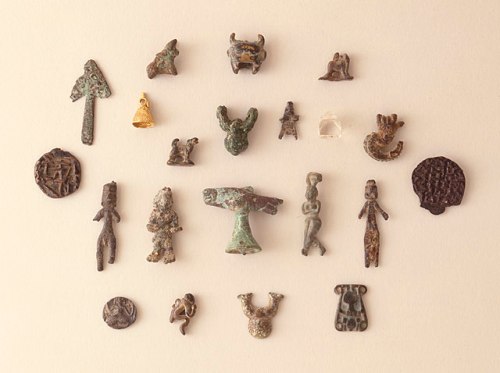
Twenty-nine of the objects are ancient. All but 8 of them belong to a single hoard of ancient figurines from Madhya Pradesh, in central India.

Two other antiquities are terracotta pieces from the 3rd and 2nd Century BC from Mathura, in Uttar Pradesh. A third is a copper sculture of Mayadevi from Uttar Pradesh, circa 100 AD.

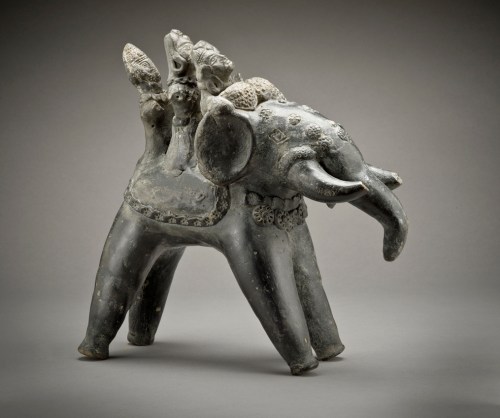
Elephant with Riders, 3rd-2nd century B.C.

Another 18 objects at LACMA were acquired from Kapoor’s brother Ramesh, who Indian authorities say worked with his brother Subhash to import looted antiquities illegally removed from India.

LACMA acknowledges it has no documented ownership history for any of the ancient objects. “We’re re-examining all these items in the light of the recent news,” said museum spokeswoman Miranda Carroll.

BOSTON MFA

The Boston MFA has just one object fr0m Kapoor – a page from a 17th century illustrated manuscript, The Jealous Older Woman and the More Impetuous Younger Woman. It was  purchased in 1995 from Art of the Past. Kapoor bought it at Sotheby’s, New York, in 1994, and was privately owned prior to being sold at auction, museum records show. The MFA also purchased two 17th century works from Kapoor Gallery.

ART INSTITUTE OF CHICAGO

The Art Institute has two objects purchase from Kapoor.  “We are in the process of confirming the provenance information and will take appropriate steps when we have completed this review,” said museum spokeswoman Erin Hogan. We’ve requested information about the objects — the museum’s online collection database does not allow for searching by provenance.

ASIAN ART MUSEUM of SAN FRANCISCO

Museum spokesman Tim Hallman said, “We have not been contacted by any officials investigating Mr. Kapoor’s dealings. However, when news broke of the investigation, the museum’s director instructed our chief curator to review the collection records to determine if we obtained items from Mr. Kapoor. We are still reviewing the files (our holdings include more than 18,000 artworks).” We’ll post the list of objects when we get it.

UPDATE: Hallman got back to us with details. The Asian Art Museum acquired four objects from Kapoor, including a 14th century statue of the Hindu deity Shiva in the fierce form of Bhairava (above), said to be from Karnataka, the Indian state west of Tamil Nadu where Kapoor is being held for trial. The Asian purchased the statue from Kapoor in 2000. “We have have carefully reviewed our records for each object and have not found any information to suggest that that any of these four art objects were acquired or imported illegally,” Hallman said in an email. The complete list of Kapoor objects at the SF Asian can be found here.

TOLEDO MUSEUM

The Toledo Museum continues to ignore our requests for information about objects they acquired from Kapoor and several other dealers tied to the illicit trade. The New York Times reported that Toledo acquired 44 terracotta antiquities from Kapoor in 2007. The museum’s website appears to offer  information about just one of those objects. It is hard to fathom how a museum whose considerable assets are exempt from taxes because they operate “in the public interest” can refuse to answer the public’s questions about objects in its collection. Only Princeton University Art Museum has shown a similar disdain for the public’s right to know.

THE METROPOLITAN MUSEUM OF ART

As we reported last week, the Metropolitan Museum of Art acquired 81 objects from Kapoor, four of which are antiquities that have no documented ownership history. For reasons that remain unclear, the museum also knowingly acquired five forgeries from Kapoor in 1991 for the museum’s study collection. Many of the Met’s other Kapoor objects are drawings from the 17th, 18th or 19th century highlighted in the museum’s 2009 exhibit, Living Line: Selected Indian Drawings From the Subhash Kapoor Gift.

NATIONAL GALLERY OF ART, AUSTRALIA

The NGA has acknowledged buying 21 objects from Kapoor, including a bronze Dancing Shiva said to be tied to the Kapoor investigation. That news has set off a wave of press reports in Australia about the case. The museum claims to have followed a “thorough due diligence process” and contacted Indian authorities this week to offer its cooperation in the investigation.

UPDATE: The museum released a statement saying, “The Gallery has commenced plans to undertake a comprehensive re-examination by a panel of internal and external art experts of the supplied documentation as well as the provenance of work acquired from Mr Kapoor, as many international Galleries are also doing. The Gallery is liaising closely with the Indian High Commission in Canberra to ensure that the internationally accepted protocols for dealing with such issues are followed.” The NGA has not yet released details about the provenance of the Shiva or other Kapoor objects.

SMITHSONIAN MUSEUMS

The Freer and Sackler Galleries told the New York Times that the only object they had acquired from Kapoor was a 20th century Indian necklace.

UPDATE: David Gill notes The Sackler has issued a statement saying it is investigating several objects purchase from Kapoor Galleries, controlled by Subhash Kapoor’s brother. The objects include a marble bracket figure, India, 13th c. (purchased in 1995); a seated figure of Jambala, Tibet, bronze, 13th c. (purchased in 1996); a Gautama Buddha, Tibet, gilt copper, 14th c. (purchased 1997); and a pair of lamps of fortune, India, bronze, 17th c. (purchased in 2000). The statement notes that The Freer|Sackler “were among the first U.S. museums to adopt the UNESCO convention of 1970, which forbids the acquisition or display of works illegally removed from their nation of origin after 1970.”

Art Gallery of New South Wales

The Art Gallery of New South Wales purchased six objects from Kapoor, Australian media reported. Former Getty Museum director Michael Brand, who took the helm of the Australian museum in June, said, “No-one has made any suggestions that the works in our collection or stolen or that there are any issues about those works. Should someone come to us and say that there is reason to believe then we would obviously collaborate in any way we can.” Among the objects at the museum are this one, highlighted by David Gill.

WANTED IDOLS

The website of website of the Tamil Nadu police has additional information about the Kapoor investigation, along with photos of missing idols. Where are these idols now? The NGA’s Shiva appears superficially similar to one of the Dancing Shiva’s shown there.

Kapoor’s Alleged Accomplices: Indian authorities are looking for two of Kapoor’s alleged accomplices, The Times of India reports. [A QUOTE FROM THE ARTICLE HAS BEEN REMOVED AT THE REQUEST OF ATTORNEYS REPRESENTING NEIL PERRY-SMITH.] Paul Barford does some digging into the alleged accomplices are finds some intriguing clues. [UPDATE: BARFORD’S POST HAS BEEN REMOVED.]

Have you tracked down other Kapoor antiquities? If so, send us the details and we’ll credit you with the find: chasingaphrodite@gmail.com

Kapoor Case: Investigation into Stolen Indian Idols Will Test Museum Transparency

Subhash Kapoor

The investigation of antiquities dealer Subhash Kapoor, which made international headlines this week when federal agents raided his Manhattan warehouse, promises to shine a bright light on the illicit trade in antiquities smuggled out of India and other South Asian countries — and the dealer’s ties to prominent museums around the world.

New York authorities issued an arrest warrant for Kapoor, the longtime owner of Madison Avenue gallery Art of the Past, the same day that agents with Immigration and Custom’s Enforcement seized what they said were $20 million worth of stolen Indian artifacts from his Manhattan storage facilities. The seized objects include three Chola period statues that investigators say match objects in Interpol’s database of stolen works of art. Some objects were imported into the U.S. labelled “Marble Garden Table Sets.” An additional $10 million in antiquities were quietly seized from Kapoor in January of this year.
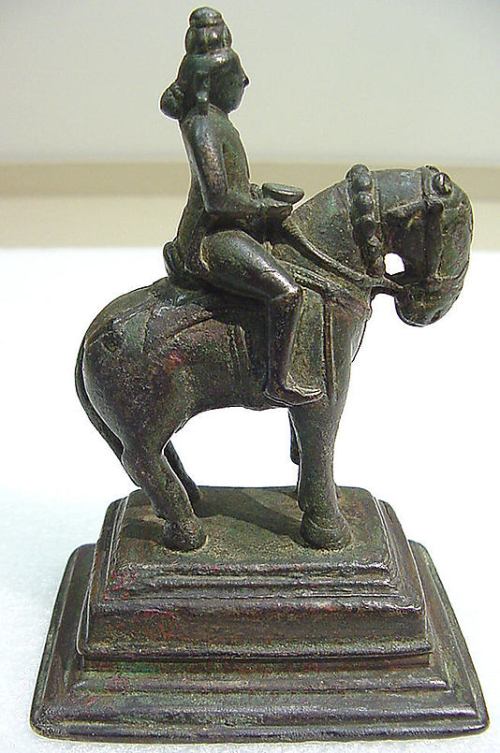
The seized objects are likely the tip of the iceberg of the dealer’s inventory. Since 1974, Kapoor has traded in ancient art from India, Afghanistan, Southeast Asia and the Islamic world, as well as more recent art from India. A sample of his recent inventory can been seen in this 2011 catalog for Art of the Past.

Kapoor’s legal troubles extend far beyond New York. He was detained in Germany in October 2011 and this month extradited to Chennai, India, where he is facing criminal charges of being the mastermind of an idol smuggling ring that plundered ancient temples in Tamil Nadu. Kapoor has reportedly admitted to Indian police that he earned more than $11 million through the transport and sale of plundered Indian antiquities with his daughter and brother through a US corporation called Nimbus International.

Kapoor’s New York attorney Christopher Kane did not return a call to his cell phone on Sunday, but told the New York Post that Kapoor ““thinks of himself as a legitimate businessman, and I have no reason to think he’s not.” We’ll post any response we receive here.

As Kapoor’s legal case plays out in India, the spotlight now turns to the dozens of museums and collectors who did business with the dealer. Kapoor boasts in his bio that he has sold antiquities to a long list of leading museums, including The Metropolitan Museum of Art, New York City; Arthur M. Sackler Gallery, Washington D.C.; Los Angeles County Museum of Art, Los Angeles; Museum of Fine Arts, Boston; Asian Art Museum of San Francisco, San Francisco; The Art Institute, Chicago; Virginia Museum of Fine Arts, Richmond; Musée des Arts Asiatiques-Guimet, Paris; Museum fűr Indische Kunst, Berlin; The National Gallery of Australia, Canberra; Royal Ontario Museum, Toronto; and the Asian Civilisations Museum, Singapore.

Investigators have tied a Dancing Shiva at Australia’s National Gallery to Kapoor, the New York Post reported.

In a press release, American investigators asked Kapoor’s clients to check their collections and be in touch. “Some of the artifacts seized during this investigation — which are stolen — have been displayed in major international museums worldwide,” ICE’s Homeland Security Investigations team said in a press release. “Other pieces that match those listed as stolen are still openly on display in some museums. HSI will aggressively pursue the illicit pieces not yet recovered.”
The press, however, is not waiting for museums to come clean. The New York Times queried several museums last week about Kapoor objects in their collections. And on Saturday, The New York Post reported that a statue of Shiva as the Lord of Dance at the National Gallery of Australia has been tied to the investigation.

Not all museums that did business with Kapoor will be in trouble, of course. The Freer-Sackler Gallery, for example, told the New York Times that the only object they had acquired from Kapoor was a 20th century Indian necklace. The two objects in the Boston Museum of Fine Arts’s online catalog linked to Kapoor Galleries, operated by Kapoor’s brother Ramesh, are 17th century Indian paintings.

The Met’s response to the Kapoor investigation has been rather cavalier. Despite the admonition from the federal authorities, the museum will not review its Kapoor antiquities, Holzer told the Times, noting that the collection had long been posted on the Met’s website. One might think that recent history would have taught Met officials time and again that open possession of allegedly stolen property is no protection from claims both legal and moral.

The Met tried to deflect the questions from the press, telling the NY Times that most of the 81 pieces they had acquired from Kapoor were drawings from the 17th, 18th or 19th century highlighted in the 2009 Met exhibit, Living Line: Selected Indian Drawings From the Subhash Kapoor Gift. “They do not appear to be the type of items that they are worried about,” said museum spokesman Harold Holzer.

But a search of the Met’s online catalog reveals several antiquities from Kapoor that authorities likely will be interested in — none have documented ownership histories dating to 1972, when India began controlling exports of ancient art.

1st Century BC ceramic Bengal pot (2003 Gift of Subhash Kapoor)

1st Century BC Bengal Vessel (2001 Gift of Subhash Kapoor)

The God Revanta Returning from a Hunt (2003 Gift of Subhash Kapoor)

Yakshi Holding a Crowned Child (2002 Gift of Subhash Kapoor)

Curiously, the Met also has five stone sculptures from Kapoor in its study collection, here and here, for example. They resemble ancient pieces but are labeled by the museum as “20th Century.” All were acquired in 1991. Did the museum acquire these objects from Kapoor, only to discover they were modern forgeries? We’ve asked Holzer for more information.

UPDATE: Harold Holzer tells us, “The group of 20th-century forgeries was accepted as a gift along with the other Kapoor gifts for our study collection, and always identified as such.”

To be fair to the Met, their online collection is far more transparent than that of several other American museums tied to Kapoor. The Toledo Museum of Art told the NY Times that it had received a gift of 44 terracotta antiquities from Kapoor in 2007. The only object that appears in a search of the museum’s online collection is a terracotta vessel purchased in 2008. The museum published the object in 2009 in a book of the museum’s masterworks, but offers no ownership history other than saying it was created in Chandraketugarh, an archaeological site north-east of Kolkata. Where was it before Toledo? What are the ownership histories for the other 43 objects acquired from Kapoor?

We’ve asked the Toledo Museum for that information, but apparently such requests are a low priority there. More than a month ago, we requested information about objects in their collection tied to two other dealers who investigators have connected to the illicit trade — Edoardo Almagia and Gianfranco Becchina. We have still not received a response.

Several years ago, the Getty Museum took a similar stance when faced with questions about objects in their collection. Stonewalling only convinced the public of the museum’s bad faith, and fueled the zeal of investigations by foreign governments and the media. Museums would be smart to heed those lessons from the Getty case, lest they relive the consequences.

Like the Almagia investigation, the Kapoor case will be a test for how transparent American museums can be in the face of unpleasant questions about ancient art in their collections. Will they take a proactive approach to investigating their collections, as they have done with objects with unclear provenance from World War II era? Or will they stonewall and encourage others to do the investigation for them?

Hat-Tips: Several people have been covering the Kapoor case for months, and you should read their detailed coverage. The Indian press, especially the Times of India, has been covering the case for months. Damien Huffer, whose excellent blog It Surfaced Down Under tracks the illicit antiquities trade in the Southern Hemisphere, was one of the first to pick up the story, a distinction that earned him repeated legal threats. Paul Barford’s blog has also diligently tracked reports on the case, adding his salty commentary along the way. Most recently, The New York Post broke the news of the Manhattan raids last week and has followed-up with some additional scoops.

UPDATE: Attorney Rick St. Hiliare has some very interesting thoughts on what the Kapoor case reveals about antiquities smuggling networks: “Examining the import and export methods surrounding the Kapoor case not only can aid police in the United States and India in their current investigations targeting the alleged idol thief, but it can help policymakers, criminologists, and scholars think about better ways to detect, uncover, interdict, and prosecute future crimes of heritage trafficking.” Hilaire also offers excellent analysis of the bills of lading allegedly used by Kapoor’s enterprises, revealing how these objects were able to enter the U.S. under false premises. He goes on to say the case might give a boost to our WikiLoot project, which is designed to suss out these very matters. Worth reading his entire post.

The Case of the Dodgy Drachmas: Arnold Peter Weiss, Prominent Rhode Island Surgeon, Pleads Guilty; “Looted” Coins Prove Forgeries.

Dr. Arnold Peter Weiss

Dr. Arnold Peter Weiss, a prominent Rhode Island hand surgeon and dealer in ancient coins, pleaded guilty in New York City Tuesday to three counts of attempted criminal possession of ancient coins he believed had been recently looted from Italy.

“Attempted” possession because the coins in the case were not actually looted — nor ancient. In Tuesday’s court hearing, the New York District Attorney’s office revealed that all three coins in the case were in fact modern forgeries.

Weiss was arrested at the Waldorf Astoria hotel on January 3rd while trying to sell ancient coins at the 40th annual New York International Numismatic Convention. According to the criminal complaint, Weiss believed at least one of the coins had been recently looted and smuggled out of Italy. “There’s no paperwork, I know this is a fresh coin, this was dug up a few years ago,” the complaint quotes Weiss telling a confidential informant. “This was dug up two years ago. I know where this came from.”  Weiss told an undercover investigator that he also knew the coins belonged to the government of Italy, which claims state ownership of all antiquities found since 1909.

On Tuesday, Weiss entered a guilty plea to the three misdemeanor counts and was sentenced to 70 hours of community service, which he will serve as a physician treating under-insured patients in Rhode Island. He will pay a $1,000 fine for each of the three coins in the case and forfeit another 23 ancient coins seized from him at the time of his arrest.

The court also required Weiss, the former treasurer of the American Numismatic Society, to write a detailed article in the society’s magazine detailing the widespread practice of dealing in coins with unclear ownership histories. It will describe the corresponding threat to the archaeological record and propose solutions for reforming the coin trade. In a statement, a spokeswoman for the Manhattan District Attorney’s office said, “Thanks to today’s disposition, the article to be written by the defendant for a coin trade magazine will raise needed awareness about unprovenanced coins, and will promote responsible collecting among numismatists.” We’ve asked Weiss’ attorney for a comment and will post anything we receive.

We were the first to report the details of the criminal complaint here, and have written about Weiss’ ties to the Rhode Island School of Design, where he was board chairman and a prominent donor;  to Harvard University Art Museums, where he was a member of the collections commitee from 2006 until his arrest in 2012; and to the Getty Museum in Los Angeles, where one of his partners at the Swiss coin dealership Nomos AG got his start. We also reported the case had started with federal investigators with Immigration and Customs Enforcement.

We’ll have more information about the case and its implications soon.

UPDATE: The DA’s office informs us that the New York Post report that the fake coins would be destroyed is inaccurate. The coins will be preserved and the investigation is on-going.

UPDATE: Paul Barford makes a good case that the fake coins seized by the DA should be retained for future investigations rather than destroyed, as the court has ordered. [See clarification from DA’s office above.] Given the facts of this case, numerous private collectors and museums that did business with Weiss must be wondering how many other ancient coins that passed through his hands could also be forgeries.

UPDATE:Rick St. Hilaire has an interesting analysis of the legal implications of the Weiss case, calling it “a breakthrough for the successful application of state criminal laws, as opposed to federal criminal laws alone, to combat international cultural property trafficking.”

NOTED: Peter Tompa, the numismatist and lobbyist for coin collectors at Cultural Property Observer, has yet to mention the Weiss verdict — or the existence of the case at all. The Ancient Coin Collector’s Guild has not mentioned the verdict either. Paul Barford has a longer list of ancient coin-oriented websites with no mention of the verdict. Why?

NOTED: Larry Rothfield has some good questions about the next steps in what the DA’s office has described as “an on-going investigation.”

Letter to Cuno: Dismissal of Educators Sparks Discord Inside Getty Museum

Last month, more than 50 Getty Museum staff members signed a letter to Getty Trust CEO James Cuno and his bosses, the Board of Trustees, objecting to recent cuts in the museum’s education department. (See below for full text.)

For those not familiar with the Getty culture, grumbling about management has long been a varsity sport there, but such open displays of dissent are more rare.

The anger is focused on Cuno’s decision to eliminate 12 of the Getty’s 17 gallery teachers — a unique position in the museum world that put the Getty in a leading role in arts education. The paid teachers, many of whom had Masters in the arts, will be replaced by volunteer docents, “educated individuals who themselves want deep experiences with art, and who will in turn seek to deepen student and visitor engagement with artworks,” according to the posted Getty job announcements. (We’ve previously written about Cuno’s cuts here and here.)

image from hyperallergic.com

The cuts will allow more visiting students to get guided tours and are aimed at saving some $4 million annually than can be used for new acquisitions of art, the Getty has said. But some from inside and outside of the Getty have questioned the wisdom of targeting educators. (Be sure to read the comments at those links, including the response from Cuno.)

Several museum staffers have contacted us in recent weeks with their concerns, calling Cuno’s less-is-more position “Orwellian.” The running joke among staff is that with Cuno’s focus on acquisitions, the Getty should change its web address from getty.edu to getty.acq. Some have suggested other areas for savings in the Getty’s $270 million a year operation. For example: Timothy Potts, who will take over as director of the Getty Museum in September, recently asked that the Getty replace the furniture in his future office. The existing furniture — which Potts referred to as “Pee Wee Herman furniture” — has been moved out and mid-century modern pieces are being sought to replace them. Also: The Skidata ticket machines being installed in the garage for the new automated parking system were recently sent back to the factory for custom painting, a museum staffer tells us. It appears they come in two standard colors, neither of which matched the Getty’s travertine. (This is not to mention the six-figure salaries of top Getty officials.)

Such examples may seem petty, but it was symbolic excesses amid belt-tightening that fueled the deep anger at Cuno’s predecessor Barry Munitz, who was ultimately driven from his job in 2006 for self-dealing with Getty funds. (Ironically, back then Getty museum officials were also upset that Munitz was too focused on hobbies like education policy, and not willing to dedicate the necessary funds to build the Getty’s collection.) It will be worth watching how these sentiments unfold in the months before the arrival of Potts.

The Getty Board

Here is the full text of the May letter from museum staff, with Cuno’s response below it:

May 4, 2012
Dear Dr. Cuno and the Board of Trustees:

We support and share your objective “to maintain the Museum’s very high standards of excellence in all areas.” While we will strive to maintain these high standards in the face of staffing reductions, the drastic and sudden changes to the Education Department’s structure and philosophy will significantly jeopardize our efforts.

The Getty Museum has been at the forefront in the museum field not only for its excellent exhibitions and collections, but also for our approach to education in both theory and practice. A key aspect of this has always been our professional and highly-trained gallery teaching positions. All of the Gallery Teachers and program staff have extensive knowledge of art history, child development theories, and teaching pedagogy, particularly as it relates to object-based and informal learning. Like all of the professionals in the museum, we stay abreast of the research which determines best practices in our field. Indeed, after 20 years of research, our colleague Elliott Kai-Kee has co-written the book on what exemplary gallery teaching can and ought to be. Across the country, colleagues in other museums have used the ideas articulated in the book as a model for the kind of transcendent experience they want their visitors to have in their own galleries. Yet, we find ourselves suddenly in the midst of deep changes to the Getty’s teaching philosophy without a rigorous analysis of how best to meet the institution’s current priorities without sacrificing quality.

The removal of the Gallery Teachers and the plan to replace them with docents with a mere four months lead time is emblematic of the nature of these changes. The Getty’s professional Gallery Teachers are unique in the museum world and have been symbolic of the institution’s deep commitment to quality educational experiences, particularly for school children. Many of the Gallery Teachers have master’s degrees in art history, fine art or classical studies, all of which result in unique perspectives that provide insight into the complex history or creation of an object. Moreover, the Gallery Teachers’ deep knowledge of the collection, in addition to their status as employees, allows for the much-needed ability to teach any tour at a moment’s notice for any type of audience—from a VIP group to students who are English language learners. We agree in holding our curatorial and conservation staff to the highest standards, and we are disappointed that the front line professionals who interact with the public will no longer be held to the same high standards.

After the staff meeting on April 4, we were optimistic that the administration’s stated support for arts education in LAUSD would translate to a commitment to the quality of students’ experience in our galleries. Instead, the sudden elimination of key staff will result in the hurried substitution of volunteers for experienced educators and an overall reduction of professional development programs for teachers. We are deeply concerned that volunteers who may not have had any prior teaching experience will have a difficult time learning about our collection and the needs of the diverse LAUSD school population within a two-month training period. Unfortunately, the students of LAUSD will once again be the victims of cuts to professional, highly trained teaching staff.

It is deeply unfortunate that the standards that make the Getty Museum a leader in the field of education have now been compromised. In the future, we hope to work together to devise effective, thoughtful strategies for teaching in the galleries that would meet our core mission while maintaining a standard of excellence.

Sincerely,
Getty Staff Members

Cuno responded on June 1 with the following email to museum department heads:

Dear Colleagues,

As you may know, I received a letter from numerous Museum staff members regarding the recent changes in Museum Education. It is very important that everyone have a chance to express their views on decisions taken by Getty administration and I very much appreciated the candor and constructive tone with which the letter was written.

Since there were no typed names and departmental affiliations to help identify the letter’s signatories with any confidence, I am asking you to share this with your colleagues if you think it is appropriate.

Our goal in transitioning from a wholly professional gallery teacher staff to a mixture of professional and volunteer teaching staff was to provide many more guided tours for our school group visitors than we currently provide.

Last years total attendance in our School Programs was 114,000. Of these, 74,000 were Title One students (a U.S. Department of Education program that provides support for school districts with the highest student concentration of poverty) and 40,000 non-Title One. Of the total attendance, only 39,000 experienced guided tours by gallery instructors; 67,000 were self-guided, or experienced the museum and its galleries with minimal assistance from us. An expanded docent teaching corps, carefully selected and expertly trained by our experienced gallery instructors, along with the development of multi-media tours, will enable us to meet our goals within the constraints of our budget.

I have the greatest confidence in our Museum educators. Under Toby’s leadership, they attract and train an excellent corps of volunteer teachers. And given that volunteer-led tours are the norm in our profession, our shift of emphasis positions us to play a leadership role in this aspect of Museum Education. We are grateful to the contributions our gallery instructors have made and will make in this regard. Having the ability to serve more of our visitors with a guided tour at a level of instruction appropriate to their needs was an important consideration as we thought about reorganizing the gallery instruction program.

Thank you again for your letter. And thank you for your good work.

Sincerely,

Jim